
Il Giorno and la Repubbica reported the probe on Monday.
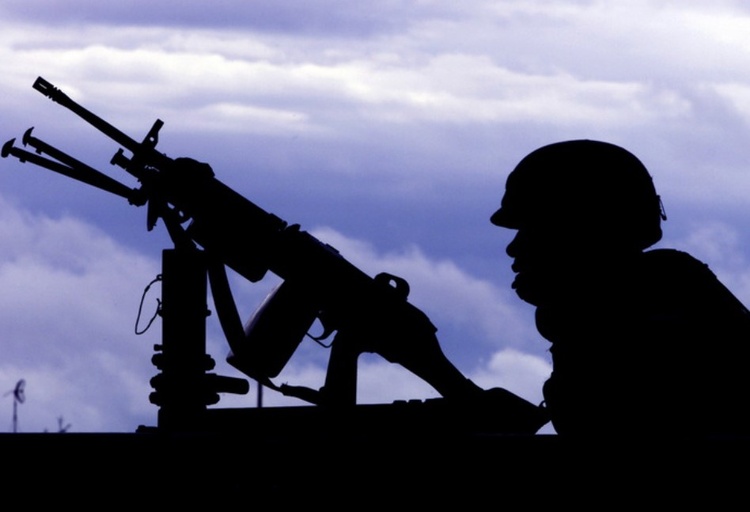
The mostly far-right gun fanatics allegedly left Italy, paying “huge” sums to Serbian soldiers to participate in the siege of Sarajevo and shoot citizens of the Bosnian capital “for fun” during the war, the two dailies said.
To identify these “war tourists”, an investigation is underway in Milan aimed at identifying those who participated in the massacre.
The case—which Il Giornale had already reported on in July—was opened by prosecutor Alessandro Gobbis on charges of voluntary homicide aggravated by cruelty and abject motives.
The charges are currently being brought against unknown persons, stemming from a complaint filed by journalist and writer Ezio Gavazzeni, with the assistance of two lawyers and former magistrate Guido Salvini.
According to testimonies gathered from across northern Italy, these “weekend snipers”, mostly far-right sympathisers with a passion for weapons, gathered in Trieste and were then taken to the hills surrounding Sarajevo, where they could fire on the population of the besieged city after paying Radovan Karadzic’s Bosnian Serb militias.
The case file also contains a report on these “rich foreigners engaged in inhumane activities” sent to the Milan Prosecutor’s Office by former Sarajevo mayor Benjamina Karic.
For now, the investigation records only include the documents submitted by the author of the complaint, dated January 28, and in the coming weeks prosecutor Alessandro Gobbis, will have to investigate and possibly interview the people indicated by the writer.
For now, Gavazzeni explains, “these are just ‘tips’”.
But there was also apparently “a price tag for these killings: children cost more, then men (preferably in uniform and armed), women and finally old people, who could be killed for free”.
The writer also referenced the 2022 documentary Sarajevo Safari and explained that “director Miran Zupanic gave us the passwords to access the restricted viewing of the film on the Al Jazeera website, and I can provide them to the magistrate who requests them”.
The film also features an “anonymous” witness. “Some sources speak of Americans, Canadians and Russians, but also Italians who were willing to pay to play war,” the witness said.
The clients, the witness added, were “certainly very wealthy people” who could “financially afford such an adrenaline-fueled challenge”.
“[Given the way] everything was organised, the Bosnian intelligence services believed that the Serbian State Security Service was behind it all.
“[They were aided by] the infrastructure of the former Serbian charter and tourism airline Aviogenex.
“[Jovica Stanišić], convicted of war crimes by the International Criminal Tribunal for former Yugoslavia, played a key role in this service.”
According to the complaint, among these “sniper tourists” were also hunting and weapons enthusiasts.
And the “hunting cover served to bring the groups to their destination in Belgrade without suspicion”.
According to an excerpt from the testimony of John Jordan, a former American firefighter who volunteered in the besieged city of Sarajevo in the 1990s, in front of the International Criminal Court in The Hague during the trial of Bosnian Serb Army commander Ratko Mladic:
“On more than one occasion, I witnessed people who didn’t seem like locals to me because of their clothing, the weapons they carried [and] the way they were treated, managed and even led by locals. I saw this in Sarajevo on several occasions.”
Passages from this 2007 deposition—which refer specifically to the so-called “tourist shooters” whom the Milan Prosecutor’s Office will also begin investigating—are also included in Gavazzeni’s complaint to the Milan prosecutors.
“It was clearly evident,” the testimony from 18 years ago continues, “that the person guided by men who knew the terrain well was completely unfamiliar with the terrain, and his clothing and the weapons he was carrying made me think they were tourist shooters.”
And again: “When a boy shows up with a weapon that seems more suited to wild boar hunting in the Black Forest than to urban combat in the Balkans ... When you see him handle it and you realise he’s a novice...”
Meanwhile, a photography exhibition entitled Shooting in Sarajevo is currently underway at the Casa della Memoria in Milan, which commemorates the siege of the city 30 years ago.
ANSA