Their legacy is not only recorded in the history books, but also at the island’s seven UNESCO World Heritage sites, which are worth a visit.
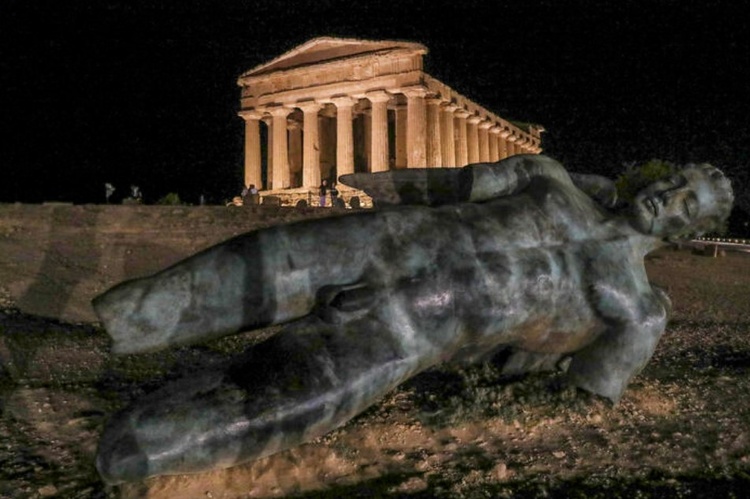
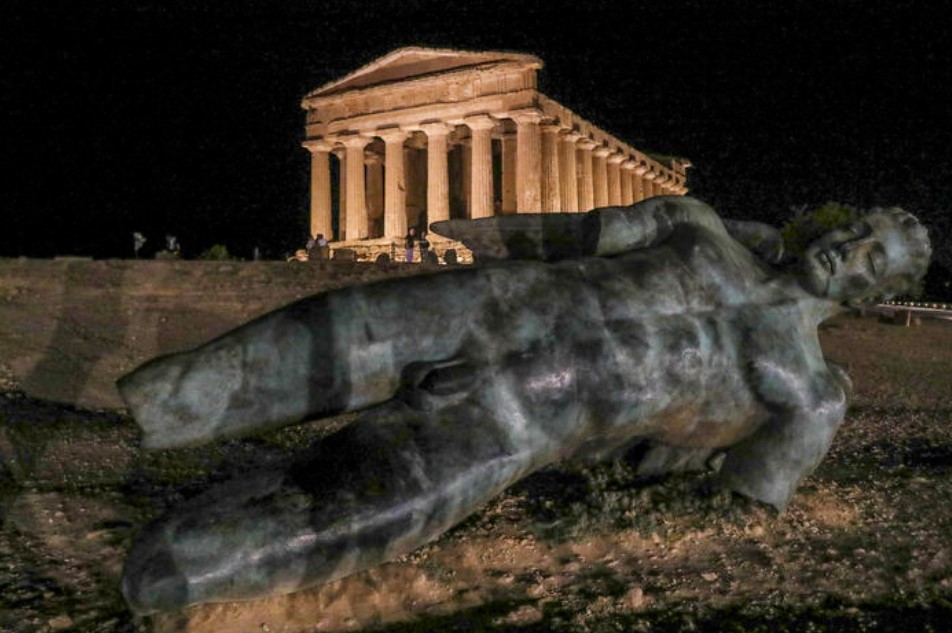
In The Wandering Life, Guy de Maupassant writes that the hill of the Valley of the Temples in Agrigento evokes the ghosts of the past and the gods of Olympus—and it is indeed so: a visit entails immersing oneself in a landscape suspended between legend and history.
After starting in Agrigento, a good itinerary with an archaeological theme must then continue eastward to Siracusa and the nearby Necropolis of Pantalica.
A visit here is dominated by prehistoric mystery: there are more than 5000 cave tombs carved into the rock walls in the canyon created by the Anapo and Calcinara rivers.
Siracusa, on the other hand, is one of the most extraordinary historical stages of the Mediterranean, showing the different ruling powers and the continuous development of the city over the centuries.
In the same area, you can then discover the late Baroque cities of the Val di Noto - Ragusa, Modica, Scicli, Noto, Caltagirone, Palazzolo Acreide, Militello Val di Catania and Catania.
These eight towns and cities are united by the fact that they were rebuilt after the 1693 earthquake and were declared World Heritage Sites for their extraordinary stylistic unity and Sicilian-style interpretation of European Baroque.
This does not mean that if you have visited one, you have seen them all: each has a special nature, a charm to be discovered.
The same goes for Piazza Armerina, where one can find another piece of Sicilian history: the mosaics of the Villa Romana del Casale, a sumptuous late Roman mansion that holds more than 3500 square meters of perfectly preserved floor decorations, making it a figurative encyclopedia of the life and power of the empire.
But some works of art in Sicily are also the stuff of legend. In exchange for escaping a storm at sea, Roger II, the King of Sicily, vowed to erect a church at the place where he landed.
Arriving in Cefalù, he kept his promise and created a majestic cathedral, consecrated in 1267. It’s a monument that, with its twin towers, dominates the town, while the Christ Pantocrator of the apsidal mosaic continues to welcome visitors from all over the world.
This can be the first stop of Sicily’s Arab-Norman itinerary, recognised by UNESCO in 2015.
From Cefalù, the journey continues to Palermo—the heart of the island. One should go from the Palatine Chapel in the Norman Palace to the Zisa, passing by the Cathedral of the Holy Virgin Mary of the Assumption, the Church of San Giovanni degli Eremiti, those of the Martorana and San Cataldo, as well as the Admiral’s Bridge.
A few kilometres away, stands the last piece of the route: the Cathedral of Monreale, commissioned by William II the Good in the 12th century. One again there is a legend behind it: the king is said to have fallen asleep under a carob tree while hunting, and Our Lady appeared to him in a dream to tell him of the presence of a treasure.
In Sicily, nature can become art too. Those who see Mount Etna, with its spectacular, unpredictable eruptions that have shaped the landscape of the area for millennia, know this well.
It, too, is among Sicily’s UNESCO heritage sites, as is the archipelago of the Aeolian Islands: Lipari, Vulcano, Salina, Stromboli, Panarea, Filicudi and Alicudi.
They are an open-air geological museum where each island tells a different story, from the craters of Stromboli and Vulcano to rich clumps of capers.
ANSA