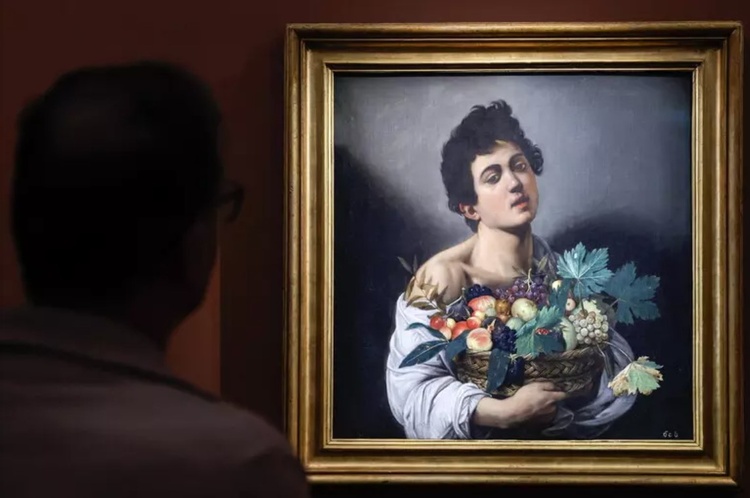
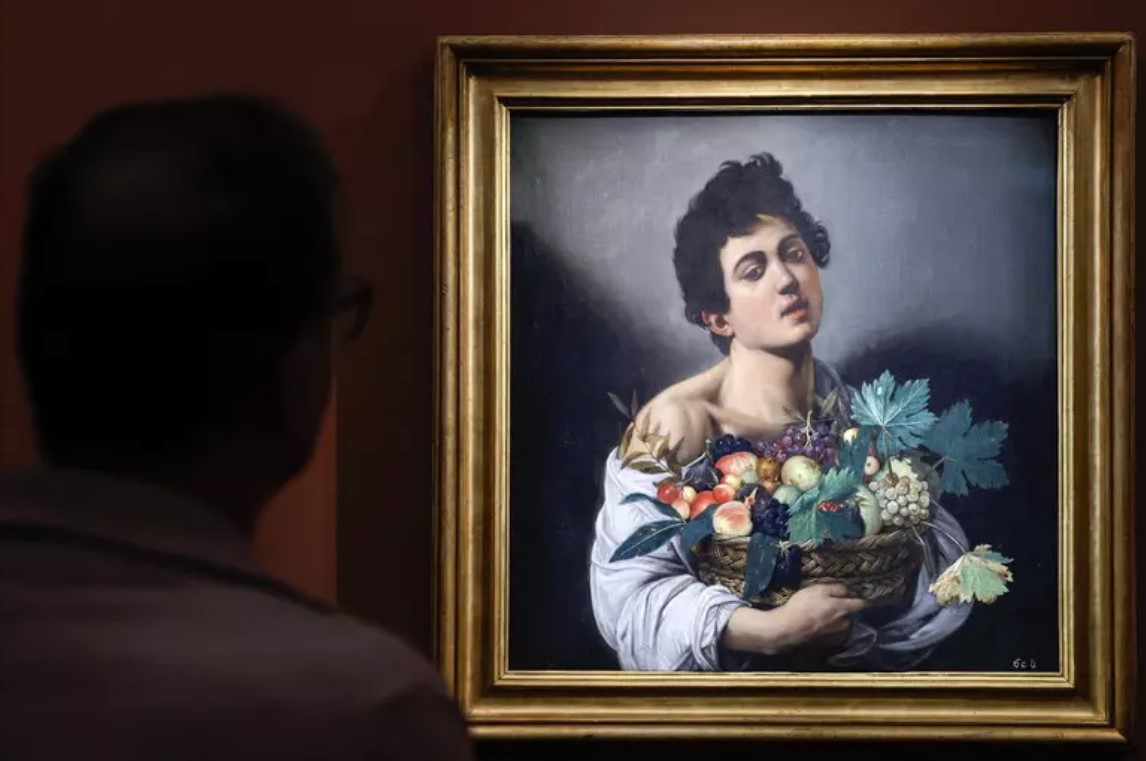
The iconic painting, a ‘hybrid still life’ centred on the human form, is the centrepiece of an exhibition at the Library, organised with the support of the Foundation for Italian Art and Culture (FIAC) headed by Alain Elkann and Daniele Bodini, which has been bringing masterpieces of Italian art to American museums for years.
The 1595 painting, which will remain at the library until April 19, is Caravaggio’s first true masterpiece, according to curator John Marciari.
Rather than attempting to borrow more of the artist’s paintings from US museums, Marciari decided to bring out of isolation a watershed figure in the history of Western art—the inventor of modern Baroque painting, which broke with the Renaissance ideal—by placing him alongside other painters who preceded and followed him.
The result is a gallery of 13 paintings.
“JP Morgan loved Italy and the history of Italian art,” said museum director Colin Bailey, while Marciari emphasised the turning point that Boy with a Basket of Fruit—last exhibited in New York in 1988 at the Met—marked in Italian painting.
“It is not a portrait, nor is it an allegory. To see this painting in its context is to understand the revolution it represents.”
Marciari sought to demonstrate the origins of Caravaggio—real name Michelangelo Merisi—by finding precedents in Lombard naturalism in his native Milan, where the ‘bad boy’ of Italian art served his apprenticeship.
In the Borghese Gallery painting, Caravaggio painted neither a god (like the 1597 Bacchus in the Uffizi) nor a saint, but a “model of the artist posing as a god”, offered to our gaze, just like the fruit—the grape leaves attacked by insects as if the basket had been left too long in the studio—that the young man presents to the viewer.
The first painting in the exhibition is the Met’s Girl with Cherries, dated around 1495 and attributed to Leonardo da Vinci’s student, Marco d’Oggiorno—similar in subject matter but “obviously much more antique than Caravaggio”.
Also included among the “influences” is Carracci’s Boy Drinking from 1583, from a private collection and never before exhibited publicly.
Next to it, The Four Seasons in a Head by Arcimboldo from the National Gallery in Washington.
“It was painted in 1590 while Caravaggio was in Milan and certainly could not have failed to have seen it,” said Marciari.
The exhibition closes with a portrait of Scipione Borghese by Gian Lorenzo Bernini. The cardinal, collector and nephew of the pope, to whom we owe the main nucleus of the Borghese Gallery, was also the second owner of the Boy with a Basket of Fruit, part of the Borghese collection since 1607.
ANSA