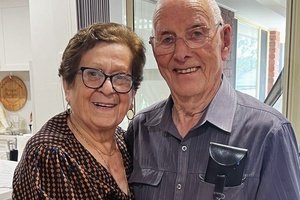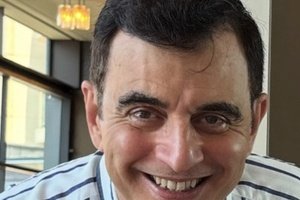
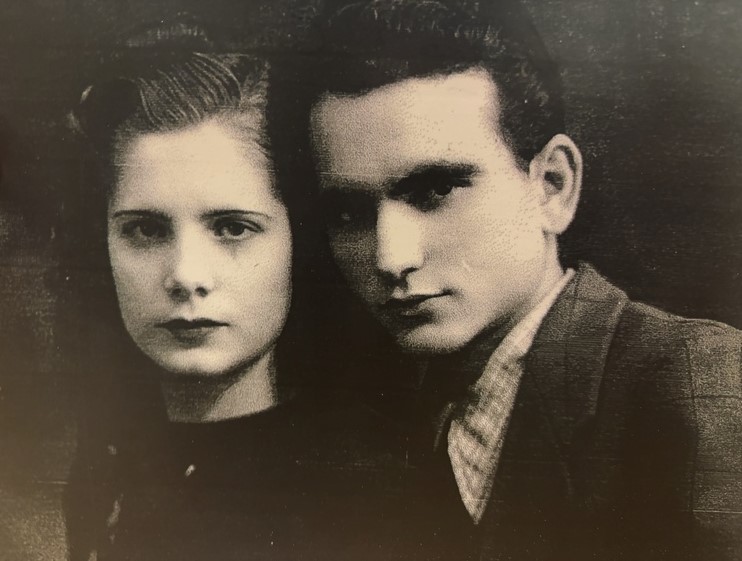
Behind these long lives lie individual stories that reflect a 20th century marked by humble beginnings, hard work, migration and strong family ties. One such story is that of Vincenzo Rizzo.
Born in 1926 in Benghazi, when Libya was still under Italian rule, Vincenzo is a firsthand witness to a turbulent chapter of history.
His family, originally from Trapani in Sicily, moved to North Africa when Italy opened its colonial provinces. Three of the five siblings lived there, while the others remained in Sicily.
The outbreak of war, however, shattered that fragile stability. In 1942, with the arrival of Allied forces, the Rizzo family was forced to flee in haste, “with only the clothes they were wearing”.
A German aircraft carried them back to Sicily, landing just outside Comiso, near Ragusa. It was a dramatic journey, involving a damaged plane and a series of events that, as his son Paul recalls, make Vincenzo’s survival seem almost miraculous.
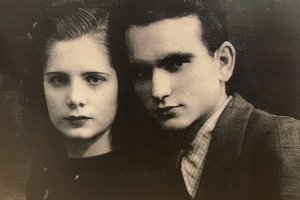
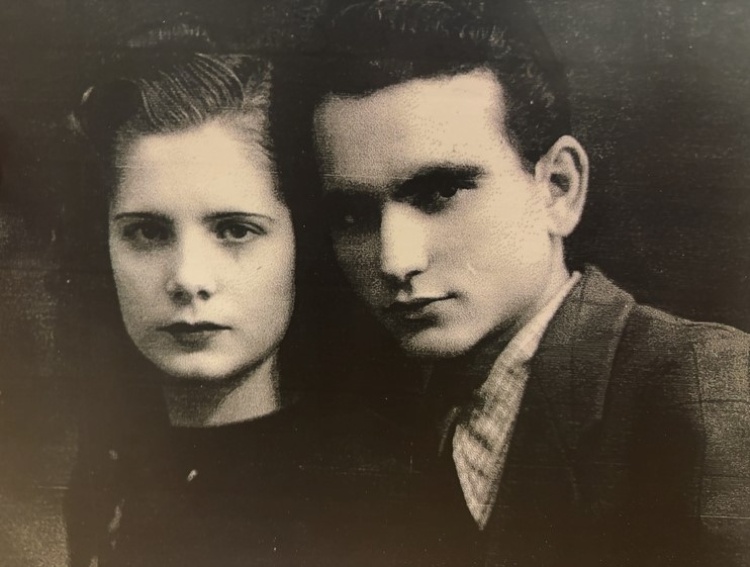
Back in Sicily, Vincenzo began working at a young age. It was 1942 when he found his first job, and a few years later he met Giuseppina Maru, the woman who would become his wife.
It was love at first sight, according to his son, so much so that the couple eloped in a traditional fuitina. “Everyone doubted them, yet they spent a lifetime together,” Paul says of his parents, who were married for 54 years.
Vincenzo had a stable and respectable job at a mechanical company, but his restlessness pushed him further. Unlike many of his peers, it was not economic hardship that drove him abroad, but curiosity and a desire to see the world.
“It wasn’t about poverty, it was about wanting to see what was out there,” his son explains. To his friends he would simply say, “Let’s go and have a look down there.”
Following the custom of the time, Vincenzo left first and arrived in Australia in 1950. The following year, his wife and a young Paul joined him.
The early days were tough. He slept in a corrugated iron shack in a friend’s backyard, with a roof so makeshift that at night he could see the stars.
“It was hard, but he made it work,” Paul recalls. He quickly found employment and became one of the top mechanics at Leyland Motors, which was a major force in Australia’s automotive industry.
Later, he opened a service station followed by his own mechanical workshop, which he ran until retirement. It was a life built on independence, enterprise and steady work.
There were challenges—like the language barrier and social prejudice—but as Vincenzo himself would say, “Nothing too serious.”
Within a few years the family bought a home in Ascot Vale, one of Melbourne’s Italian hubs. Before that, they lived above a fruit shop on Lygon Street, in the heart of the Italian migrant scene.
Giuseppina passed away in October 1998, and Vincenzo lived alone for many years after. Today, he is a grandfather and great-grandfather, surrounded by a large extended family.
Vincenzo is remembered as a tireless worker, sociable in his younger years and remarkably self-sufficient. “In the past 20 years, he has grown more comfortable with solitude,” shares Paul.
He drove until the age of 98 and still lives independently. The values that guided him throughout his life remain unchanged: family at the centre of everything, respect and education.
“Looking back,” Paul reflects, “I think he achieved exactly the opportunities he hoped to give his family.”
Food and conviviality have played their part in his longevity, alongside good genetics and a lifetime of physical work.
Above all, he is disciplined: every morning begins with 20 push-ups. Now, at 100 years old—having celebrated his centenary on February 3—his only physical complaint is a troublesome knee.
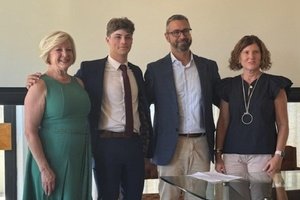
His milestone birthday also brought official recognition with letters from King Charles and Queen Camilla, along with well wishes from Australian Prime Minister Anthony Albanese and Victorian Premier Jacinta Allan.
These letters symbolically seal a life lived without luxury or shortcuts, grounded in work, honesty and family.
He would often say, “If something needs to be done, there’s no point complaining. You just do it.”
“That sums up the determination with which he faced the past century,” Paul concludes.