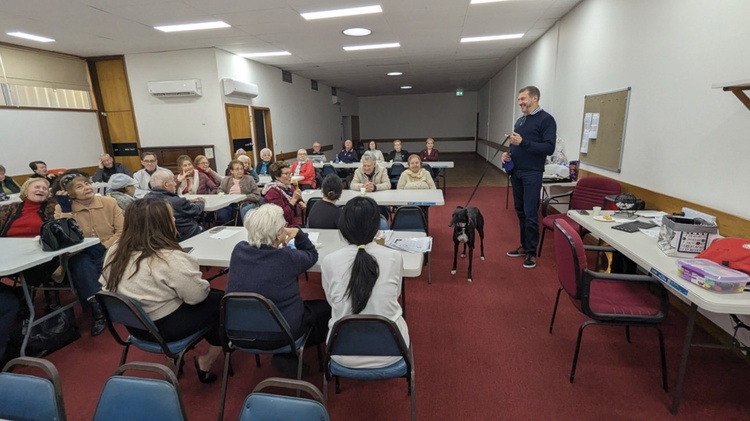
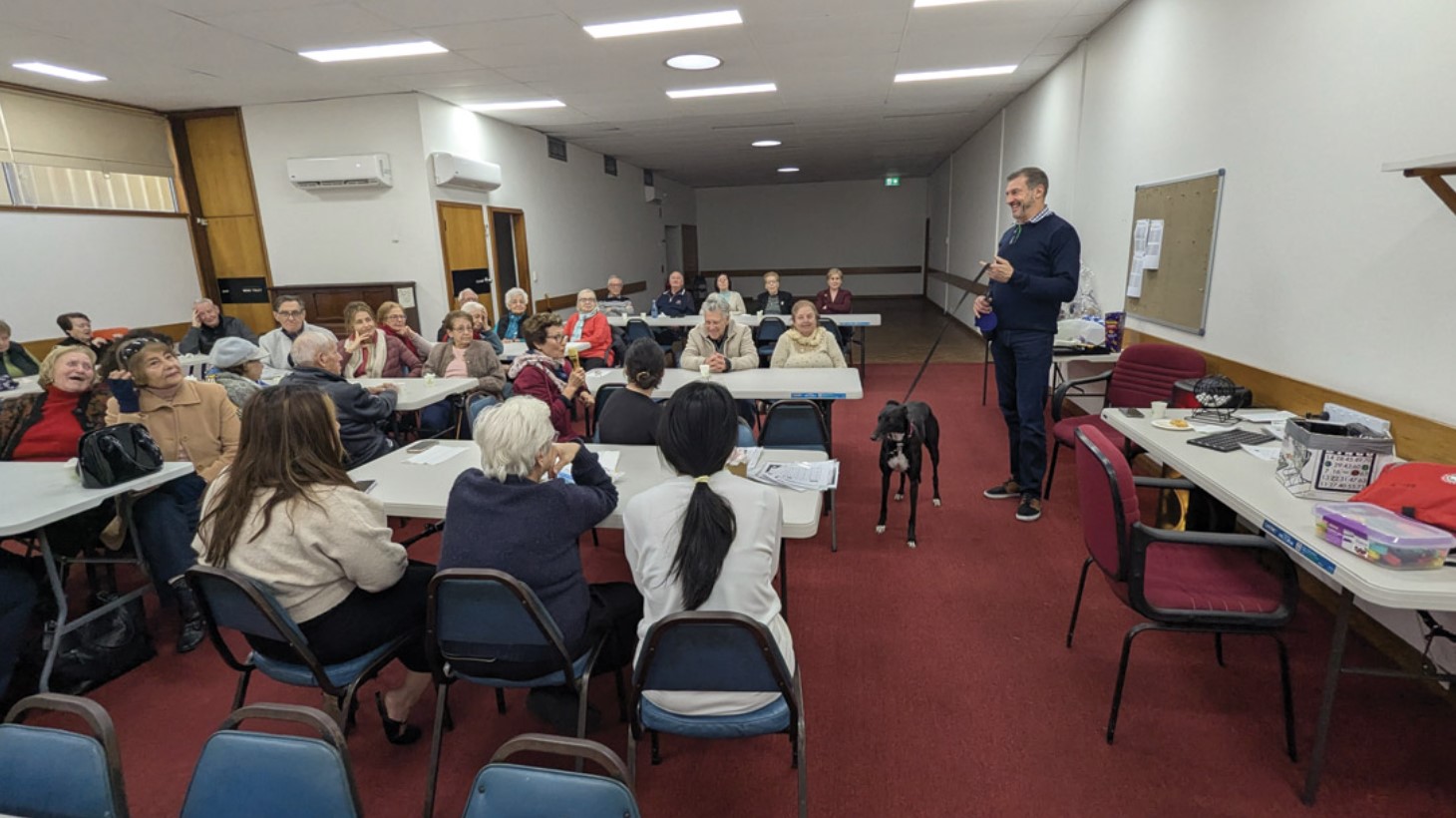
SYDNEY - Recently, after their usual social activities, the group welcomed two very special guests: David Doig and his dog Penny, members of Delta Therapy Dogs, a volunteer organisation based in Earlwood specialising in dog therapy.
As soon as Penny, a female greyhound, entered the Senior Citizen Centre in Maroubra, she was greeted with warm applause, along with her owner and trainer David.
David explained to the group that dog therapy, or pet therapy (also known as animal-assisted therapy) is a therapeutic practice based on interaction between people and companion animals, aimed at improving physical, emotional, cognitive and social well-being, supporting recovery, healing and quality of life.
The term “pet therapy” was coined in the 1960s by psychiatrist Boris Mayer Levinson, one of the first to use companion animals as therapeutic support to treat specific conditions.
Dog therapy is widely used among the elderly, especially in nursing homes, where it is warmly welcomed. The presence of a dog or cat can significantly improve mood and psychological well-being and encourage light physical activity.
Interacting with these “four-legged therapists” by petting them, or simply taking care of them, contributes significantly to the guests’ mental and physical wellness.
In schools, dog therapy is often used with children who have intellectual and psychomotor disabilities, speech and learning disorders, autism or visual impairments, as it stimulates communication and strengthens self-esteem and confidence.
In general, dog therapy has proven effective for individuals on the autism spectrum, those with mood or behavioural disorders, relational difficulties or chronic medical conditions such as anxiety and depression.
Its success is due to certain dogs’ natural ability to form empathetic bonds, their instinct to help and their unconditional affection.
During sessions, the dog is introduced into a controlled environment, such as a hospital, a school or, as in this case, a senior centre, and interacts with people through petting, play, structured exercises or simply by keeping them company.
Some dogs also respond to specific commands, such as sitting, giving a paw or staying still, encouraging active and stimulating interaction.
Therapy dogs must be carefully selected and trained based on temperament, behaviour and their ability to respond to stimuli. They need to be calm, affectionate and well-socialised to ensure the safety of all participants, especially children, the elderly or vulnerable individuals.
The benefits of this form of therapy are numerous: reduced stress and anxiety, improved mood, increased motivation, stimulated social interaction and emotional support.
The dogs become true “communication bridges”, helping to break down isolation and promote more open and peaceful human relationships.
All the Italian seniors present interacted with David and Penny with great enthusiasm, sharing how, in the past when they had dogs, they experienced powerful emotional and mental benefits.
Many of them consider their pets as part of the family and recognise the therapeutic value that dogs bring to nursing homes, hospitals and other care settings.
The gathering ended with a shared lunch, where the guest of honour was, of course, Penny.