Environment and Energy Minister, Josh Frydenberg declared the listing before the public at the Snowy Hydro Discovery Centre in Cooma, otherwise known as the ‘Capital of the Snowy Mountains’.
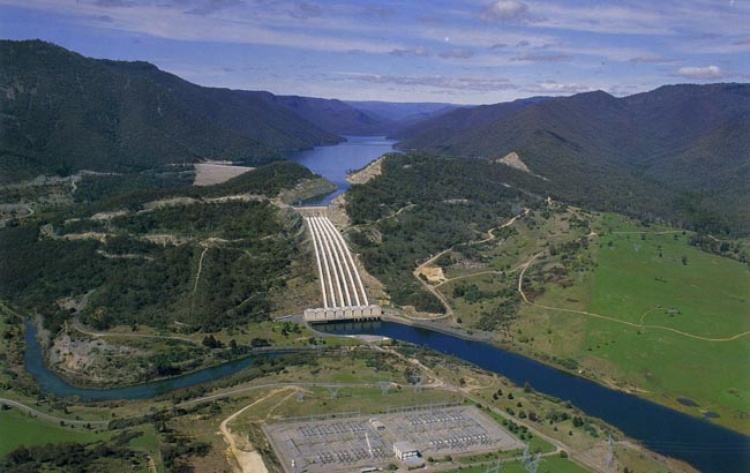
Completed in 1974 after a 25 year construction process, the Scheme consists of sixteen major dams, seven power stations, a pumping station, 145 kilometres of interweaving tunnels and 80 kilometres of aqueducts spanning across 4600 square kilometres.
The Scheme has been recognised as one of the greatest achievements of civil engineering in the world and a symbol of Australia’s multicultural identity.
Originally constructed to divert flowing water to irrigate farms and provide energy to homes and businesses, the Scheme still supplies over 30 per cent of total renewable energy to the nation’s electricity grid.
Over 100,000 people from around 30 different nationalities flocked to the Snowy Mountains in NSW to work on the Scheme, and around three-quarters of those were migrants who had moved to Australia after World War II.
The construction of the Scheme was undergone by Australia’s most prominent engineering company, Transfield (now Broadspectrum).
Renowned for the construction of other civic wonders, including the $700,000 Sydney Harbour Tunnel, Transfield was co-founded in 1956 by Italian migrants Franco Belgiorno-Nettis and Carlo Salteri.
Belgiorno-Nettis, who passed away in 2006 aged 91, was born in Cassano delle Murge (Bari) in 1915.
In 1938, Belgiorno-Nettis became deputy head of the Italian railway company, Ferrovie dello Stato at Trebisacce.
Encouraged by his father, Franco followed in the footsteps of his younger brother and entered the Italian Military Academy where he studied engineering.
Five years later, World War II broke out and Belgiorno-Nettis served the Italian Army in North Africa, where he was captured by British forces and sent to a POW camp in India for five years.
It was during that time that Franco learnt English, enhanced his knowledge of engineering and developed a passion for art.
When the war ended, Belgiorno-Nettis returned to Italy and began working for the Società Anonima di Elettrificazione, a multinational engineering company based in Milan.
The company sent Franco to Australia to help build our first ever steel power transition line, and once the work was completed, he remained in Sydney.
In 1965, Belgiorno-Nettis co-founded Transfield with Carlo Salteri, which took off with great success to become a multinational and multicultural company with employees from around 60 nationalities.
In 1966, the two co-founders separated and the Belgiorno-Nettis family continued operating Transfield, while Salteri went on to produce military equipment.
An avid supporter of the arts, Belgiorno-Nettis established international art festival, the Bienalle of Sydney in 1973, with the support of the federal government and other public entities.
Today, ten years after his passing, Belgiorno-Nettis will officially become recognised for his contribution to Australian infrastructure alongside fellow individuals who helped establish the Snowy Mountains Hydro-Electric Scheme.