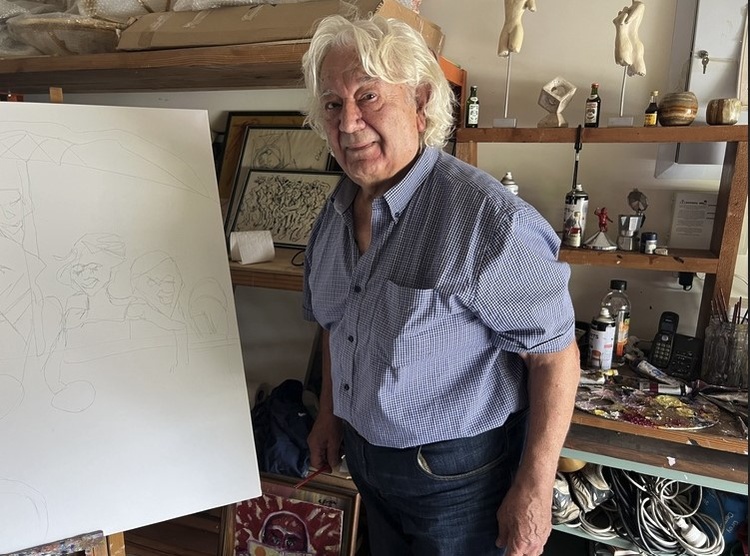
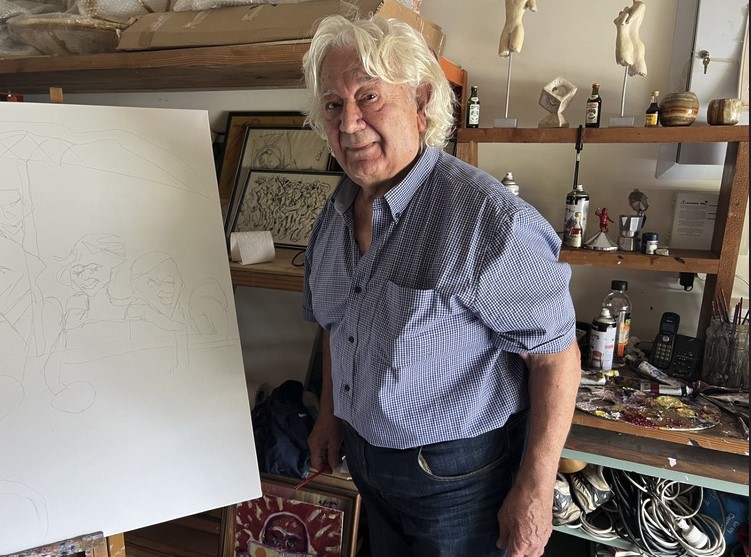
As he shows me hundreds of works, drawings and sketches created over the last seventy years, he lets himself be guided by the nostalgia of a distant past he’s never forgotten, of old emotions still in his soul and on the canvas.
Originally from Rome, Rosa grew up in the Torpignattara neighbourhood, four kilometres from Termini Station. He remembers those days with a warm and welcoming smile because he was “young and free, and there’s nothing more beautiful in the world”.
Influenced by the wonders of the Eternal City, where on every corner thrives the theatre of life, he embraced art as a child after being involved in a tragic accident that took his father’s life.
Following the footsteps of his brother Antonio, a classically trained painter, he began to express himself through colours and shades.
At eighteen, Rosa experienced his first exhibition with the painting The end of a pair of shoes.
“I was somehow trying to process what had happened to me as a child and my father’s absence,” he explains, “And maybe, I was searching for myself.
“Even a pair of shoes eventually reaches the end of its ‘life’. Everything ends.”
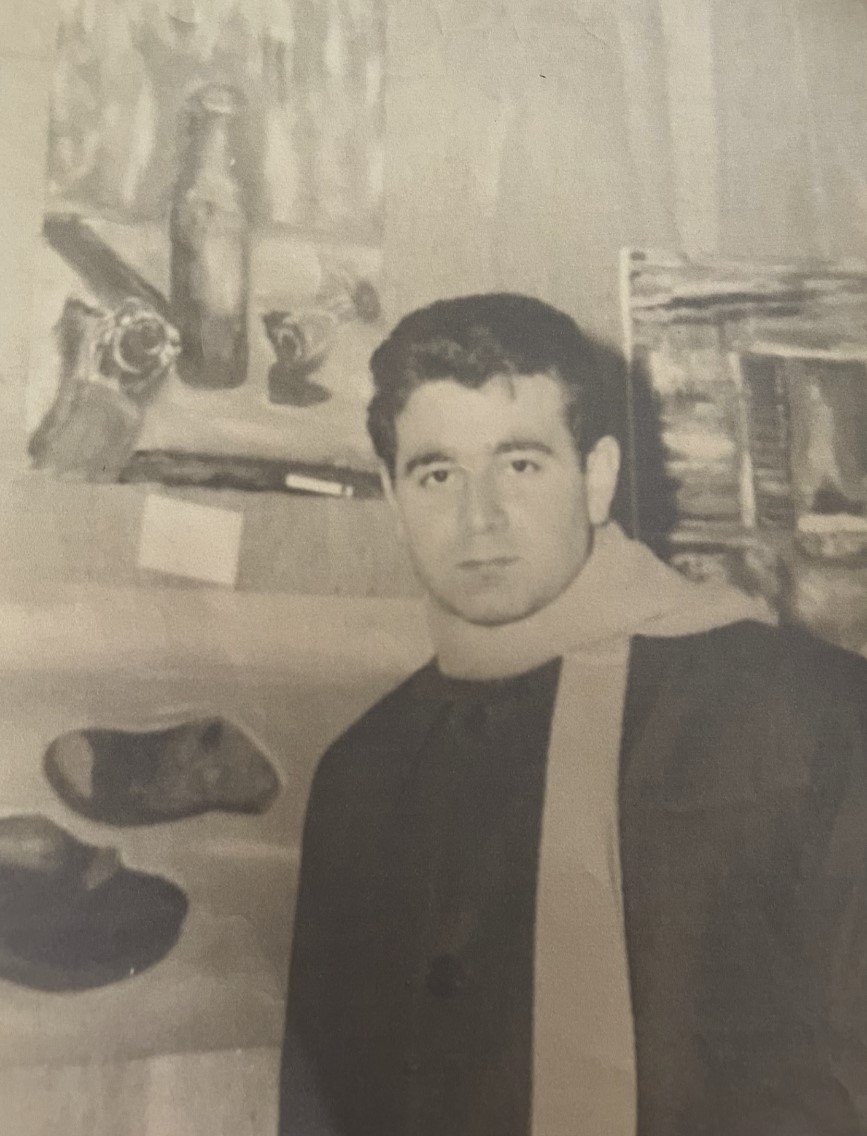
Rosa in front of The end of a pair of shoes in Rome in 1963
Despite his impressive collection, which also includes a wonderful 1967 bronze sculpture of the Supreme Poet, Dante Alighieri, and a portrait of the Good Pope that won third prize in an old Vatican art competition, Rosa was forced “to diversify his profession”.
“Even during military service in Santa Maria Capua Vetere, in Campania, I made hundreds and hundreds of portraits of my companions, just for the simple pleasure of art,” he recounts.
“But to ‘survive’, upon returning to Rome, I started working as a salesman of electric chairs throughout Italy.”
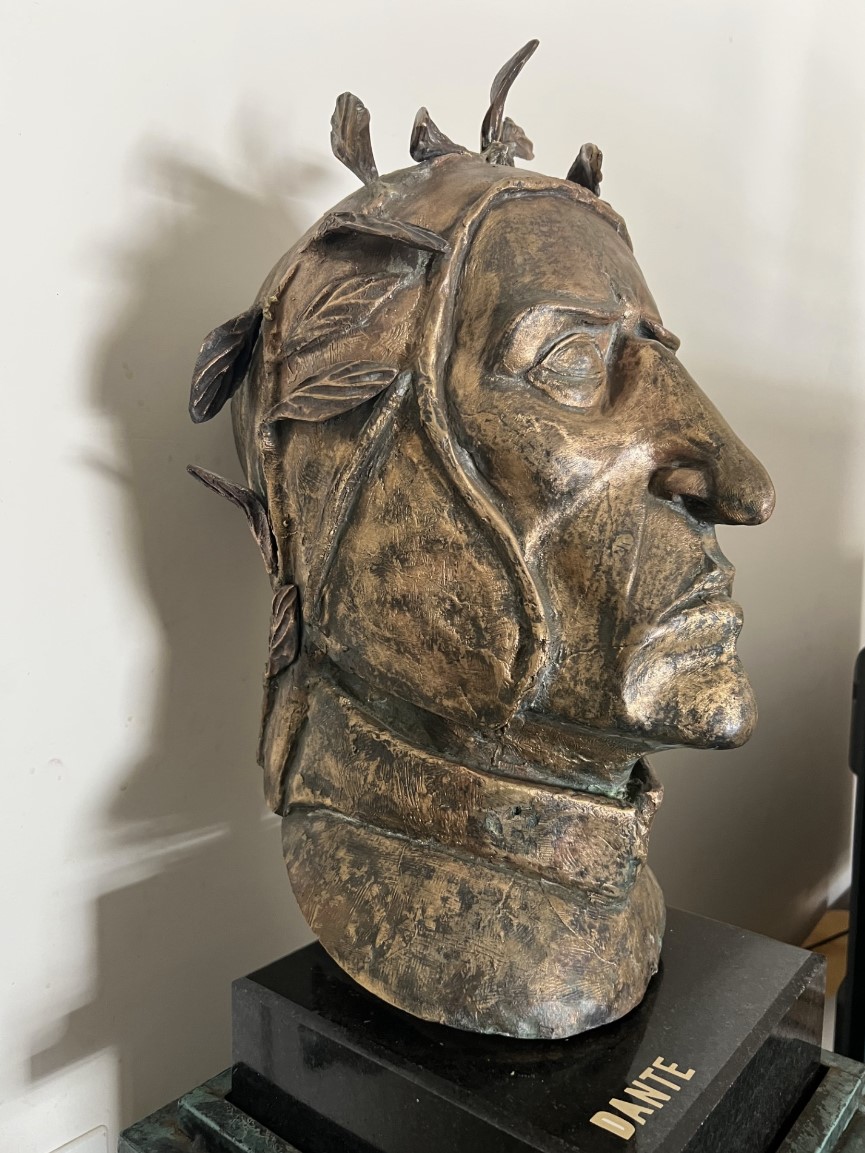
Rosa’s sculpture of Dante Alighieri
In 1969, Rosa was struck by an ad at Termini Station urging Italians to move to Australia with 17,500 lire and a residence requirement of at least two years.
“I had a distant cousin Down Under and so I decided to leave,” he explains. “I spent 700,000 lire from my severance pay to completely renew my wardrobe and arrived in Melbourne with only 17 dollars in my pocket.”
But the new continent was “wild”, and the job opportunities were plentiful, albeit tough. Rosa immediately found himself thrown into a dark cigarette factory.
“It was a terrible job,” he recalls, “There were no masks at the time and you absorbed the debilitating stench while the heat burned your face; you felt sick.”
Then, four months at Carlton & United Breweries and a brief experience in Sydney at the Mamma Maria restaurant “making pepperoni pizzas for Americans arriving from Vietnam”.
His only intention, however, was to return to Rome; there was nothing that convinced him to continue his life in Australia. To pay for the ticket, Rosa worked for months in a mine in the Northern Territory checking bauxite.
“Everything was included; I’d get about a hundred dollars a week and had food and lodging, but the climate killed you, so I returned to Melbourne,” he explains.
However, his destiny was already sealed and, one evening at the San Remo Ballroom, he met the love of his life, a young woman originally from Giovinazzo, in Puglia.
“Filomena Fiorentino,” he says, deeply moved, “The moment I saw her, I was paralysed. She was beautiful.
“I asked her to dance, and I remember very clearly the moment I held her in my arms; she had the scent and freshness of a flower. After the evening, I walked all the way to Elgin Street, sat on a step and stared into space.
“I’d been struck.”
And from then on, he never left her, and the reciprocated love culminated in marriage in 1974 with an intimate ceremony in the family garden and a menu prepared by the chef of the then-famous Café Florentino.
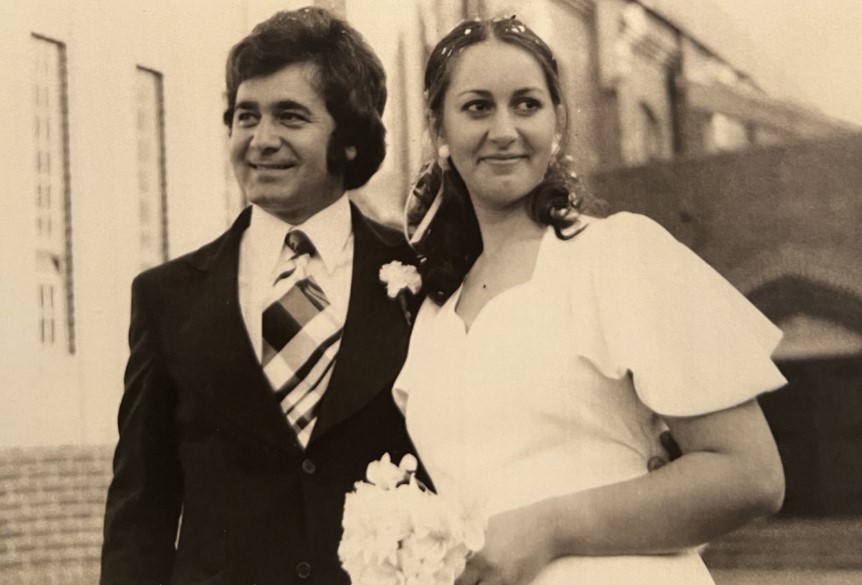
The wedding of Aldo Rosa and Filomena Fiorentino in 1974
Now settled in Melbourne, Rosa turned a collaboration with his cousin’s company, which sold lamps and chandeliers, into a cutting-edge company with products imported from Italy.
ItalStyle Lighting set trends in the Australian lighting design world for decades, first from its small office in North Melbourne and then with a showroom and factory in Brunswick.
“I was a taxi driver at the time, so I carried the chandeliers in the car trunk and tried to sell them around,” he recounts, “Then, suddenly, I found myself distributing my products in the country’s biggest department stores.
“To convince them to sell my stuff in their stores, I bought about seventy empty boxes and stacked them in the factory as if to show the exceptional quantity of samples in stock.
“We Romans have an extra edge!”
The company grew rapidly over the following years, acquiring around fifteen employees. As his wife helped with every aspect of the business, Rosa would continually travel to Europe and bring the era’s latest items back to Melbourne.
A transition to the commercial sector allowed him to “secure solid contracts” before selling the company three years ago to be by his wife’s side during every moment of her long and painful battle with cancer, which lasted about twenty-three years.
“She left me last year, but she’s still here with me,” he says emotionally, “She always gave me strength and continues to do so today.”
In 2016, forty years after the last time he held a brush, he decided to gift his grandchildren with special portraits. Since then, he hasn’t stopped.
Today, his large canvases take inspiration from current events and his feelings. Exhibiting at The Victorian Artists’ Society in East Melbourne with his first solo show in Melbourne after the long break, Rosa hopes that his paintings can once again make people reflect.
Recently, with a bronze sculpture dedicated to U.S. President John Fitzgerald Kennedy, he won second prize awarded by the same Victorian art society.
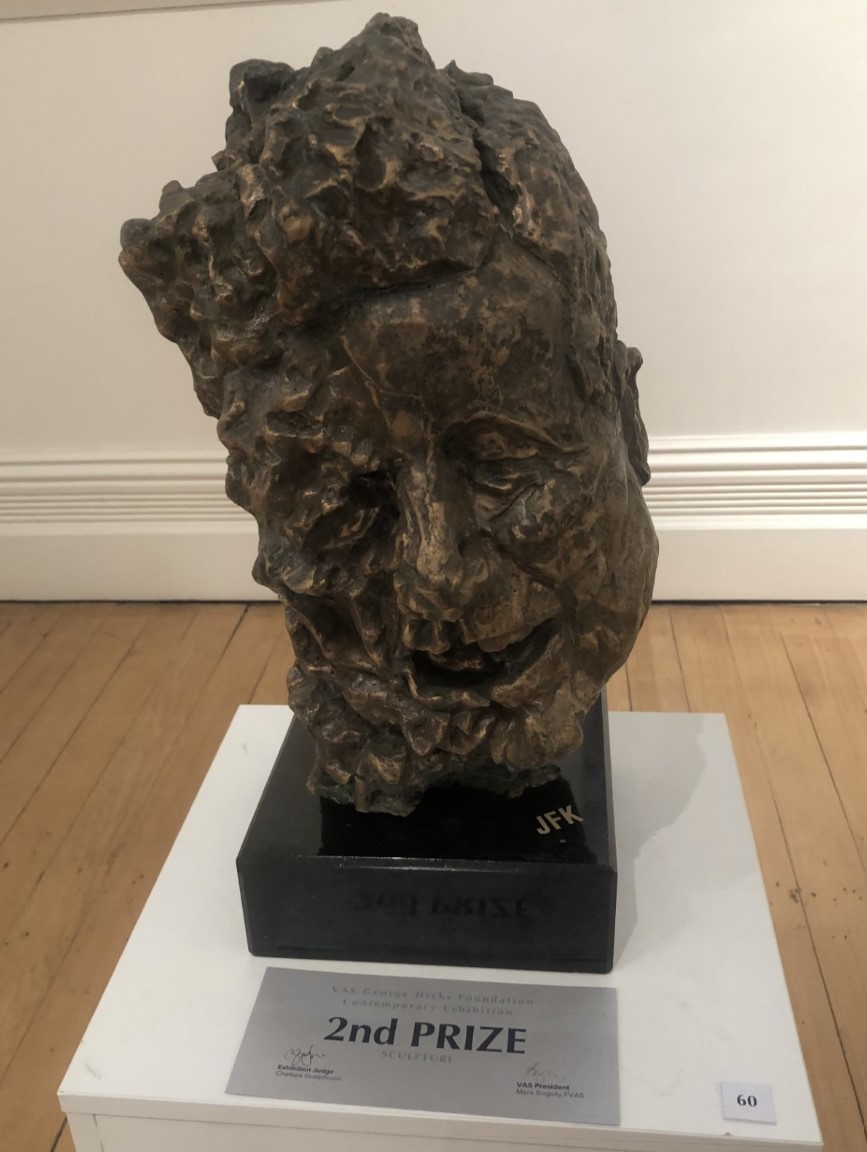
Rosa’s sculpture of JFK at The Victorian Artists’ Society
“An American woman in Rome gave me a book about Kennedy in 1969,” he explains.
“Shortly after, I had surgery for appendicitis, and from the hospital bed I decided to read it. I was so fascinated that in 1969 I turned his face into a sculpture.”
One of his latest pieces is called New Generation, inspired by young people often lost in a phone screen. “It cost me a fine of 802 dollars because, inspired by some passersby on Sydney Road, I suddenly parked, took off my seatbelt and took a photo [of them buried in their phone],” he recounts
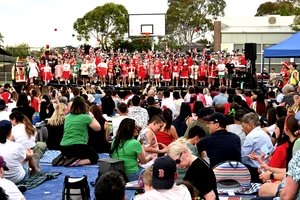
Meanwhile, Picnic at the Melbourne Cup is now for sale at the Victorian Artists’ Society for ten thousand dollars.
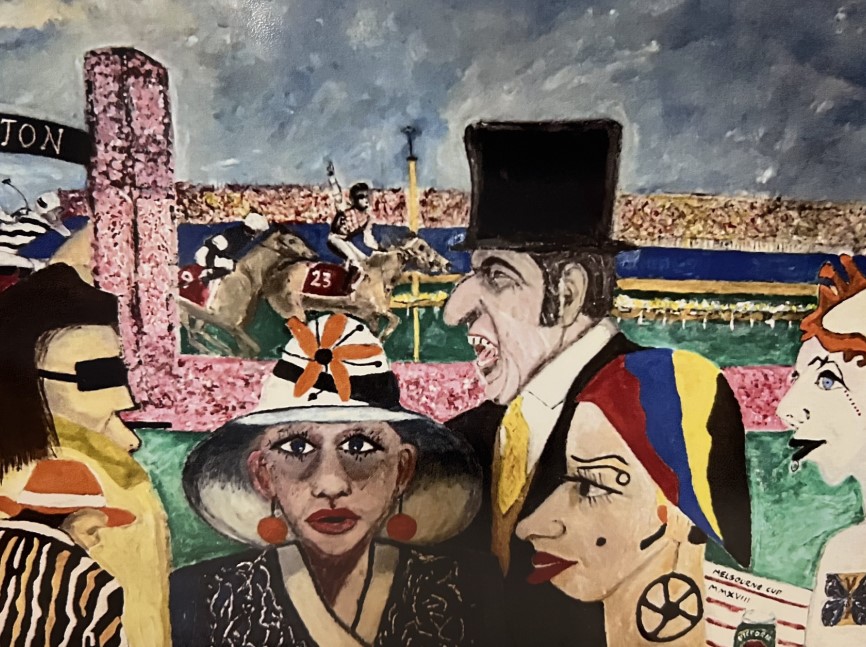
Picnic at the Melbourne Cup is now for sale, with proceeds going towards cancer research
“I’ll donate it to cancer research,” he adds emotionally. “I went back to making art in a completely spontaneous way. My painting speaks to me, and I’d like it to speak to those who admire it.
“I often get up at two in the morning to paint,” he reveals, “If I don’t like what I’m creating, I step away, smoke a cigar, go back to the canvas and observe it. I start again and paint at my own pace.”