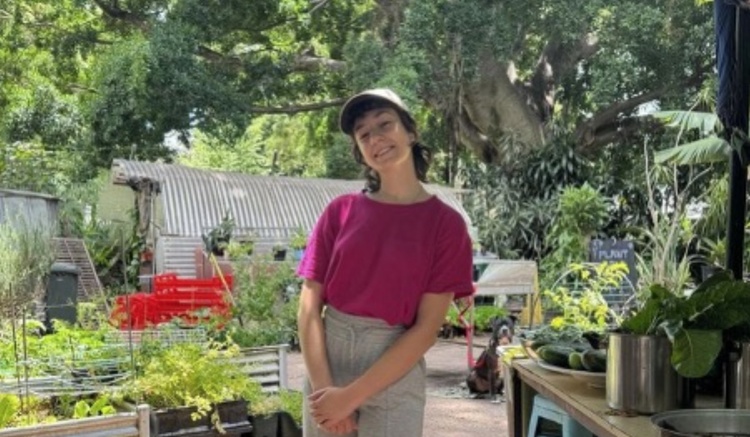
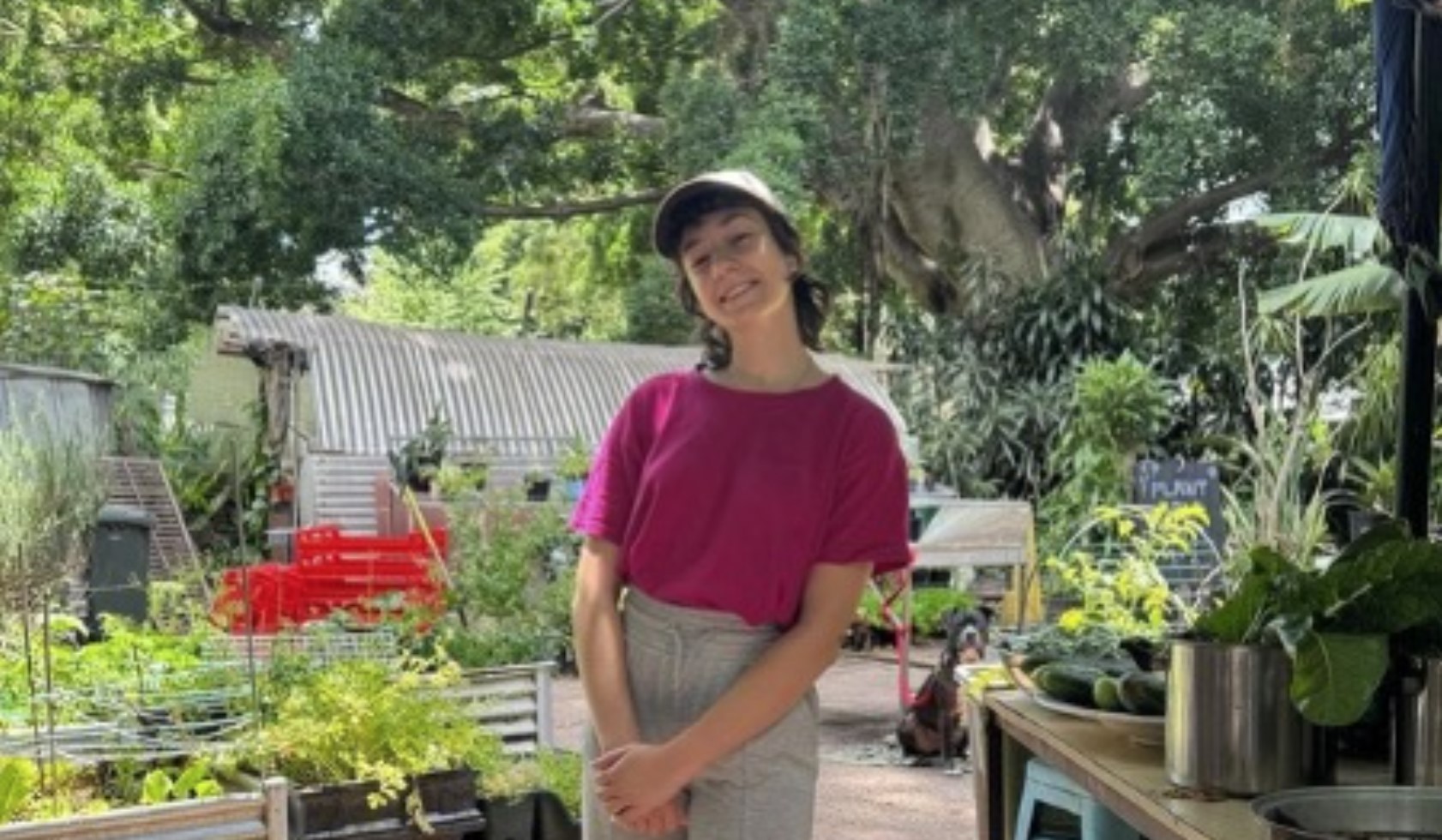
Young, yet eager to contribute to the Inner West community, Zatti is the new treasurer of the Angel Street Permaculture Food Forest, the community garden in Newtown.
Originally from Orzivecchi, in the province of Brescia, she took on the role after several months of volunteering with the project.
Her responsibilities are primarily administrative: managing memberships, bookkeeping and keeping track of income and expenses.
“I’m not doing it for any reason other than to lend a hand,” explains Zatti, who works professionally as an Events, Media and Communications Project Manager at the Italian Chamber of Commerce and Industry in Australia.
Her interest in gardening has deep family roots. “My maternal grandfather worked in corn fields,” she shares.
“My paternal grandfather had a vegetable garden, and I remember him picking strawberries for me. He also made wine at home, and my cousins and I loved crushing the grapes.
“Being in contact with nature relaxes me, it makes me feel good to take care of the environment.
“We live in a society that often forces us to always be rushing, but being in contact with the earth brings you back to the present, allowing you to be fully focused on what you’re doing.
“Even the fact that you have to respect nature’s timing—there are no deadlines or ways to speed things up, you simply have to wait.”
The Angel Street Permaculture Food Forest covers approximately 3000 square metres at the corner of Angel Street and Harold Street.
The garden features native trees, mature fruit trees and shared vegetable plots with seasonal produce. Until a few years ago, it was a neglected urban space that the local community decided to reclaim, transforming it into a productive garden.
The project follows permaculture principles and aims for self-sufficiency, minimising the need for external input.
“People care, earth care, fair share—the goal is to care for the land in the most sustainable way possible,” explains Zatti.
“Everything we use in terms of fertiliser or compost is produced by us, and we always reuse everything.”
Urban community gardens like Angel Street play a fundamental role for locals. In addition to providing access to fresh, healthy food, these green spaces create social connections in often fragmented communities, reducing isolation and encouraging intercultural exchange.
From an environmental perspective, they transform neglected urban areas into spaces that improve air quality, increase biodiversity and help mitigate the urban heat island effect.
During the pandemic, these gardens proved even more valuable as safe outdoor spaces where people could socialise, reduce stress and maintain a connection with nature.
In an increasingly dense urban space like Sydney, projects such as Angel Street demonstrate that it’s possible to create oases of sustainability and community, even in the heart of the city.
Volunteers meet every Sunday from 11 a.m. to 1 p.m. to work in the garden, which coincides with its public opening hours.
The garden welcomes volunteers of all levels of experience. For information, please email angelstreetpg@gmail.com.