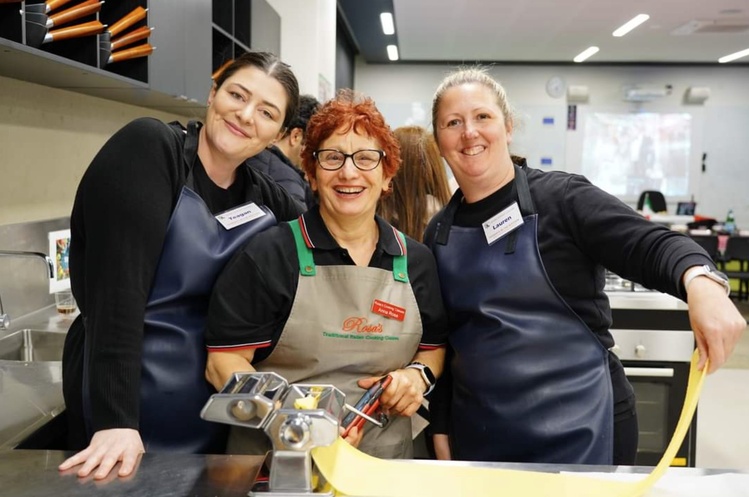
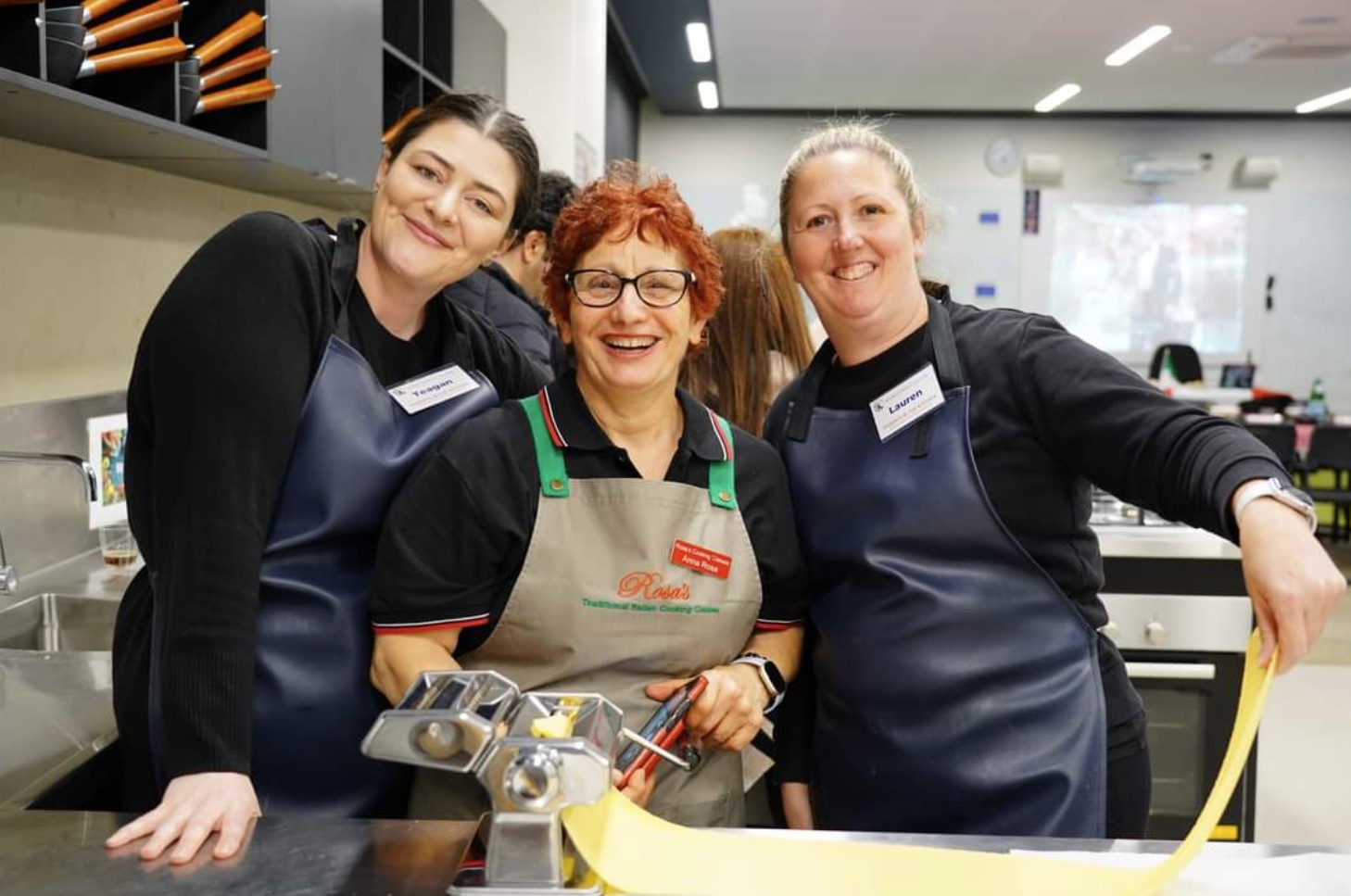
She arrived in Australia at just 15 with her family, but never lost touch with her Italian roots. Her love for food was passed down through generations, from her grandmother to her mother and now to her.
“Flour, water and eggs” are the three simple ingredients that, according to Pascuzzo, form the foundation of Italian cooking. She proudly calls it “the best cuisine in the world”.
Her culinary journey began in childhood, kneading dough beside her grandmother at the age of nine. It wasn’t just about learning to cook; it was about experiencing the warmth and togetherness that food can bring to a family.
“As kids in Italy, we all had to help out [with dinner]. We had a big family, and everyone had their role. That’s how I started inventing recipes,” she recalled. “Sometimes they worked, sometimes they didn’t. But cooking, like life, is about experimenting. And if it fails, you try again, with patience.”
In 2019, an idea started to take shape. Whenever she posted photos of her home-cooked meals on social media, the reactions came pouring in.
“What do you put in your sauce?” one Facebook user asked. “Can we buy these delicious dishes?” another inquired.
With many doubts and no clear roadmap, Pascuzzo took a leap into entrepreneurship. “I had no idea where to start, apart from the ingredients,” she admitted, “The permits, the rules, the concept of opening a cooking school, it was all new to me.”
Today, she has carved out a place for herself in the heart of Melbourne, running a business that includes a cooking school and catering services.
Each weekend, her classes draw people of all backgrounds: Greeks, Chinese, Italians, Italian-Australians and Australians from across the country. “It’s beautiful to see how everyone, no matter where they’re from, is drawn to the food of home, the kind you can’t find in restaurants,” she declared with pride.
For many of her students, learning to cook is more than a hobby; it’s a way to reconnect with family. “One day, after class, a woman looked at me with tears in her eyes and said the pizza we made tasted just like her mother’s,” Pascuzzo shared, “Every year, on the anniversary of her mother’s passing, she makes that same pizza to remember her. For me, that’s deeply moving.”
This sense of rediscovery and reconnection is at the heart of her mission. It’s a testament to how food can bridge generations and cultures.
“In the kitchen, you need to be like a little chemist: fresh ingredients, simple components, and then you start experimenting. But everything must begin with simplicity.”
Her work extends beyond the classroom. Over time, she’s begun cooking for people who can no longer prepare meals for themselves, especially the elderly who live alone.
“I cook for seniors now too,” she explained. “I make meals just like their mothers used to, packaging them so they can enjoy them at home. No preservatives, just fresh, natural ingredients, like in the old days.”
It’s a gesture of love that goes far beyond the kitchen, offering comfort and dignity to those who need it most.
Amid her many endeavours, one dish remains closest to her heart: cavatelli, the pasta that symbolises her bond with her grandmother. “When I make cavatelli, it’s like stepping back in time,” Pascuzzo confided, “I remember sitting beside her, watching her work. Every time I roll that dough, I feel like she’s right there with me.” It’s as if the food tells her stories of family and culture.
For Pascuzzo, the beauty of a dish lies in its meaning: the unity of family, the strength of identity and the respect for tradition. It’s in the laughter of her eight grandchildren, in every class she teaches, in every sauce she stirs. Each meal is an invitation to slow down and rediscover a world of flavours and feelings that too often gets lost in the rush of everyday life.