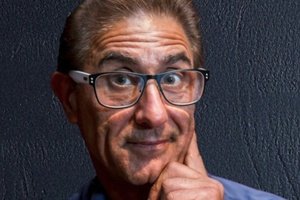
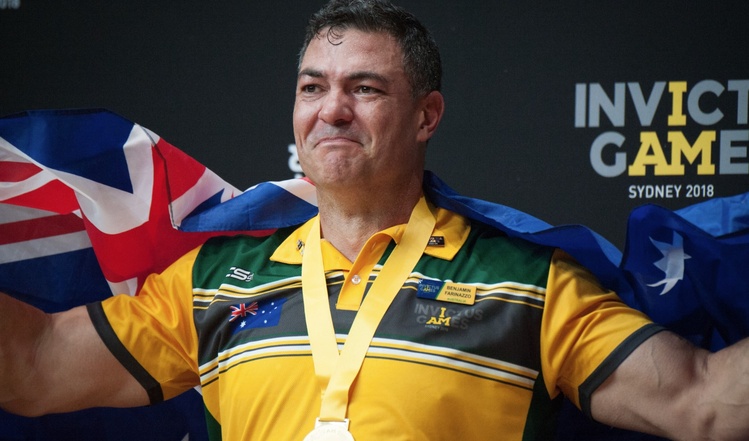
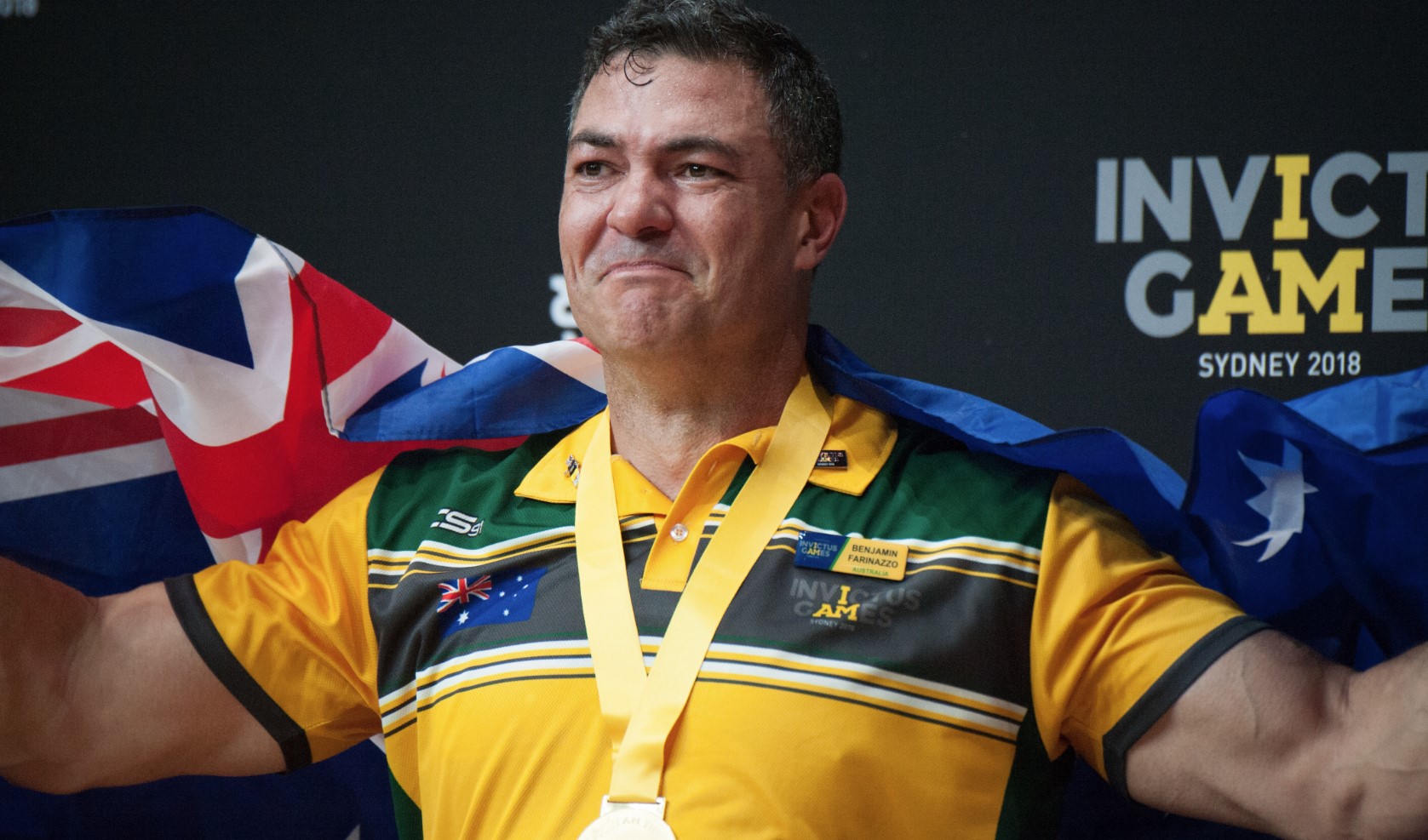
Born in Brisbane to an Italian father and a Kamilaroi Aboriginal mother, Farinazzo embodies Australia’s many identities. “Like many Australians, I come from a mixed cultural background,” he says.
“We’re a melting pot and we need to respect everyone who has come here and their journeys.”
On one hand, he strongly identifies with his Indigenous heritage and its deep connection to Country. On the other, he proudly carries the legacy of his grandparents, who arrived from Mantova after World War II.
“They worked themselves to the bone to build a new life in this country,” he says, visibly moved as he speaks about them.
Growing up in a community where Italians, Greeks, Vietnamese, Chinese and Aboriginal people lived side by side, Farinazzo learned early the value of diversity. “Multiculturalism isn’t a threat to Australian identity,” he says firmly.
“It’s one of our greatest expressions. If people show respect and Australian values like mateship and fairness—that unites us while still respecting everyone’s background.”
Farinazzo’s military service, consisting of a deployment to East Timor in 1999, left a lasting mark. “Living in Australia, I realise I’m in a very privileged country,” he reflects.
“But when you arrive somewhere and every house is burnt down, people have been tortured and are starving, you understand the rest of the world isn’t like this beautiful nation.”
The memories still move him. “When someone you don’t know runs up to you, hugs you crying and says, ‘Thank you for saving us’… seeing our soldiers do everything they could to help rebuild families, homes, the country—it’s something I’ll never forget.”
But the trauma had an impact he didn’t immediately understand. “When I came back to Australia, I found myself a different person from who I was before I left,” he shares.
In 2015, everything came to a head. Farinazzo spent a full year in hospital battling Post Traumatic Stress Disorder (PTSD)—a condition that can develop after traumatic events such as war or serious accidents, causing flashbacks, nightmares and severe anxiety.
As if that wasn’t enough, Farinazzo fell off his mountain bike on Australia Day, breaking his neck and back in five places, narrowly surviving.
“All I could think about was hugging my family again, seeing the blue Australian sky, touching the green grass,” he reveals.
Surrounded by doctors, nurses and a supportive community, Farinazzo found the strength to start over: “It made me damn proud to be Australian—grateful to live somewhere people help those in need.”
His rehabilitation took three years, and in 2018 Farinazzo was selected to represent Australia at the Invictus Games in Sydney, where he won two gold medals. But for veteran, the Games meant far more than medals.
“I met people with stories like mine, who through persistence, the love of their families and medical care had picked themselves up again,” he recalls.
The Invictus Games gave veterans a chance to share their experiences publicly, but Farinazzo is clear that these struggles exist everywhere.
“There are people across the country battling mental health issues and disability. I support veterans, but we need to shine a light on other Australians doing it tough too,” he says.
Today, almost 50 per cent of Australians will experience a mental health issue in their lifetime.
“If it’s not me, it’s you,” Farinazzo states bluntly. Twenty-five years ago, mental health was barely discussed in Australia. Now, services like Lifeline and Beyond Blue provide support—but he believes change begins with awareness.
“Just be aware that the person next to you might be going through a critical time,” he says.
“They might look fine but be struggling in silence. I think kindness and care are enough.”
His advice is to be willing to listen and to show up: “In Australia, we call it mateship. If someone says, ‘I’m not okay’, don’t say ‘You’ll be fine.’ Ask instead, ‘What can I do?’ Take that step of care and kindness.”
As someone who carries both Indigenous and migrant heritage, Farinazzo believes he has a unique perspective. “When I was a kid, being Aboriginal meant being looked down on,” he recalls. “That story is changing, and we do that by learning and honouring our past.”
He also sees a powerful parallel between communities. “Italians know exactly what it feels like,” he says emphatically.
“They suffered prejudice too. It took time and hard work to be accepted.” That shared empathy, Farinazzo argues, can become a starting point.
“Australia has welcomed and valued the Italian community over the past 50 years. Italians can now use that experience—that journey of integration—to help the Aboriginal community gain the same recognition and respect.”
The biggest obstacle, he says, is ignorance: “It’s ignorance that blocks respect and kindness.”
“To overcome it,” he continues, “we need open minds and open hearts—learning about other cultures, our Indigenous history and our struggles. We need to move beyond prejudice and include everyone in Australia.”
This year, Farinazzo was an Australia Day Ambassador. In 2015, the day marked one of the darkest moments of his life—yet today he stands in the role perhaps because of that trauma, not despite it.
“When they appointed me as an Ambassador, I thought it was a wonderful opportunity to say thank you to people. Just thank you. I wouldn’t be here without you,” he says.
His approach rests on three pillars: reflect, respect, celebrate. “I reflect on ancient history, the Indigenous community. I reflect on multicultural history, on what shaped me and made this country what it is,” he says.
Respect, he adds, goes to veterans, police, paramedics, nurses, volunteers—“people who work every day to make this country better”.
And celebration: “Everyone has their own story, and Australia’s story is still unfolding. By bringing our stories together, we build a better country and a better future.”
Meanwhile, Farinazzo’s mother and sister march against Australia Day—yet they are proud of him. “Everyone has the right to their opinion. That’s exactly what makes us Australian.”
Asked if he has a message for the Italo-Australian community, Farinazzo pauses and smiles. “My grandmother would be proud if she knew I was doing this interview,” he shares.