His family history stretches across Sicily, Lazio, Germany, Australia and back again to Sicily, closing circles that once seemed destined to remain open forever.
Both of Damien’s parents were born in Italy. His mother in Sicily, in the province of Messina; his father in Lazio, in Frosinone—though his paternal roots trace back once more to Sicily, in the province of Enna.
The family story carries the flavour of oral tradition: a grandfather who, during a military parade, spots a woman in the crowd, falls in love and, just a week later. An impulsive decision inaugurates a family line marked by movement and bold turns.
Like many Italian migrants in the post-war years, Damien’s family left Italy in pursuit of a better future. The journey to Australia was by ship, and arrival was anything but easy.
Settlement was hard, and English remained foreign for decades. “My grandfather has lived in Australia for over fifty years without ever learning the language,” Damien shares.
Life revolved around the Italian community: neighbourhoods, manual labour, social clubs. Among them, a restaurant in Darlinghurst called No Names, a meeting point for migrants at a time when Italian cuisine was not yet woven into Australia’s cultural fabric.
When his parents arrived in Australia, they were very young—his father 14, his mother still a child. Their overriding desire was full integration. They did not deny their origins, but neither did they display them. They wanted to become Australian.
This aspiration was reflected in every choice, such as when Damien and his sister were given English names. Only years later, when Italian identity became culturally desirable, would the children from his father’s second marriage receive Italian names.
The shift speaks volumes about changing attitudes towards migration—from something to conceal to something to claim with pride.
For Damien, growing up Italian-Australian in the 1980s and 1990s meant something different again: football, fashion and Italian culture became markers of prestige. Identity was no longer a burden but an asset.
He makes a perceptive observation: migrant families tend to freeze the culture of their homeland at the moment they leave. “My childhood home was essentially a Sicilian house from the 1950s,” he says. A cultural model suspended in time, while Italy itself continued to change.
When he first visited Italy at 17, he felt an immediate familiarity. He did not feel like a foreigner. The gestures, the tone of voice, the relationship with food and the way people gathered all mirrored what he had known at home.
Yet he also discovered that contemporary Italy was not the Italy his parents had left behind. Divorce, tattoos, profound social shifts. The real country had moved on; family memory had not.
One of the most intense moments of his life came in his early twenties. After his maternal grandmother’s death, his mother discovered that her biological father—whom she had always believed dead—was alive in Sicily. Damien decided to travel to find him.
He arrived in Spadafora, in the province of Messina, armed with little more than a name. He learned the man was a barber. He walked into the shop, sat down for a shave, and then revealed who he was.
The grandfather opened a drawer and pulled out a locket containing a photograph of Damien’s mother as a child—the last image he had of her.
The reunion was emotional and theatrical, as such Italian stories often are. The renewed relationship between mother and father would not endure, marked by wounds too deep to heal. But Damien built a lasting bond with his grandfather, returning to Sicily every year.
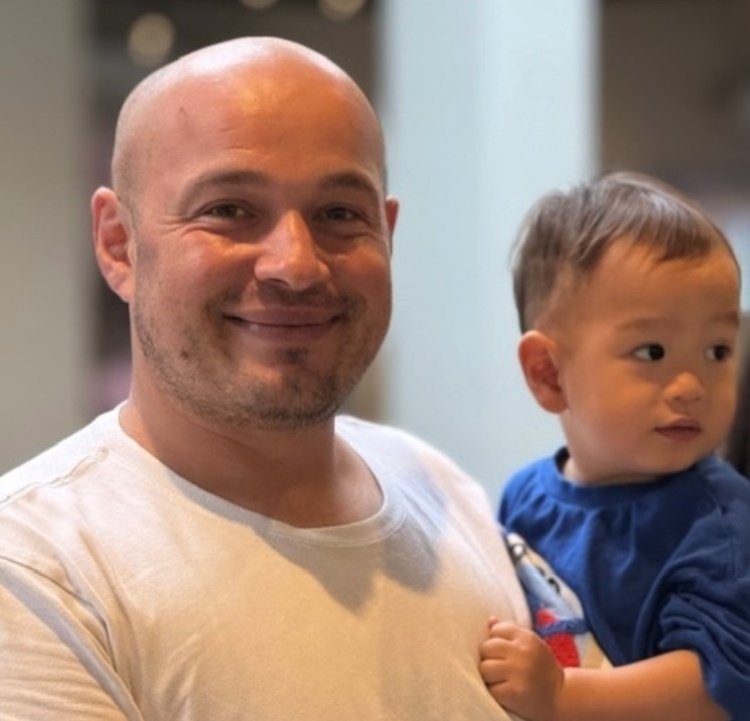
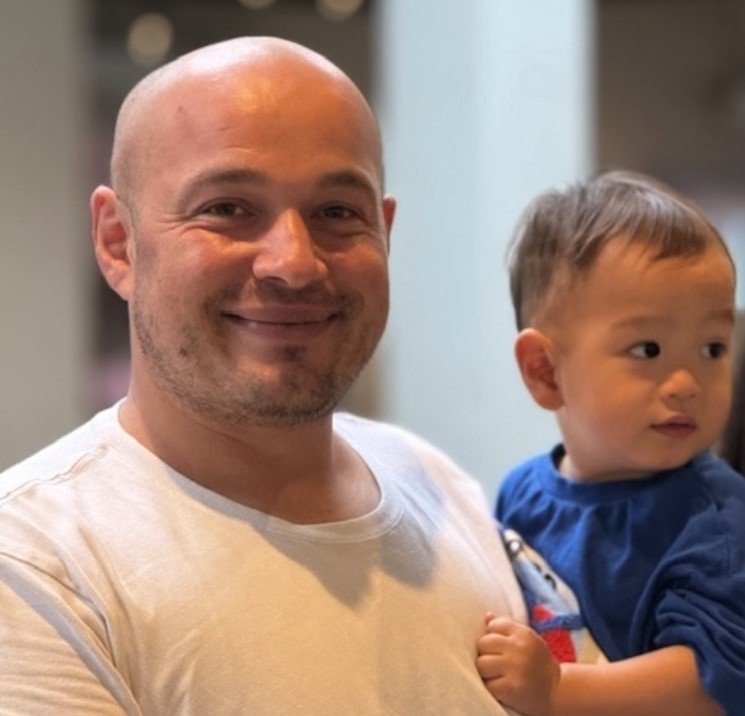
Today, the family story continues to expand in unexpected directions. Damien’s son is half Chinese and half Italian. He carries the Messina surname—the only male descendant to do so.
For the great-grandfather, raised in rural Sicily within a culturally homogeneous world, this combination is surprising, almost ironic. Not unsettling, but emblematic of how much the world can change within a single lifetime.
Professionally, Damien works in technology project management, often in international contexts with teams spread across continents, bringing diverse perspectives.
Multiculturalism, for him, is not an abstract concept but daily reality. Yet he also observes its tensions: globalisation, economic competition, fragmented urban identities. “Sydney is made up of so many communities that it’s hard to define a single, shared identity,” he notes.
The Messina story moves through assimilation, loss, rediscovery, cultural transformation and generational blending.
Unique in its details, it nonetheless reflects a broader truth: migrant identities do not simply shift geographically. They change shape, freeze in time, reinvent themselves and intertwine with others.
And sometimes they return to their starting point—like a young man walking into a barber’s shop in Sicily and discovering that the past had never truly disappeared.