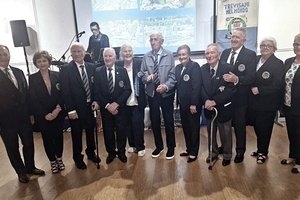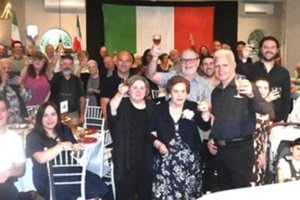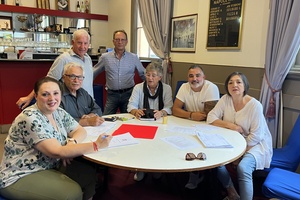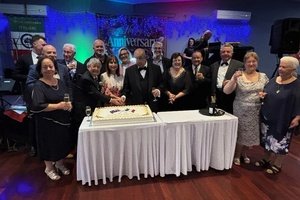
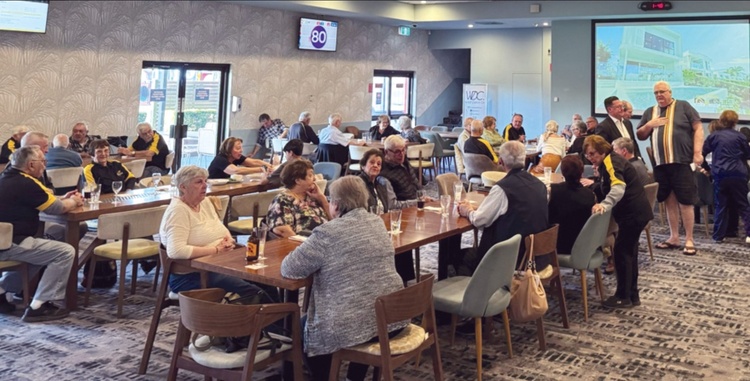
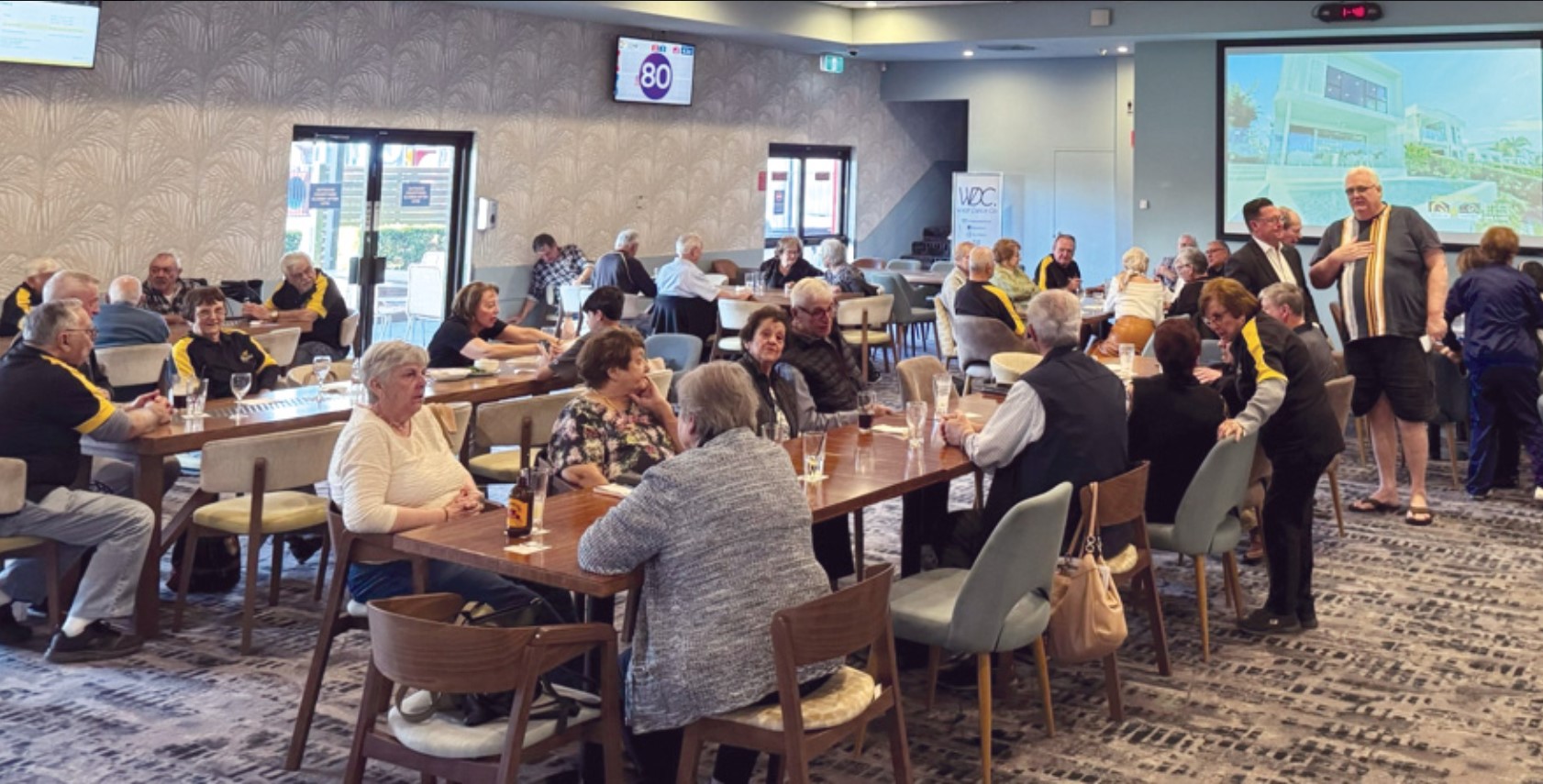
In this spirit, the annual Bocce BBQ Day was held at the Triglav Club, a place that for years has welcomed the local Italian community after the closure of Club Italia in Lansvale.
At first glance, it just looks like a lunch and a few bocce matches. But in reality it’s much more—it’s a living fragment of Italian history.
The event was attended by 67 people, including members of Club Italia, members of the Social Bocce Group, the Abruzzo Bocce group and institutional representatives.
The large and warm presence was proof that this tradition not only endures but, continues to thrive.
When president Ben Sonego took the microphone to officially open the event, he didn’t limit himself to formal greetings, but proudly reminded everyone why they were there: “Today we celebrate the game of bocce, our cultural sport.”
Not a hobby, not a simple pastime—an inheritance.
In his speech, Sonego retraced the history of bocce at Club Italia: from 1966, when the first match was played, to 1972, with the first national Fogolars of Australia tournament, and then to the arrival of the world championships in 1976, the same year in which Club Italia won first and second place at the New South Wales state championships.
In the 1980s, bocce lived its golden age. In 2017, Gino Cencigh, a central figure in this journey, was inducted into the Hall of Fame.
The Abruzzo Bocce group, led by Tommaso Floro, also carries with it a long history that intertwines with that of Club Italia, enlarging the sense of community.
Sonego then shifted his speech from past to present, and did so without mincing words. “Our activities help reduce social isolation. We want you out of the house, involved, part of something,” he said.
In this way, bocce goes from being a game to being a part of the community’s social infrastructure—an antidote to loneliness. A place one comes to for the sport and stays to feel seen.
Sonego finally thanked coordinators, volunteers, those who prepare the courts and all who arrive each week with the same enthusiasm as the first time, expressing his gratitude to Triglav for having given bocce a home after the closure of Club Italia.
He then closed with a sentence that travelled through the room like a gentle caress: “Even if we play here, you are members of Club Italia and we will continue to support you.”
His words expressed that home is not a building—home is people.
Bocce, a slow game of precision, becomes an act of poetic resistance: resisting isolation, invisibility and the passage of time.