Conceived as a strategic asset for post-war reconstruction, the camp was intended to be a “controllable pool of labour” to fill the gaps in Australia’s workforce. Yet, for many, it inevitably turned into an experience marked by long waiting, confusion and a profound sense of dislocation.
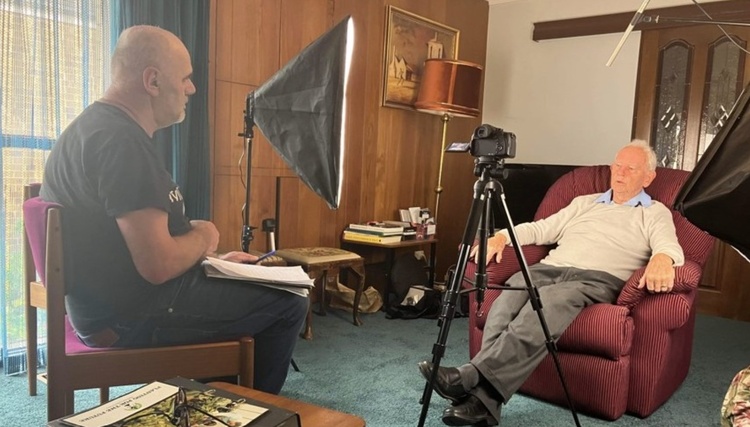
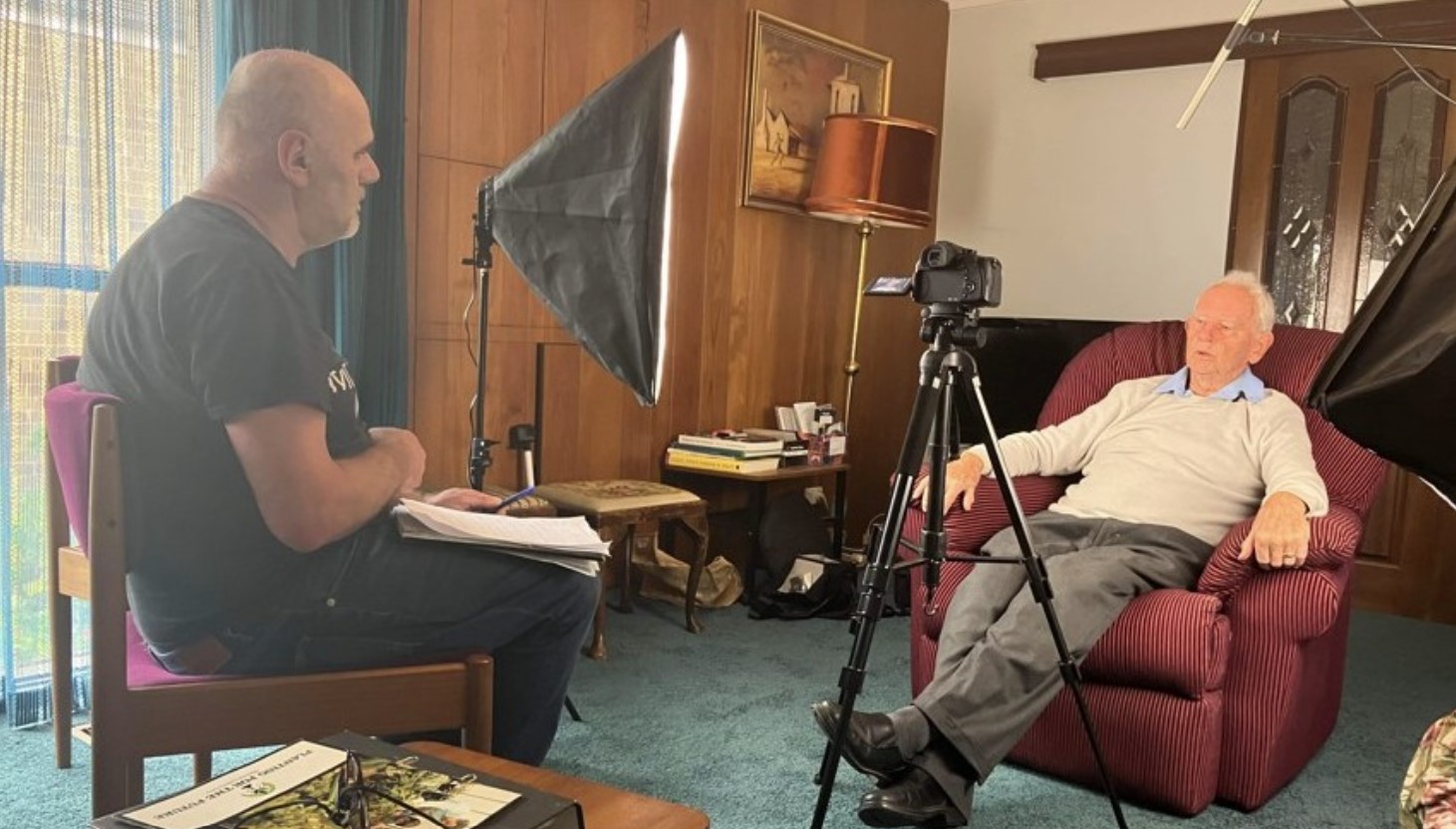
Capturing and bringing these memories back to life today is musician and sound engineer Simon Reich, who created Bonegilla Stories, a series of podcasts and short films that soon grew into a lifelong project. More recently, this work has culminated in the documentary Bonegilla: The Migrant’s Journey, a moving film celebrating the resilience and courage of the pioneers of Australian multiculturalism.
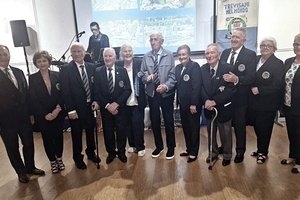
The film project, selected among the 30 finalists at the prestigious Melbourne Documentary Film Festival, focuses on 14 migrants who arrived in Australia after World War II, including two Italians, who recount their experiences.
From surviving the war to enduring the ocean voyage on dilapidated ships, the migrants share their first encounters with “strange” Australian customs, the deep challenges of integrating at Bonegilla and, ultimately, the building of a new life.
For Reich, the inspiration runs deep and personal; his father, of German origin, lived through the horrors of the war in Berlin as a child, just 50 metres from the bunker where Hitler took his own life. His father’s story was previously told in the award-winning series Up From the Rubble, sparking Reich’s determination to embark on this new journey of oral history.
“I want to promote tolerance and peace by telling the stories of those who passed through Bonegilla,” Reich explained. “The camp was a starting point for so many people, and despite the early hardships, many were able to bury the hatchet and say, ‘The war is over; let’s move on.’ Many chose to leave the years of war behind and look forward. And for me, as the son of a migrant, it’s a moral duty to preserve these memories.”
After its initial screenings at the Melbourne Museum Theatre in December 2023, Bonegilla: The Migrant’s Journey has also become a live performance, sparking significant interest within the Italian communities of both Victoria and New South Wales. It’s a testament to how these stories continue to resonate deeply in a country built on migration.
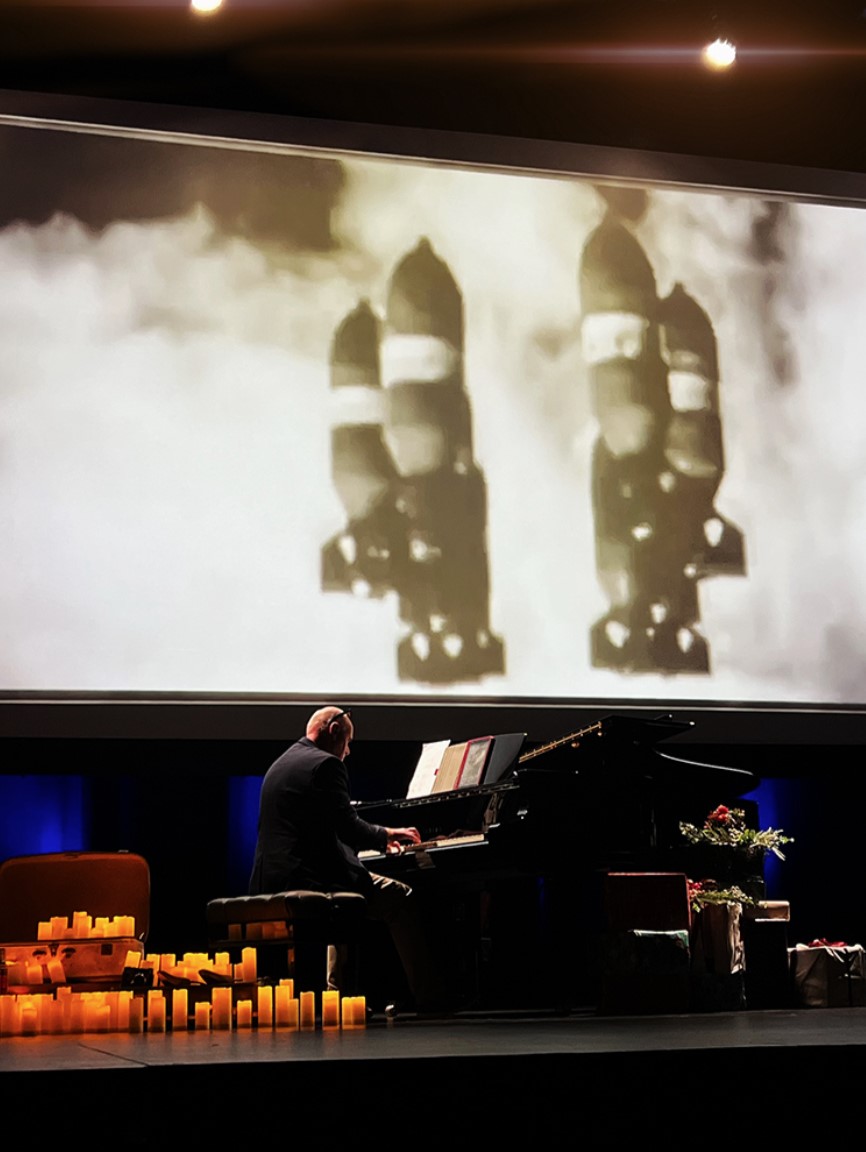
Simon Reich on the piano during a special screening of the documentary. In the background is an image of bombs detonated during WWII
“Recording these stories was painful and sometimes horrifying,” Reich admitted, “But in the end, I always found myself laughing with them because, no matter how much tragedy they went through, they always managed to find the bright side in every experience. They’re a tremendous source of inspiration, truly.
“The documentary, like the live show, is quite candid. I don’t shy away from showing the widespread racism of the post-war years, when migrants were insulted and mocked,” he added.
“An Italian man I interviewed, for example, told me that at his workplace he was called ‘Jim’ because his real name, Giovanni, was considered “too long”. They changed the names of migrant boys back then without a shred of respect, something unthinkable today.”
In the documentary, Italian migrant Rosa Sartor jokes with genuine naïveté: “If I say bad things about Australia, do you think the government will kick me out? I don’t want to seem ungrateful!” Her comment reveals the complex mix of gratitude and wounds that have never fully healed.
As part of the Melbourne Documentary Film Festival, the screening of the documentary on July 25 in Carlton has already sold out. A second screening has therefore been scheduled for Sunday, July 27 at 7:50 p.m., again at Cinema Nova.
“People often tell me, ‘I wish I’d asked my grandparents about their stories, but now it’s too late.’ This film is our chance to hear the stories that helped shape Australia into what it is today,” Reich said. “You’ll laugh, you’ll cry, but above all, you’ll be inspired by the courage of these pioneers who left everything behind for an uncertain future.”