The Lombardy-based company, specialists in braking systems, has recently reached a remarkable milestone: more than one thousand world titles won across car and motorcycle racing in around five decades of racing.
This result reflects the journey of a brand now synonymous with technological excellence and reliability.
In Formula 1, the numbers speak for themselves. All 24 races in the 2025 championship were won by cars equipped with Brembo braking systems or AP Racing brake clutches—a brand that is part of the Brembo group.
Looking further back, since its debut in 1975, cars fitted with components from the Bergamo-based company have won countless Grands Prix, supporting generations of drivers from historic legends to today’s champions.
Brembo’s story in motorsport began in 1975 with what now seems like a bold challenge, as Ferrari decided to entrust the young company with supplying cast-iron brake discs for its Formula 1 cars.
At the time, the business had been founded only fourteen years earlier, in 1961 in the small town of Sombreno, near Bergamo. Emilio Bombassei and Italo Breda established the mechanical workshop with a vision that would soon expand into the automotive sector.
Like many small manufacturers, the company initially focused on mechanical components. Then an unexpected incident opened the door to the world of braking systems.
A truck transporting brake discs from England to Alfa Romeo tipped over along the way. Concerned about possible damage, the carmaker asked the small Bergamo workshop to inspect and repair the components if necessary.
From there, the company gradually expanded its technology. Brake callipers, pads, disc bells and hydraulic pumps were added to the range. The development never stopped and eventually led to increasingly complex braking systems, including electric technologies.
Today, the Brembo name is associated with victories by some of the biggest figures in motorsport, including Lewis Hamilton, Valentino Rossi, Charles Leclerc and Max Verstappen. The disciplines may differ, but the common factor is trust in systems engineered in Bergamo.
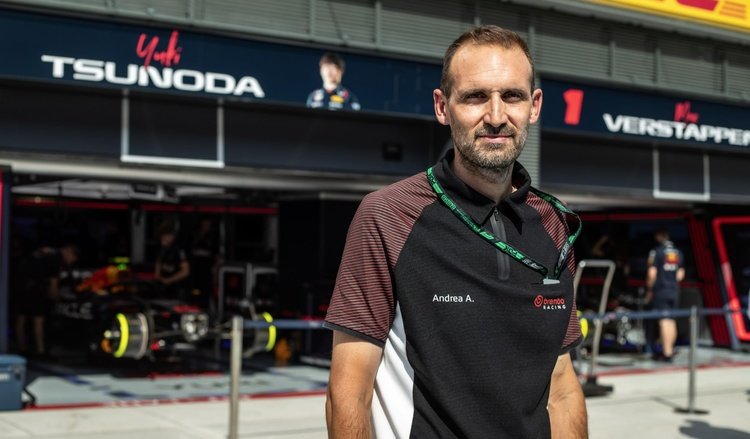
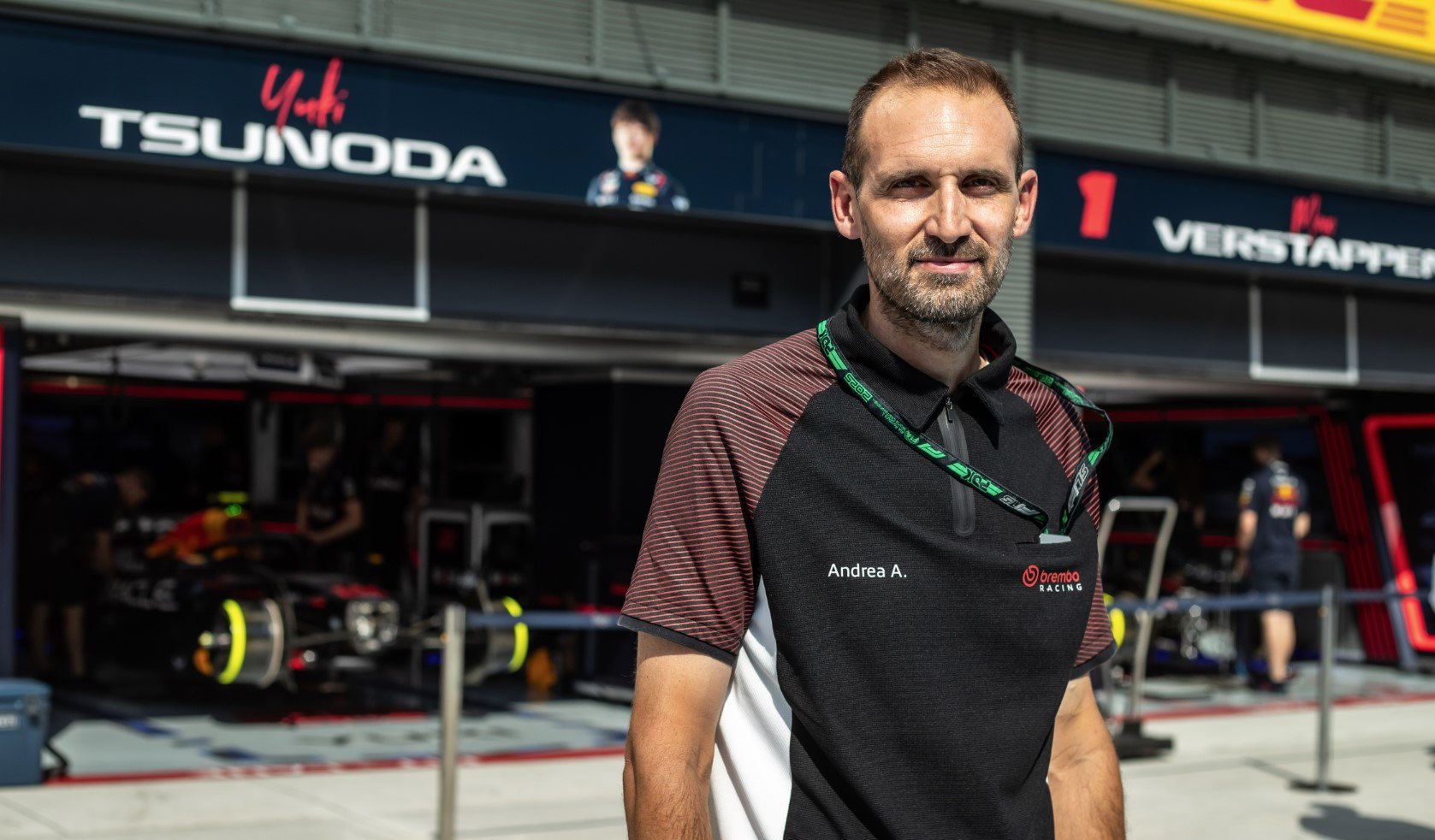
In Formula 1, the company’s presence is almost universal. “I am essentially responsible for the racing car market, meaning all cars that compete in racing championships,” explains Andrea Algeri, Racing Car Market Manager at Brembo.
Algeri’s role also includes managing the team of engineers who support Formula 1 teams trackside during Grands Prix. Brembo engineers are always present in the paddock.
“In Formula 1, we attend every race with at least two engineers,” Algeri says, highlighting how central motorsport remains to the company’s work.
The collaboration with teams is extremely close and involves almost the entire grid.
“Brembo supplies nearly all Formula 1 teams. In fact, we have components installed on every car competing in the championship,” he notes. Some teams use the full braking system developed by Brembo, while others adopt specific components such as callipers, discs or pumps.
For the company, however, Formula 1 is not just a prestigious showcase—it’s also a testing ground for innovation.
“Motorsport is where we push every concept related to braking systems to the limit,” Algeri explains.
The 2026 season marks the beginning of a completely new era in Formula 1. New technical regulations will introduce cars with reduced weight, active aerodynamics and a much more powerful electric component.
These changes will significantly affect how the cars behave, making braking even more complex and decisive.
Algeri explains how this evolution is reshaping the engineering approach.
“The electric component of the car will become increasingly important, so we need to adapt our products to this configuration,” he says.
“In practice, we work on what we call blending—the integration between electric braking and traditional braking.”
Achieving the right balance is extremely delicate. The transition between the two systems must be imperceptible to the driver, who needs to feel the same response from the brake pedal throughout the braking phase.
“The goal is to make that transition as natural as possible,” Algeri says, so the driver “always feels completely comfortable with the car”.
Technically, Formula 1 cars remain among the most extreme machines ever built. During a race, carbon discs and pads can reach temperatures between 800 and 1000 degrees Celsius—figures closer to aerospace engineering than conventional road vehicles.
“We use very high-grade materials, partly derived from aerospace technologies,” Algeri explains. “They are extremely expensive but capable of handling very high loads and temperatures.”
Yet raw braking power alone is not enough. The system must also be perfectly reliable.
In racing, the decisive moment often comes when a driver enters a corner, the phase when many overtakes happen.
“Very often a race is decided at the moment braking begins,” Algeri says. “If a driver can delay braking by even a few metres, they can gain a position.”
Every driver also has a unique style.
“Some drivers prefer a very ‘on-off’ response, with a rigid pedal and immediate braking,” he explains. “Others want more modulation so they can carry braking deeper into the corner and manage the car’s balance.”
This requires continuous customisation. Contrary to what many might think, there is no single standard braking system for every car. Each team receives a configuration tailored to the characteristics of its car and the preferences of its drivers.
Behind the scenes, Brembo engineers constantly analyse data collected on track and adapt their work to the needs of each team.
The rest comes from experience built over more than fifty years in racing.
“The brakes might not win you the race—but they can certainly make you lose it,” Algeri concludes.