
A radical change has occurred in the long history of the relationship between Italy and its children scattered around the world. The new Citizenship Decree, which was definitively approved by the Italian House of Representatives with 137 votes in favour, 83 against and two abstentions, introduces very severe restrictions to ius sanguinis, undermining the right to obtain Italian citizenship by blood.
But amid disappointment and turmoil, the measure also contains a gesture of reconciliation: an amendment that allows Italian emigrants, decades ago forced to renounce their citizenship for work-related reasons, to reacquire it.
A right restored, however, only for those born in Italy.
This significant concession has been met with contrasting reactions in the local community. Some feel it is “now too late” while others see it as an opportunity to renew a bond that was never broken, preserved in family stories, in dialects still spoken far from the Peninsula, in the gestures and memories of those who, even thousands of kilometres away, never stopped feeling Italian.
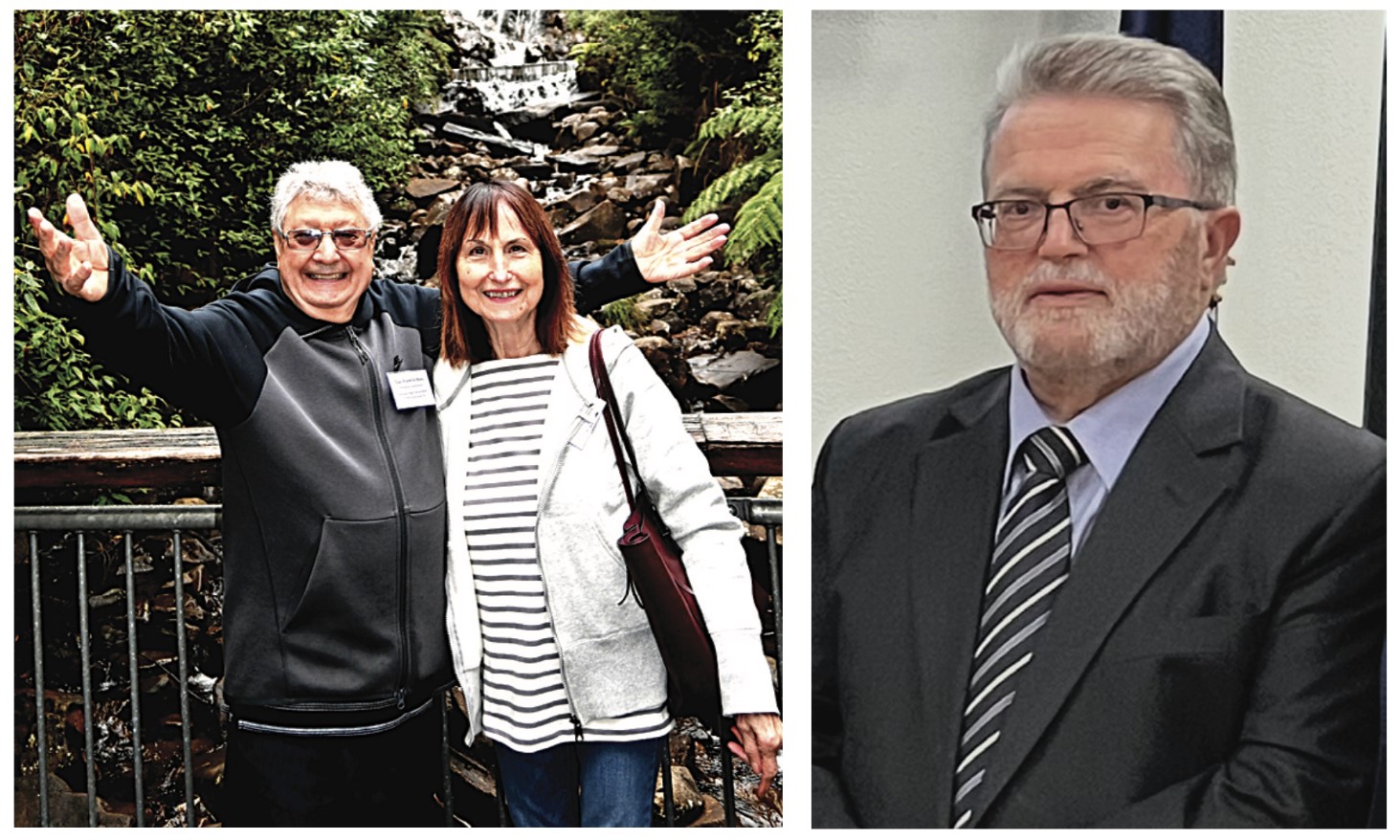
Leonardo Santomartino, now president of the Lucanian Federation of Melbourne, is one of the many Italian-Australians who suffered this long wait. Born in the small village of Montemurro, Basilicata, he emigrated to Australia in 1962. Since then, he has turned nostalgia into commitment; first as secretary of the Montemurro San Rocco association, then of the Val D’Agri association, and finally taking up his current post with the Lucanian Federation.
“The battle to reacquire citizenship lasted almost thirty years,” he explained with quiet bitterness.
“But by now, I think I’m no longer interested. We’ve reached an age where we no longer feel the urgency of certain validation. Even though, in my home, there are three Italians: my wife, Pina, who never became an Australian citizen and is still a permanent resident, and our daughters Lisa and Gisella, both Italian teachers at high schools.”
Santomartino also pointed out how the procedure for reacquiring citizenship, though finally granted, risks remaining largely inaccessible. “I don’t think we’ll see many applications from the local community,” he added. “Not because of the cost, but rather due to the long and exhausting bureaucratic process.”
Completely different, however, is the feeling that consumes Frank Di Blasi, a pillar of the Italian community in Victoria who was awarded the Medal of the Order of Australia in 1984 and knighted by the President of the Italian Republic Francesco Cossiga in 1986.
To this day, Di Blasi continues to narrate and immortalise the affectionate everyday life, joyful celebrations and achievements of Italians in Australia.
Originally from Vizzini, a small town in the province of Catania, Sicily, he arrived in Melbourne at the age of seventeen, in January 1962. Just two years later, he was forced to renounce his Italian citizenship to keep his job at an English company in Victoria.
“I did it reluctantly,” he said. “When I heard about the decree, it felt like a door had finally reopened. It’s not just a document, for me it’s a rediscovered embrace, a return home.”
Although he has fully integrated into Australian and Italian-Australian society, Di Blasi has always experienced the renunciation of his native citizenship as a profound loss and wound.
For hundreds of thousands of migrants abroad, reacquiring Italian citizenship means obtaining official recognition of their personal story. But Di Blasi also reiterates that identity can’t just be measured with stamps and documents.
“I’ve always worked hard to represent the local Italian community, but at the same time I felt stripped of my identity,” he added. “Inside me there’s always been that desire to see, in black and white, my existence as an Italian, to reconcile with that part of me that remained in Sicily.”
Despite decrees and governments deciding the fate of thousands of citizens without making an effort to understand them, the stories of Italians abroad remind us that Italy isn’t just a distant land, but a feeling that endures over time.
That feeling lives on through our memories, in the language we pass on to our children, in the meals we make in faraway kitchens and in the music at festivals we celebrate under foreign skies.