For many Italian families, the word emigration still carries a mix of melancholy, pride and wounds that never fully heal. The “cardboard suitcases” of the diaspora tell the story of an Italy both beautiful and fragile, shaped by poverty, uncertainty and fear of the future. They describe not only a physical journey, but an emotional one—a painful break from one’s roots and a new beginning often faced in solitude, in an unfamiliar land.
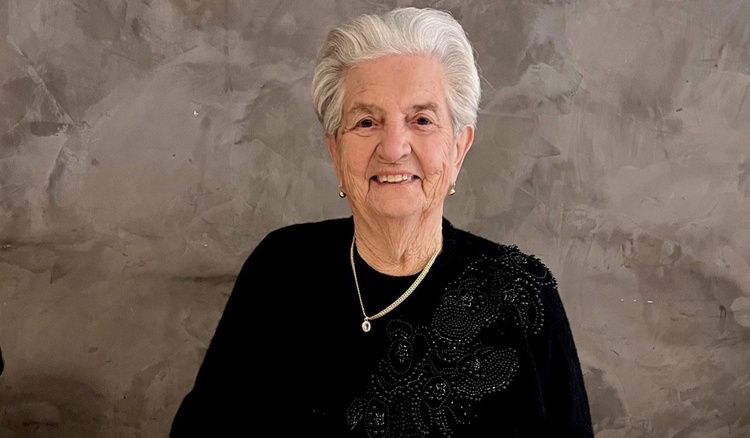
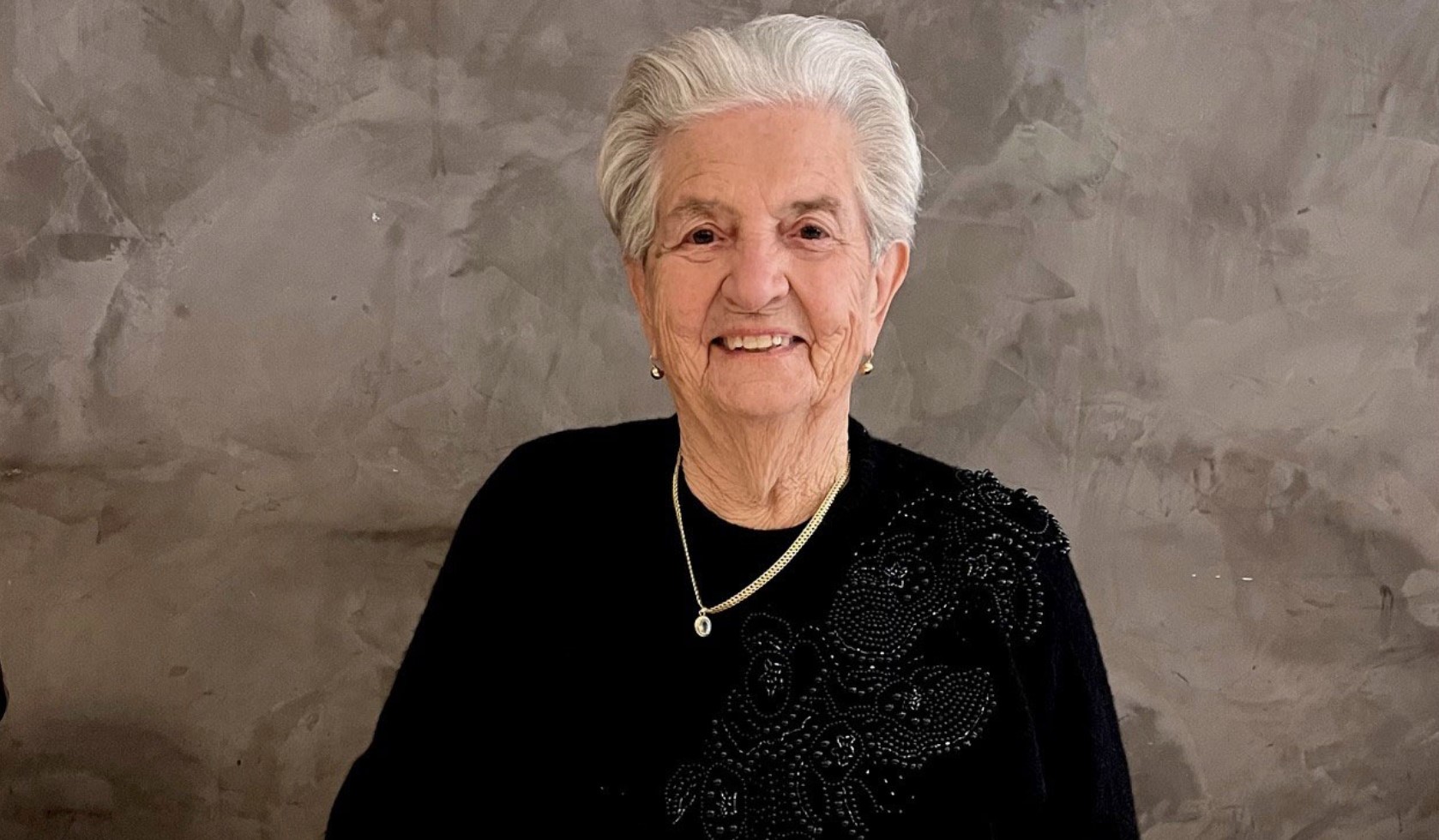
But the story of Elvira Di Lizio—the oldest member of the Abruzzo Club and a living archive for an entire community—follows a very different path. Di Lizio offers a narrative that might surprise you: that of a woman who, in her adopted country, did not feel nostalgia, but liberation.
Born in Ripa Teatina, in the province of Chieti, on August 3, 1928, Di Lizio remembers clearly the Italy shattered by war: the bombs that shook the night, the noise of tanks, the desperate cries in the streets, the uneven backroads. But above all, she remembers the lack of freedom. “In Italy I wasn’t free,” she repeats.
And she remembers even more vividly a suspicious, possessive father-in-law who monitored her every move: a sharp symbol of a suffocating family culture in which many Italian women of her generation would recognise themselves. “At home I couldn’t speak,” she recalls.
“My brother had already been living in Australia for a long time—he had found work and bought a house. My husband decided to follow him to see what life was like over there.”
While he was gone, Di Lizio went to live with her in-laws—as was common at the time. There, one particular episode remains etched in her memory.
“It was summer, it was hot,” she says, “I had dressed my little daughter in shorts.
“We were walking peacefully along the lanes of the village when I saw my father-in-law coming. He was furious. He ordered me to go home immediately.”
It’s a scene that speaks for itself, a fragment that reflects an entire system of restrictions and rigid expectations.
In 1955, at 27 years old, she boarded a ship with her three-year-old daughter Liliana to join her husband, Nicola. The voyage was long and exhausting, marked by nausea, fatigue and an endless horizon.
“I couldn’t leave the cabin,” she remembers. Her sister-in-law, who travelled with her, looked after the child and kept her going.
But in Melbourne, everything changed. Within a week and without knowing a word of English, Di Lizio found work in a shirt factory. She communicated with gestures, watched the other women, learned quickly and soon produced more than she was asked to.
“I was paid eight dollars an hour—not bad for a first job,” she says with a smile.
It was a new world: nobody stared at her, nobody scolded her, nobody tried to control her. “I finally felt free,” she says.
One evening, she returned home late because she couldn’t find the tram stop. Her family was worried, but nobody blamed her—something she had never experienced in Italy: the absence of judgement.
Life, however, tested her again. Miscarriages, a traumatic delivery at Preston Hospital, the loss of a baby she never held. “I had a big belly and felt very ill. I called the doctor, but they used to say that we Italian women were too dramatic, that we exaggerated.”
Di Lizio suffered, but she did not break. She kept sewing, working, rebuilding herself. And when her second daughter, Sonia, was born, her strength found a new purpose.
She raised her daughters in an Australia that was often unkind to immigrants—insults at school were common. But Di Lizio knew how to defend herself, and she taught her daughters to do the same. “You always have to keep going. Life is not gentle,” she says.
Years later, she returned to Italy several times with her husband. Each visit confirmed how little she missed it. “I didn’t want to go, but my husband was a good man, so I went with him,” she explained. Each time, she felt the same certainty: “My home is here.”
Yet she also admits that today’s Italy is not the one she grew up in. “When I was young, in my village, we went to church dressed properly, and some girls wore a veil or a kerchief on their head,” she recalls.
“I never did, because if someone pulled it off, you had to marry the boy who took it.
“This story might make young people laugh now, but back then it happened all the time.”
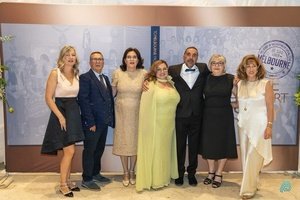
At the Abruzzo Club—which her husband Nicola helped found—Di Lizio has always been a tireless presence.
Today, almost 98 years of age, she walks tall, speaks with humour and attributes her longevity to a simple formula: “Always work, eat lightly, never argue.”
And pain? “Pain is inevitable, but it passes,” she assures.
In her eyes today, there is no trace of nostalgia, nor resentment towards the country she left behind. “I’m content. I made a long journey and found my freedom—and the space to be myself.”