The story of the Triestines who left for Australia in the 1950s and ‘60s is not simply a tale of departure and new beginnings: it is also a reflection of the political and cultural tensions of a territory caught between competing powers, fractured in its social cohesion and deprived of the stability needed to imagine a peaceful future.
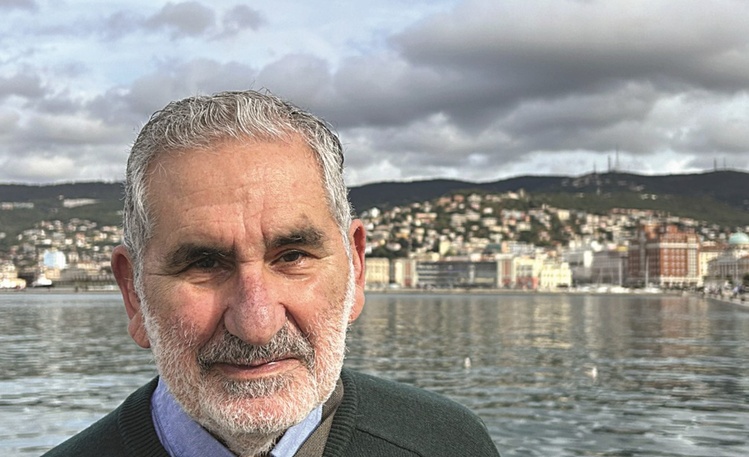
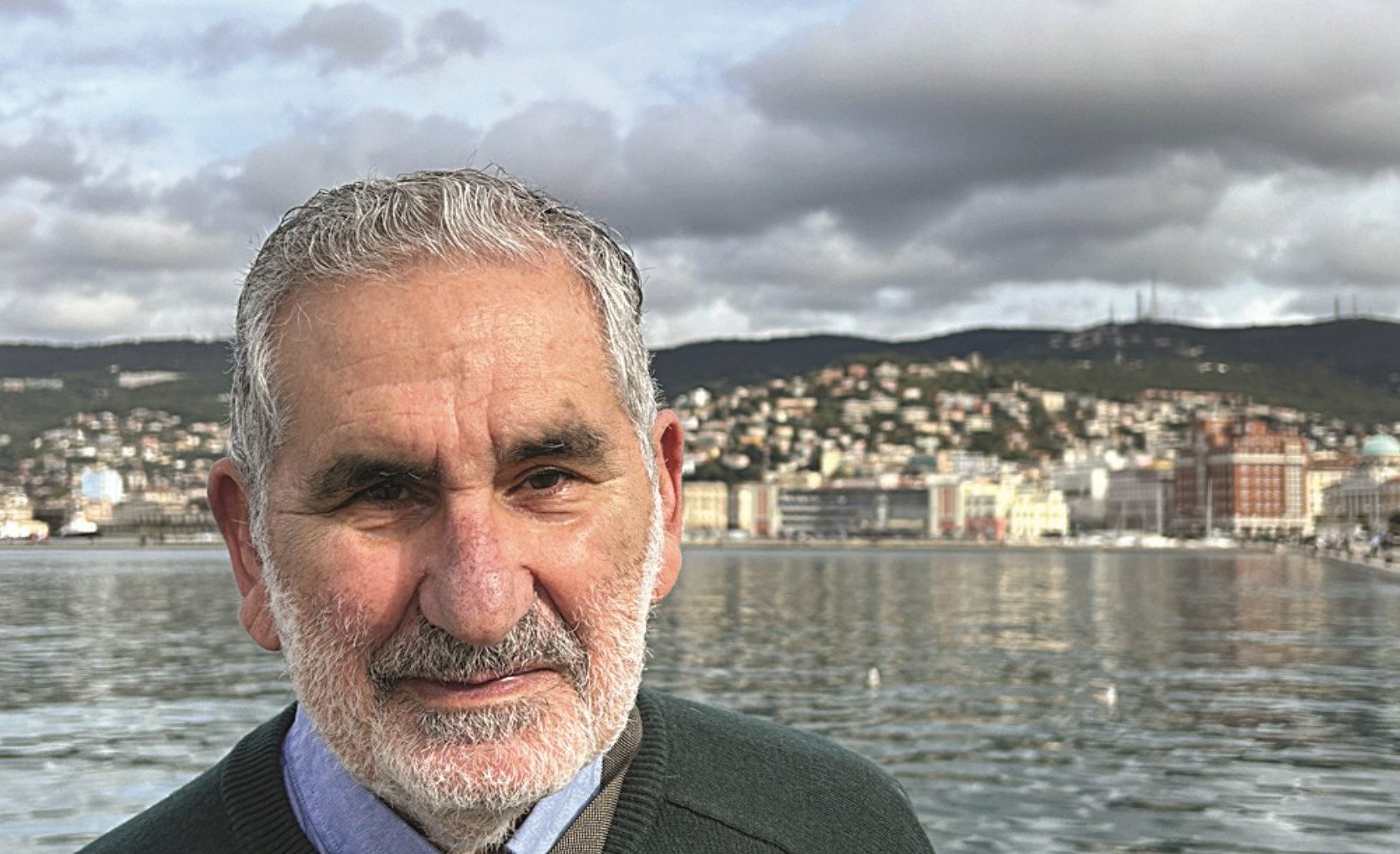
This is the context that Gianfranco Cresciani—an Italian-Australian historian, born in Trieste and long settled in Australia—brings back into focus. In Trieste Goes to Australia, first published in 2011 and reissued in a new edition in 2025, he dismantles the convenient narrative that folds the Triestine exodus into the broader, generic story of Italian emigration—the reassuring tale of “ordinary people seeking a better life”.
“People would email me saying they never understood why their parents came to Australia,” Cresciani recalls.
“Their parents never talked about it, and now, thanks to the book, they finally understand what happened.”
He refuses the softened, linear story that turns a collective fracture into a sentimental account of courage and cardboard suitcases. Instead, he digs deeper: challenging the accepted storyline, reconstructing a “difficult history” marked by anxiety, political pressure and fragile identities.
Between 1954 and 1961, roughly 10 per cent of Trieste’s population left for a “faraway and unfamiliar land”—an extraordinary proportion that cannot be explained through the usual frameworks of Italian migration.
To understand why a city that once drew people from across Europe emptied so quickly, Cresciani outlines a clear but incisive historical context. After 1918, when Trieste—formerly a vital port of the Austro-Hungarian Empire—became part of Italy, the transition was neither smooth nor unified.
Slovenes and Croats were treated with suspicion, mutual trust eroded and during Fascism the city turned into an ideological frontier, with forced Italianisation and growing international scrutiny.
Economically, Trieste suffered: losing its natural hinterland meant losing its backbone. War only made things worse. Under German occupation, the city witnessed violence, repression and trauma that still leave deep marks.
Peace brought little relief. In May 1945, the city was first taken by Yugoslav partisans and then by Allied forces in a tense and unsettling handover. In 1947, the Peace Treaty created the Free Territory of Trieste: a divided, unstable, hybrid political creation split into Zone A under Allied administration and Zone B under Yugoslav control.
Even the London Memorandum of 1954, which gave Italy authority over Zone A and Yugoslavia over Zone B, did not restore stability. Trieste remained a trembling borderland, shaped by uncertainty and persistent fears about its future.
It is within this atmosphere that Cresciani situates the mass departure. And he emphasises what most challenges the conventional narrative: the Triestines who left were not “typical” migrants.
They were not driven by poverty. They were not agricultural labourers or unemployed workers. They were office employees, teachers, technicians and administrators who worked for the Allied authorities—educated people with steady incomes and established lives.
Yet they left. Why? Because they were navigating a political landscape marked by shifting loyalties, ideological battles and a daily sense of instability. A “climate of insecurity and fear for the future”, as Cresciani writes, a lack of cohesion across nationality, ethnicity and ideology that pushed many to look elsewhere for the certainty their city could no longer provide.
They were Triestines “tired of vague promises”, “defenceless pieces in the game of national tensions and great-power manoeuvres”.
Australia, in those same years, offered the opposite: a country intent on attracting migrants, eager to populate its vast territory and offering assisted passages and more favourable conditions than many other destinations.
“On March 15, 1954, the ship Castel Verde left with 650 Triestines on board,” Cresciani notes—the first of many departures that would reshape Adriatic migration.
But arrival did not mean immediate freedom. “Once in Australia, Triestines had to deal with unrecognised qualifications, modest jobs, cities where pubs closed at six and social life had to be reinvented,” he writes.
Some returned home, driven by a homesickness they could not overcome, but were now labelled ‘Kangaroo’.
Trieste, he observes, lived through a “sad prologue”, one that overturned its identity as an open and cosmopolitan port. Yet the thread linking the Adriatic to Australia is not only a story of painful departures, but one of rebuilding—of finding, far from home, the stability that felt impossible to achieve in Italy.
Triestines abroad created associations, cultivated new meeting places and formed a renewed sense of community.
Because, as Cresciani concludes in the final pages of his book, a homeland is not limited to borders or flags.
“Home,” he writes, “is where you can live well.”