
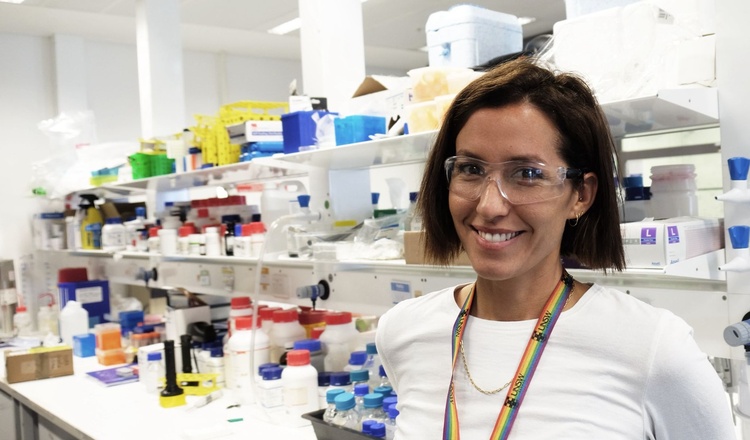
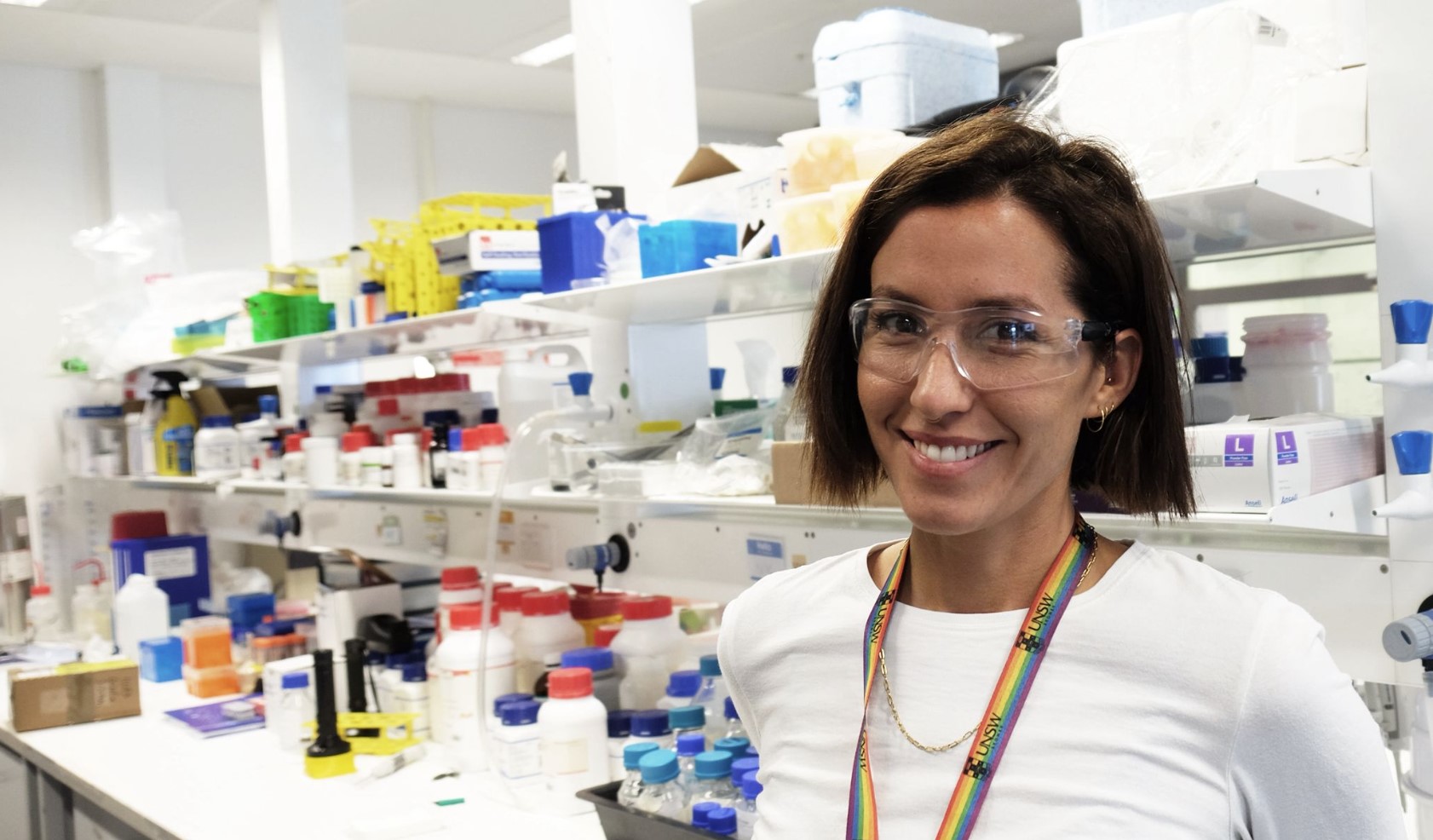
The grant, worth $529,878 over three years, will fund her pioneering project on how cells adapt to microgravity.
The DECRA is a major milestone in Australia’s research landscape. This year, only 200 grants were awarded nationwide from around 1500 applications, with a success rate of just 13 per cent.
UNSW received 12 DECRAs overall, including six within the Faculty of Science, placing Silvani among a small group of researchers selected in an exceptionally competitive field.
“Whether it’s new discoveries in the immune system or technologies for renewable energy, I’m excited to see how UNSW’s early-career researchers will help solve the most pressing challenges of our time,” said Professor Bronwyn Fox, UNSW Deputy Vice-Chancellor (Research and Innovation), congratulating the successful recipients.
Silvani’s project, titled Using bioengineering tools to learn how cells adapt to microgravity, focuses on a fascinating scientific frontier: understanding how living cells behave in the absence of gravity.
Her research will examine how reduced gravitational force affects cell movement, tissue repair and the formation of protective barriers.
The findings could reshape our understanding of how physical forces—including gravity itself—influence life, offering new insights into how organisms adapt in space and other extreme environments.
Silvani’s path in biomedical research has been marked by steady achievements. Originally from Rome, she completed a PhD in microfabrication and organ-on-chip research at Sapienza University in 2020, as an affiliate of the Italian Institute of Technology (IIT).
She moved to Sydney in November 2019, joining the Victor Chang Cardiac Research Institute, where she worked on mechanobiology projects.
In December 2021, she was awarded the Women in Early Career Research Fellowship at the University of Technology Sydney (UTS), supporting her work on identifying new molecular targets linked to brain tumour function through mechanobiological approaches, including simulated microgravity.
Her expertise sits at the intersection of microfabrication, mechanobiology and tissue engineering, with the goal of building biological platforms that replicate vascularised tumour tissues and their native 3D microenvironment.
In November 2022, she joined UNSW’s Kilian Lab as a postdoctoral researcher, focusing on glioblastoma—the most aggressive form of brain cancer.
In 2024, Silvani received another significant boost: the Research Rebels Award from the Charlie Teo Foundation, a $200,000 grant over two years that allowed her to begin building her own research team, including a PhD student.
“It’s an exciting moment: I can finally create my own research team, and this is a launchpad for securing larger funding in the future, such as the DECRA,” she said at the time.
Capping off a standout year, Silvani received another major recognition in January 2026 when she was promoted to Lecturer in UNSW’s Faculty of Science.
The double achievement—a DECRA grant and a promotion—marks an exceptional milestone for an early-career researcher and reflects the strength of Silvani’s work in bioengineering and cancer research.
As UNSW’s Women in Maths and Science Champion, she is also committed to encouraging young women to pursue scientific careers.
“I love teaching. I coordinate part of the polymer science course and supervise some students. Being able to engage with them and share my passion for science is something that brings me real joy,” she said.
With more than 310 citations on Google Scholar and publications in leading journals, Silvani represents Italian excellence on the international scientific stage, bringing innovation and rigour to biomedical research.
As she steps into 2026 with DECRA support and her new academic role, Silvani continues to stand out as a point of pride for the Italian community in Australia, and an inspiration for the next generation of women in science.