Good Friday, or Venerdì Santo (Holy Friday) in Italian, is a solemn religious observance which takes place in the lead-up to Easter Sunday and commemorates the crucifixion and death of Jesus Christ as recounted in the Bible.
This year, Good Friday lands on April 14, and though it is recognised as a public holiday in Australia, this is not the case in Italy.
Some Italians abstain from eating meat on Good Friday, and only eat fish as a form of penance in honour of the sacrifice that Christ made for our sake.
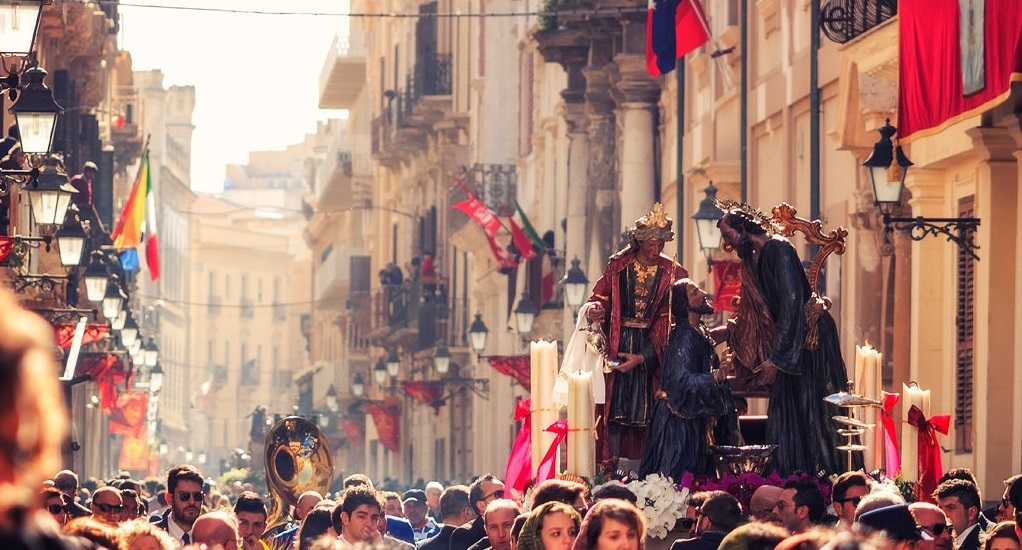
Myriad ceremonies and processions take place across Italy on Good Friday, while the Stations of the Cross are re-enacted in many communities.
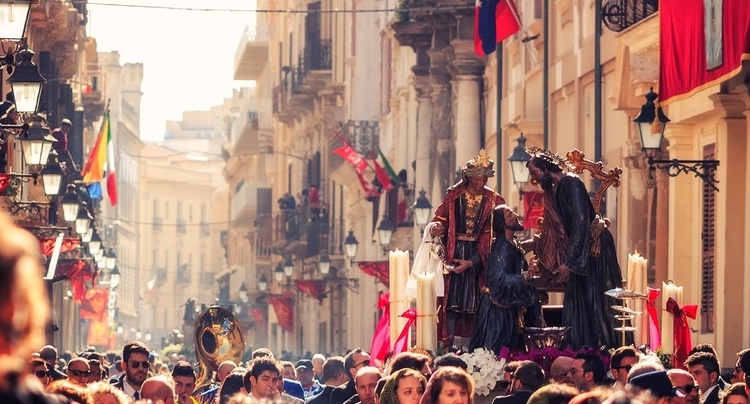
The Procession of Mysteries is held in a number of towns, but the one in the Sicilian city of Trapani is the longest religious event in Italy, beginning on the afternoon of Good Friday and lasting almost 24 hours.
Twenty floats make their way through the city’s streets beginning and ending at the Chiesa del Purgatorio, carrying 18th-century life-sized wooden statues known as the Misteri which portray the story of Christ’s Passion.
Moving from the coast to the centre of Sicily, the city of Enna holds the record for the largest Good Friday procession, as more than 2000 friars dressed in ancient attire parade through the streets before spectators who come from far and wide to witness the occasion.
On the mainland, the community of Chieti, in Abruzzo, commemorates Good Friday with Italy’s oldest religious procession, the Processione del Cristo morto (Procession of the Dead Christ).
This age-old pageant, which dates back to AD 842, now attracts tens of thousands of visitors to the city each year.
During the procession, 13 local congregations carry religious symbols, including a wooden statue of Jesus Christ which dates back to the 18th century, through the city’s streets.
Only men and children participate in this ancient ritual, and they are dressed in gowns and hoods as a sign of mourning and penance, each wearing the colours of their parish.
The parade makes its way through the streets accompanied by the haunting music of the Miserere, an ancient hymn composed by the Theatine musician Saverio Selecchy, performed by 100 violinists and a male choir who follow the worshippers on their journey.
Though Good Friday is certainly a sombre occasion for faithfuls, it is also a strong reminder of the dedication to old religious traditions - great and small - which is present across the entire Belpaese in the name of Christ.