The discovery, explains the University of Udine, is the result of the sixth underwater archaeological campaign conducted by the Department of Humanities and Cultural Heritage of the Friulian university and the Superintendency of the Sea of the Sicilian Region, as part of the Kaukana Project research project.
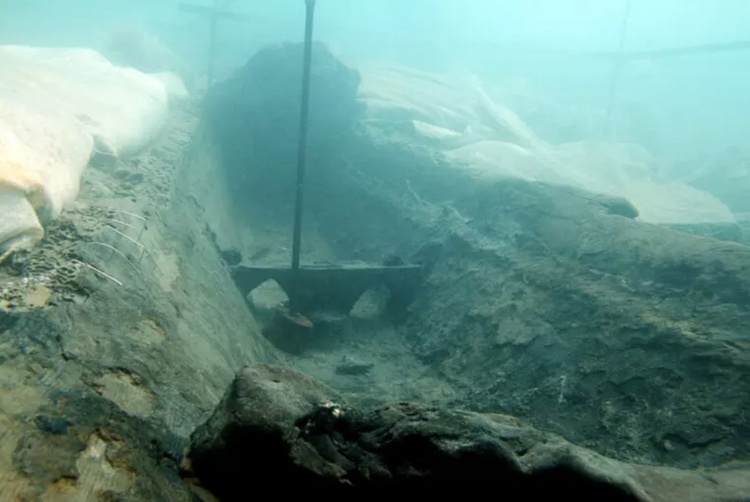
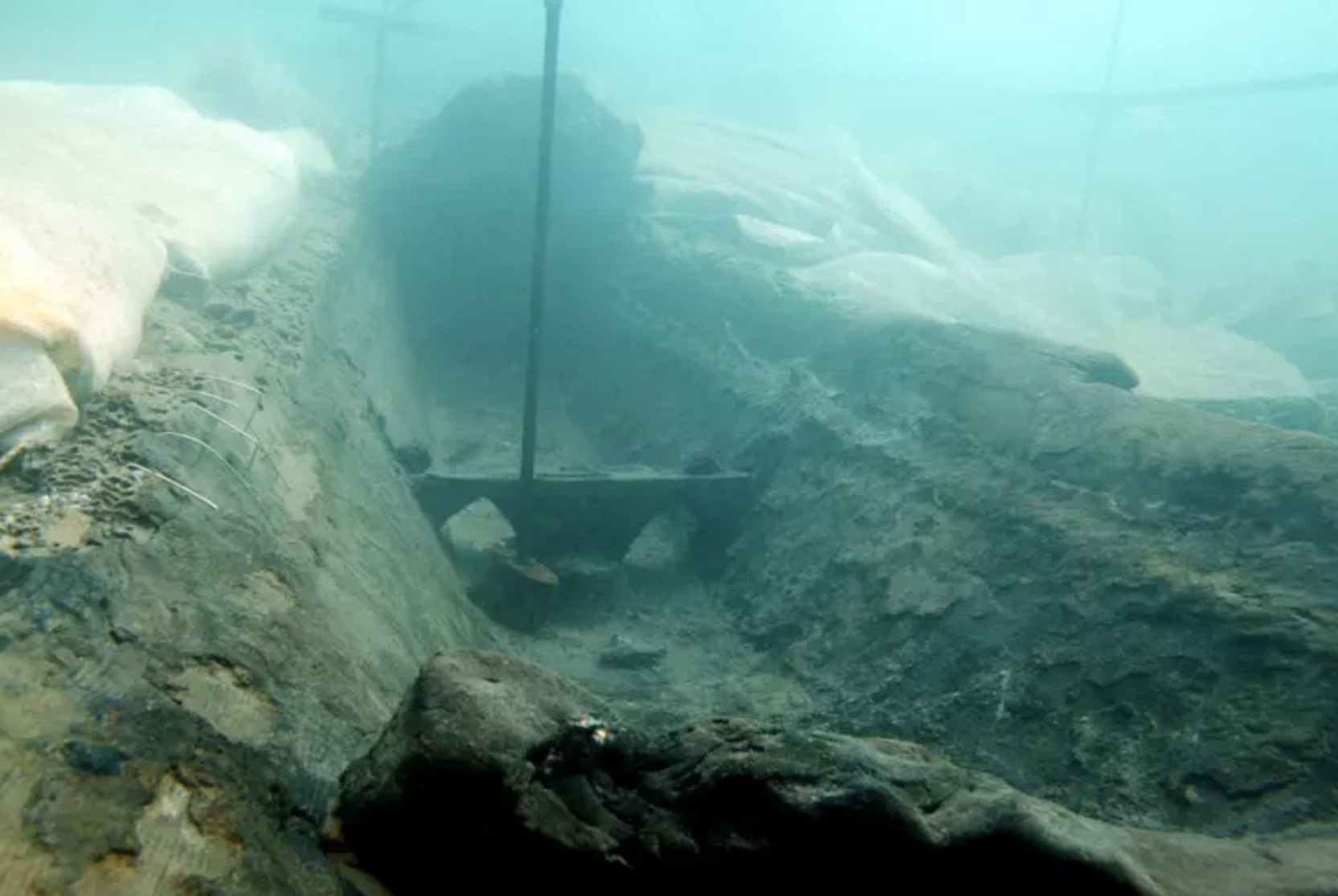
In addition to the ship’s structure, the excavation uncovered the vessel’s mast, black-figure pottery, a small ointment jar inscribed with the Greek word “Nau” (ship) and a section of the vessel’s rope in excellent condition.
The operations, carried out between May and June, allowed the remains to be documented with direct surveys and photogrammetric imaging, producing a three-dimensional model of the wreck.
“By proceeding with caution,” explained Massimo Capulli, professor at the University of Udine and project coordinator, “we were able to document new and important parts of the ship, including its mast, which is very rarely preserved”.
The wreck, classified as a “shell” wreck, was partially buried under sand and rocks.
Using a water-powered digger, the excavation trench was extended, allowing the identification of the keelson and one of the wheels, the curved connecting element.
Also participating in the mission were Fabrizio Sgroi of the Superintendency of the Sea, Dario Innocenti and Lucrezia Maghet representing the University of Friuli and Sunk Costs Productions, who were involved in the production of the documentary film Shipwreck of Sicily, co-produced by Martin Scorsese.
ANSA