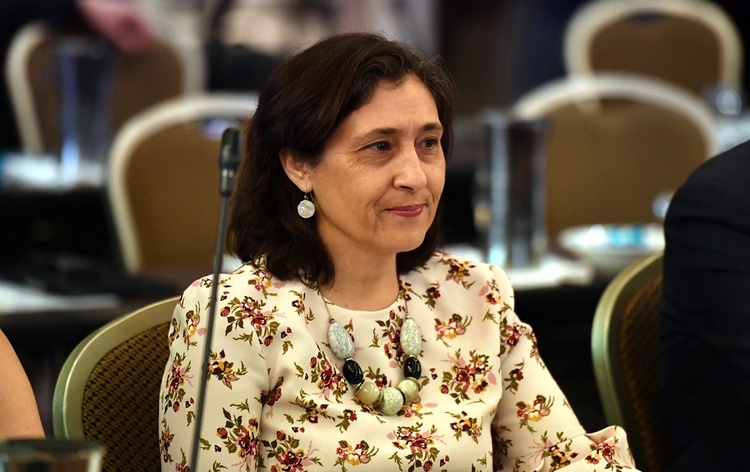
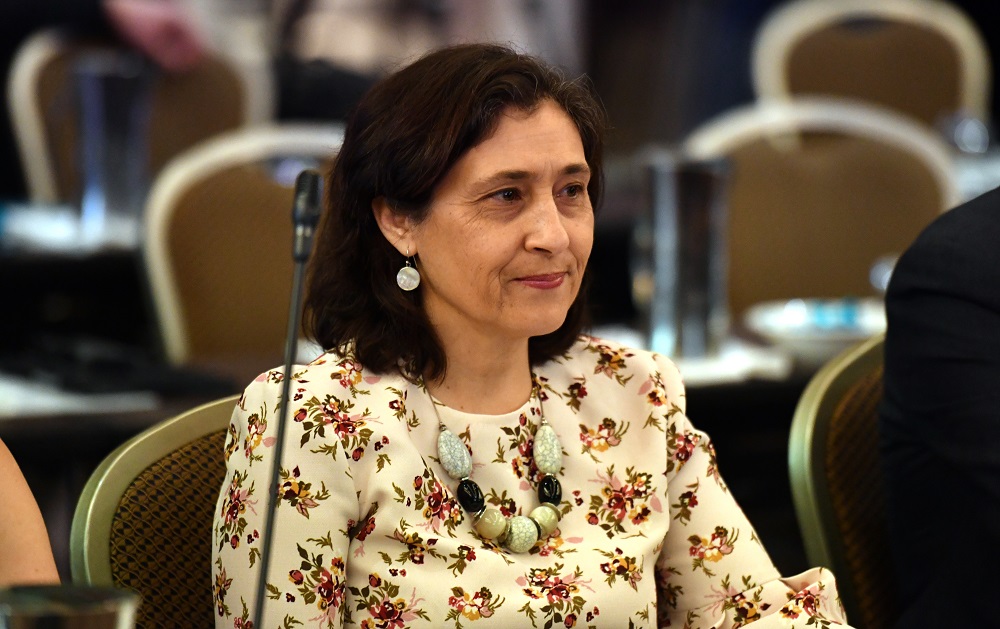
Born Liliana D’Ambrosio, the minister owes her determination and tenacity to the matriarch of her family.
Her mother was a clothing worker and spent her life mingling with people from different backgrounds in textiles factories.
She had a passion for progressive politics and was a union delegate at a time in which women were making their voices heard a fighting for equality in the workforce.
“My parents always had a very strong view about politics and who they supported politically in Australia,” D’Ambrosio says.
“I’d always understood who they supported in politics and voting made sense to me.”
D’Ambrosio welcomes me with a smile on the 16th floor of her ministerial office in East Melbourne; we sit in front of a large window as the sun rises over the city.
She casts her memory back to her formative years in Fawkner, where she and her brother, Corrado, were raised in an Italian family that took pride in keeping traditions alive, while also being open to and accepting of others.
Her father, originally from Gizzeria, a small mountain town in Calabria, arrived in Australia in 1952, alongside one of his eight siblings.
After nine years of hard work in both Victoria and New South Wales, he returned to Italy, where he met his future wife.
Shortly after the couple married, they made the courageous decision to move to Australia for good.
“It was a little bit tough, even though both my parents were fluent in English, which was good,” D’Ambrosio explains.
“I think for any community that comes to new countries, you want to hold on to what you know and what you value.
“When I went to school in Fawkner, we were all kids from migrant families, but the teachers mostly weren’t.
“There was a little bit of a lack of understanding in some regards.
“I loved school but the first day, I was very nervous and I ran away.
“But there was lots to learn and my mother always encouraged me at school.”
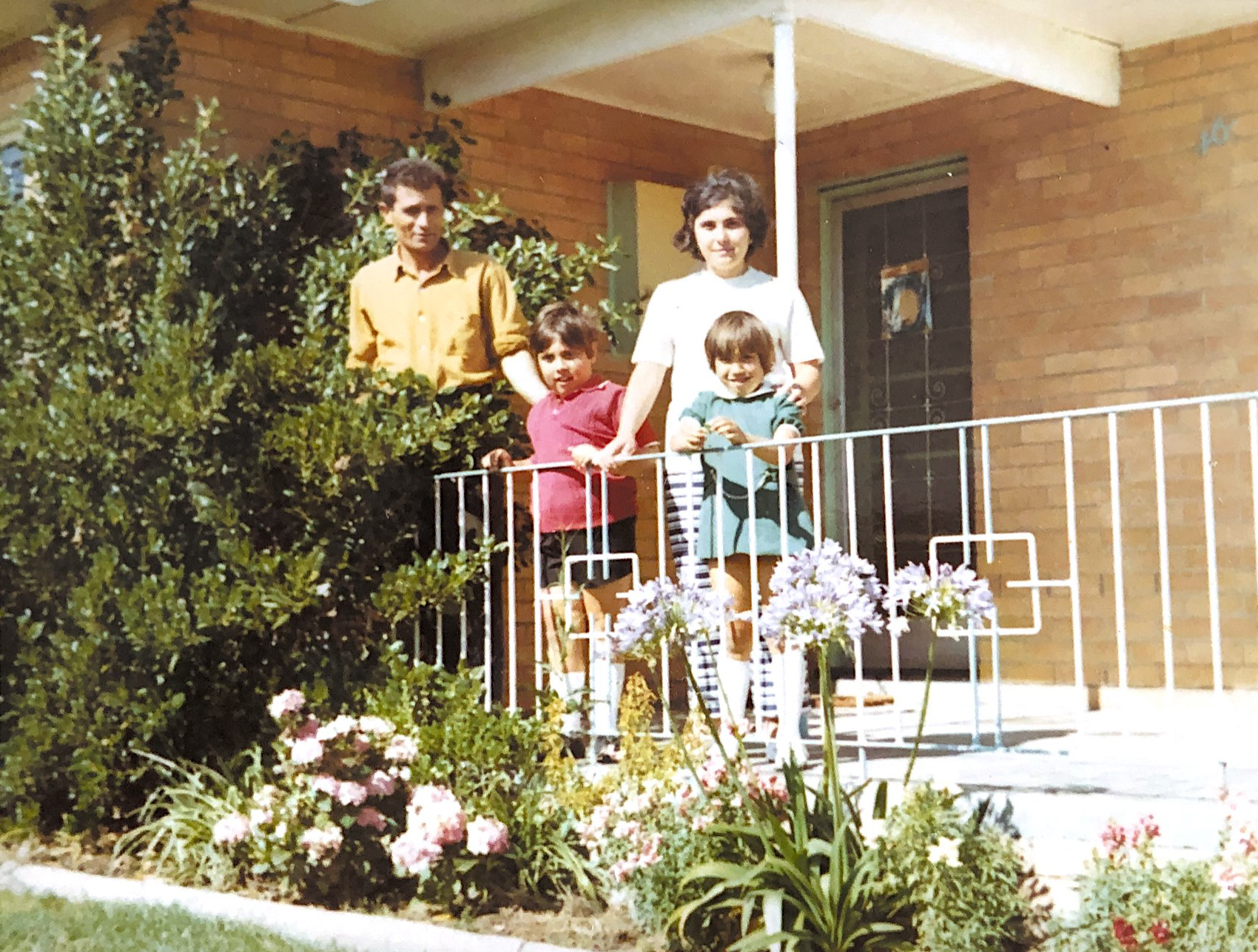
Lily D’Ambrosio with her parents and brother, Corrado, in 1970. (Photo supplied)
D’Ambrosio says her parents arrived at a time when many workplaces were “heavily unionised” and there was a strong sense of collectivism to achieve outcomes at work.
“My mother’s father also was very political in his own town in Italy,” she adds.
“So [my mother] always had this affinity with the left of politics.
“My parents would always talk about what was happening at work and the difficulties; my mother was a union delegate at work so she was very strong on working together and progressive politics.
“When Gough Whitlam was dismissed as the prime minister of Australia back in 1975, she was very angry and she made a decision to become an Australian citizen so she could vote.
“He was the first Labor prime minister in more than 20 years.”
D’Ambrosio’s mother set a strong example for her children and sparked a passion within her daughter that would pave the path to a career in politics.
D’Ambrosio studied English, philosophy, and politics at the University of Melbourne and also holds a diploma in public policy.
From early on in her university days, she knew she wanted to work in the political sphere and the union movement.
D’Ambrosio joined the Labor Party at university, and subsequently became an organiser with the Australian Services Union in 1986.
She was promoted to state organiser in 1994, and served in the position until 1999, when she became an electorate officer to Alex Andrianopoulos, the then-Speaker of the Victorian Legislative Assembly.
He retired in 2002, and she replaced him as the party’s candidate in his safe seat of Mill Park.
“A lot of these things happen by circumstance or by being fortunate,” D’Ambrosio says.
“I was always very involved on the voluntary side of political activity and policy development.
“There was an opportunity for me to nominate for pre-selection for a state seat; I was lucky to have support and the rest is history.
“I’m a very practical, tanglible person so I’ve always been very highly motivated to put into action ideas that can make a difference in the foreseeable future.
“These opportunities are very precious and they can come and go, so you have to make every day worthwhile; I’m always looking for the next idea or the next project.”
D’Ambrosio was appointed the Minister for Industry and Minister for Energy and Resources following the election of the Andrews Labor Government in 2014.
In 2016, she became Minister for Energy, Environment and Climate Change and Minister for Suburban Development.
At the last G7 summit in June, Australia was put under international pressure, from the US and the UK among other nations, to reach the goal of achieving a decarbonised energy system by 2050 and reducing emissions by 26 per cent compared to 2005 levels by 2030.
Prime Minister Scott Morrison has resisted international pressure to formally commit Australia to a firm 2050 deadline, reiterating that the country is investing in new technologies for the transition to a new clean energy economy.
Shortly before the international forum, there was little talk of the climate crisis or the environment in the federal budget.
“The federal budget announcement comes as no surprise to me in terms of their lack of support for climate change, reducing our emissions as a country and fulfilling what our obligations are as an industrialised country on a global stage,” D’Ambrosio says.
“In Victoria, I’ve been absolutely committed to changing our energy system, for a number of reasons; one, of course, is our commitment to climate change and achieving our goal of net zero emissions by 2050, which we were one of the first jurisdictions globally to legislate for.
“We’ve also required of ourselves interim emissions targets, because that is an important discipline for the whole economy to understand where our aspirations go.
“It’s no wonder that Victoria is outpacing other states in terms of having the largest net of jobs created in renewable energy of any state.
“That’s impressive for a state that has been heavily reliant on coal electricity for many decades.”
While continuing to tackle the huge task of decarbonising Victoria’s energy system, D’Ambrosio is inspired and spurred on by her two daughters, Eleanor and Madeleine.
“My daughters are very encouraging and very clear in their own view; and I’m extremely proud of them,” D’Ambrosio concludes.
“I think you need to have firm views to be able to push ahead, to cut through and create a sense of resilience, strength and confidence.
“I look at my daughters now, and I’m so grateful for the level of confidence that they have.”