These breathtaking views unfold from the small village of Quattropani, a charming hamlet of Lipari nestled in lush Mediterranean vegetation. From here, spectacular sunsets can be seen over the neighbouring islands of Salina, Filicudi and Alicudi.
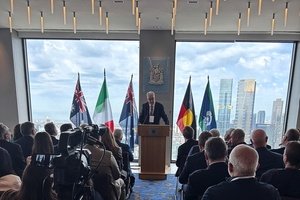
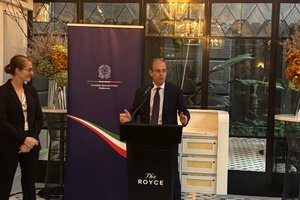
This evocative landscape forms the backdrop to the stories of Aeolian poet and writer Italo Toni, who last December presented his latest book, Eolie. Noi ragazzi di ieri (Aeolian Islands: We, the Children of Yesterday), at the Società Isole Eolie Melbourne, during the feast of Saint Lucy.
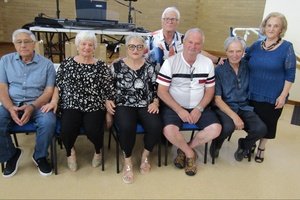
It marked Toni’s second visit to Australia, where he also reunited with his sister Gioconda, who has lived in the country for 56 years. Theirs is a family bond that mirrors Australia’s connection with the Aeolian community.
“There are more Aeolians here than in Italy,” Toni says at the start of the interview.
According to unofficial estimates, around 15,000 first-generation Aeolians migrated to Australia in the 1950s, a figure that doubles when second-generation descendants are included—surpassing the total population currently living in the Sicilian archipelago.
In this context, Toni explains, the book is intended “as a bridge between two worlds”—between the memories of those who left the islands and the younger generations.
Eolie. Noi ragazzi di ieri is, as the author describes it, “a journey through memory”. A return to the past where the lively voices of children playing in the streets blend with the sound of sea currents and the salty scent of the ocean.
“Dear readers, young and old, I want to share a snapshot of Aeolian life as it once was, lived alongside many sincere friends,” Toni writes in the opening pages, inviting readers into his world.
It’s a black-and-white postcard that freezes in time those feelings of carefree childhood—something most of us, at least once in life, may have experienced.
Yet it is a childhood profoundly different from today’s: no mobile phones, no television, no computers. Children of the post-war years entertained themselves with very little.
Imagination was enough—a piece of wood became an invincible sword, a stick guiding an abandoned tyre turned into a marvellous contraption—while their own legs were the only vehicle.
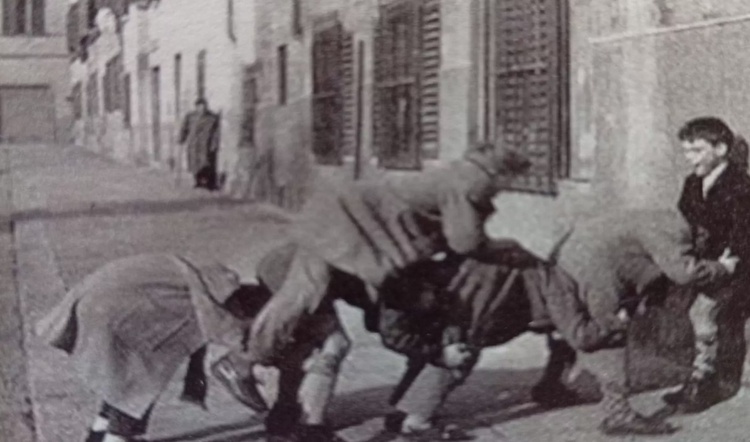
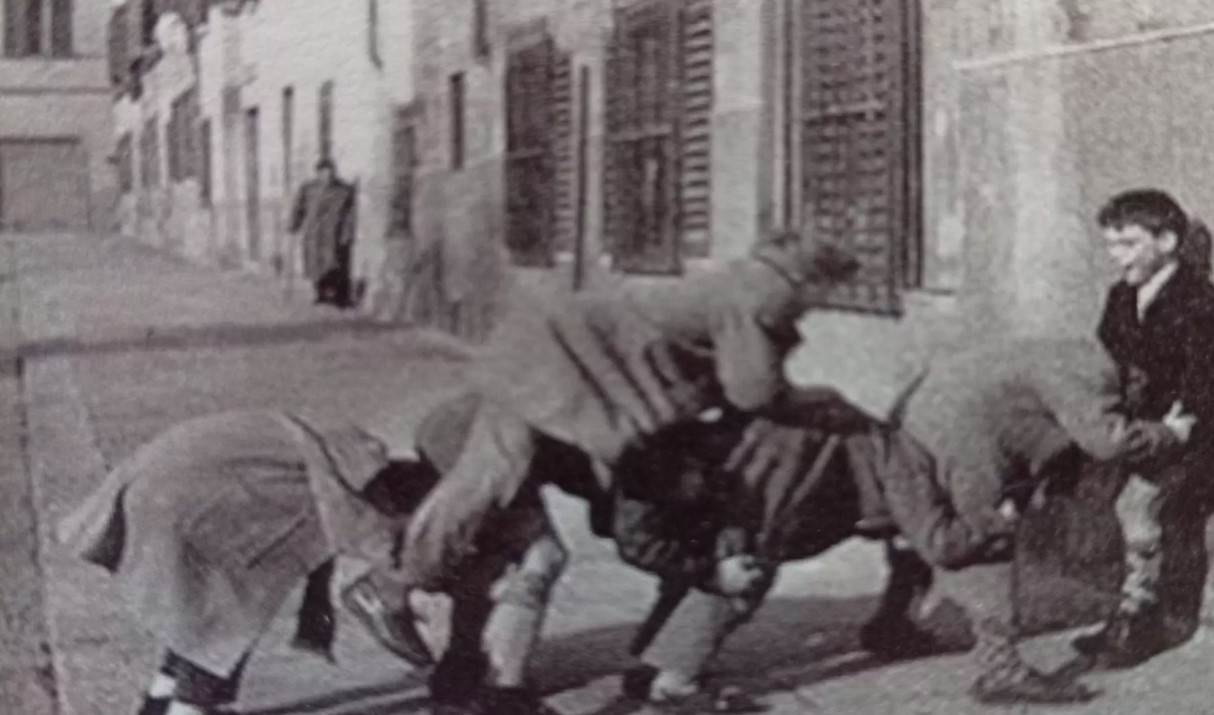
Among the first games Toni recalls is Spezzacavaddu. “Six or seven kids would line up, bent forward, forming a chain,” he explains.
“The opposing team had to jump over them. The first jumper had to be the most agile, clearing the entire line in one leap. If they failed and landed on someone, the chain collapsed and the team lost.”
Games that required strength, coordination and teamwork, but above all encouraged movement and cooperation.
Every gesture was an exercise in creativity and skill, a dance between reality and imagination. Streets, courtyards and small village squares became improvised stages for wild races, daring jumps and scraped knees.
“One of the most common complaints doctors make today is that children don’t get enough physical activity,” Toni adds. “Back then there were no gyms, but we were constantly moving, playing and enjoying ourselves together.”
Turning the pages, vivid memories emerge: days split between school and play, deep respect for teachers and the parish as a central gathering place for the community.
“In Quattropani, electricity only arrived in 1962,” Toni explains. “Back then it really snowed on the islands—something that hasn’t happened for decades now.
Men would climb Mount Sant’Angelo with lanterns to collect snow. They dug pits, lined them with wheat straw and stored large blocks of ice underground, covered and protected by layers of earth.
“When August 24 arrived—the feast day of the patron saint, Saint Bartholomew—the remaining snow was retrieved, taken to the gelato maker and crushed to make granita. Just lemon and a bit of sugar,” he recalls. It was a simple luxury, but one eagerly awaited.
Among Toni’s other treasured memories is waiting excitedly for the fair to arrive—and along with it sweets that felt irresistible.
“As kids, we’d go picking capers a few days before the feast to earn 100 or 150 lire,” he says.
“For us, that was a lot of money—it meant we could buy something to eat, because there were no toys.”
Today, Toni travels throughout Italy and abroad promoting Aeolian traditions, dialect and culture.
His work was recognised in 2017 by Italy’s National Pro Loco Union, which awarded him the Salva la tua lingua locale prize in Rome at the Capitoline Hill, with a special UNESCO mention recognising intangible cultural heritage.
“Sharing what once was the simplicity of everyday life means giving younger generations the roots they need to build their future,” Toni concludes.