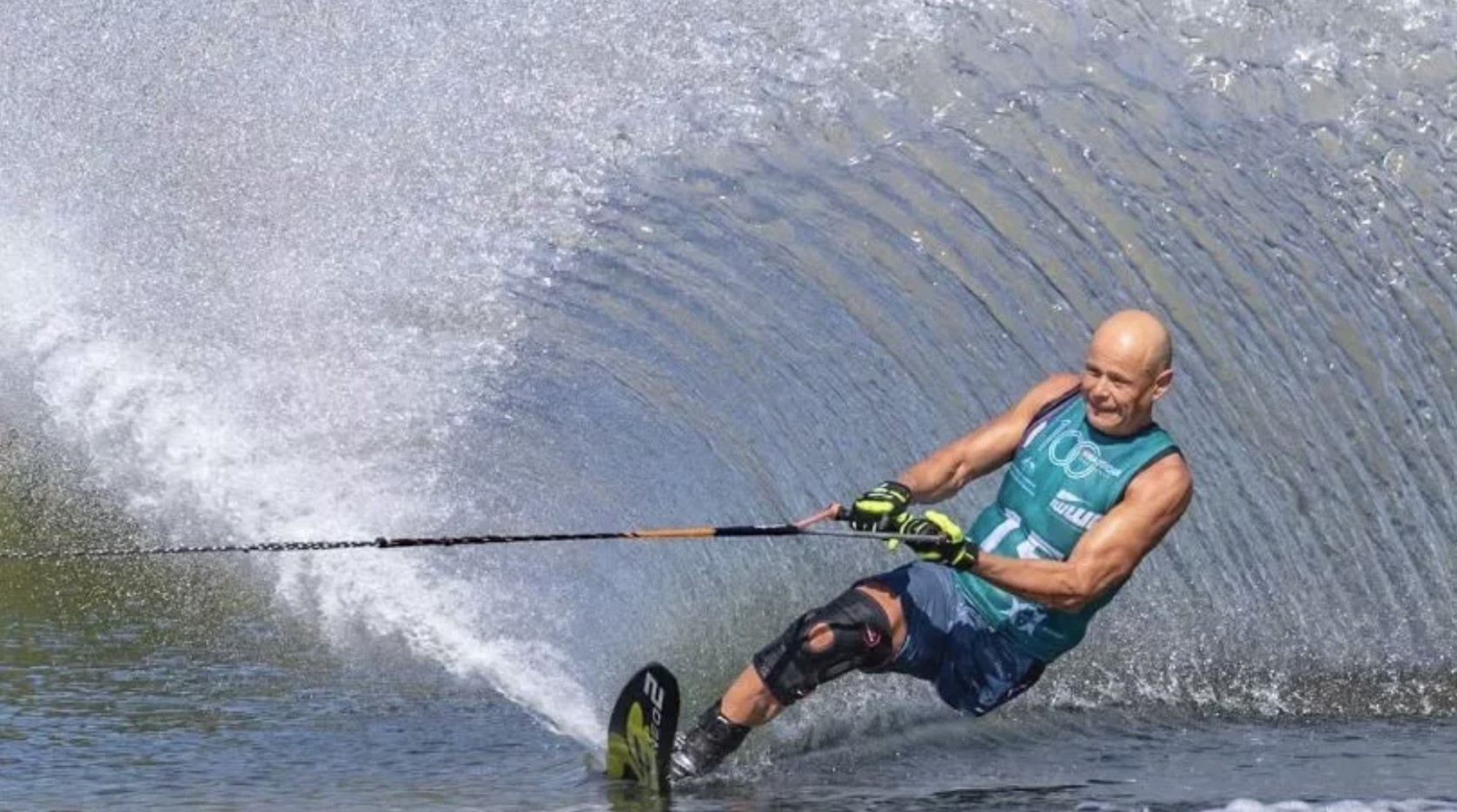
The event, held from November 24-30 in Mulwala, NSW, featured four athletes representing the Waterski and Wakeboard Italian Federation. Gandola joined us for a phone interview at the end of Friday’s elimination rounds.
“We have Cristian Lanthaler and Andrea Modica. Cristian is a veteran one-legged skier and a former world champion, so he knew exactly what to do and booked his place in the final,” explained Gandola.
“Modica, on the other hand, was competing in his first World Championship and narrowly missed qualification.
“We also advanced one of our two vision-impaired athletes, Michele Brignani, to the slalom final, while the other narrowly missed out on the tricks final after placing fourth (only the top three went through), and another Italian athlete made it into another final with a second-place finish.”
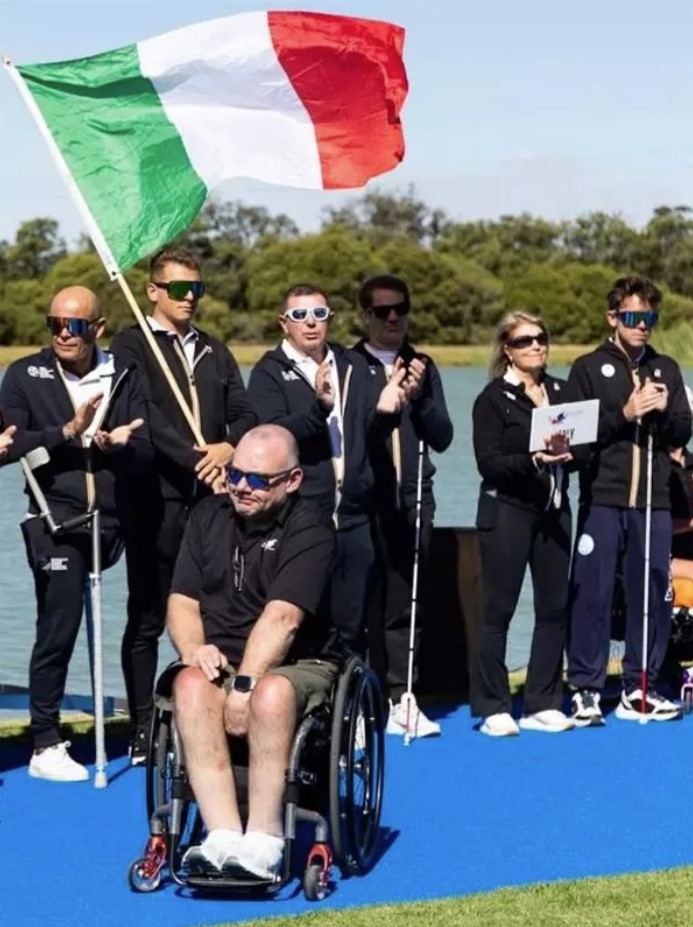
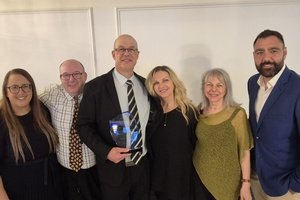
The Azzurri during the awards ceremony
For those unfamiliar with the sport, Gandola explains that competitions are structured almost exactly like able-bodied events, with only minimal adjustments depending on the athlete’s disability and the discipline involved.
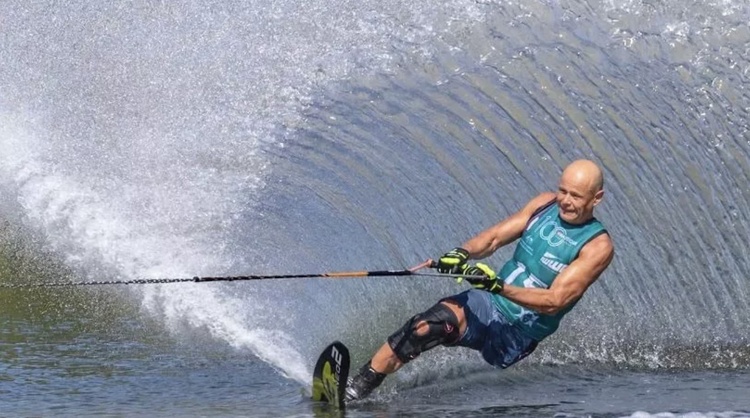
For single-leg slalom skiers, the binding is positioned centrally on the monoski to ensure performance comparable to that of athletes who ski with both legs.
As for vision-impaired competitors, although they participate in slalom, tricks and jump events like everyone else, they rely on an electronic system that detects the position of the buoys relative to the boat’s speed—which remains identical to that of an able-bodied competition, at 58 km/h.
In the jump event, athletes receive verbal guidance from the team’s technical director, who supports them right up to the final centimetres before the ramp, after which they complete the jump autonomously.
“This is definitely the most important competition of the season,” Gandola said.
“We trained right up to mid-November and, considering that temperatures in Italy were already getting cooler, it was a real pleasure to compete in Mulwala, where the weather has been kind—beautiful days, with temperatures around 30 degrees.”
When asked about the ages of his athletes, Gandola explains that the team ranges from around 25 years old to about 60.
“This is a sport where experience counts,” he revealed, “Emotions and nerves play a big role, so when you get to the Worlds, it’s often the ‘old foxes’ who manage to land the decisive blow.”
Now back in Italy, the Waterski and Wakeboard Italian Federation team finished fourth overall, behind the United States, Australia and Canada.
The world of athletes with disabilities is still largely unfamiliar to many sports fans, despite it delivering the same excitement—and in many cases far more—than mainstream sport.
These competitors embody the true spirit of sport—something that, sadly, many elite able-bodied athletes occasionally lose sight of.