

Fortunately, the waves of mass migration from Italy saved Australia from that desolate fate, all the while changing the cultural fabric of this remote island.
The history of the first Italian restaurants in Australia has a more complex background than you might imagine.
This history dates back to the migrants who arrived in Australia in the 1920s and 1930s and the emergence of the “Spaghetti Mafia” of Melbourne.
These pioneering restaurants, of which The Society is perhaps most notable, gradually dethroned the monotonous British fare of rump steak and mutton chops available on popular menus.
Established Italo-Australian actress and screenwriter, Marita Wilcox, grew up on her mother’s recollections of memorable images and unforgettable flavours.
Her grandfather, Giuseppe Codognotto, was among the first to make his mark on Melbourne’s restaurant scene, showing Australians how pleasure could be found in food, wine, conversation and music.
Back in 1923, Codognotto founded The Italian Society in Little Bourke Street, which was originally a club for expatriates.
He returned to Friuli, his region of origin, briefly, where he married his wife Amalia, and welcomed the birth of his son, Rino, and his daughter, Rina.
Ever restless, Codognotto migrated back to Australia and moved The Italian Society premises to 23 Bourke Street, thus establishing the legacy of one of the oldest gastronomic institutions in Melbourne.
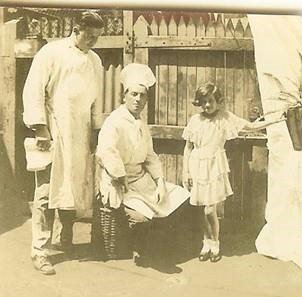 From the left: Ernesto Codognotto, Tony Evangelista and Rina
Drawing on those rich memories, Wilcox has written a sophisticated script that tells her family’s story, featuring the restaurant that welcomed multiple generations of customers and served American celebrities and military personnel.
Foremost among the characters in the script is Wilcox’s mother, Rina, a woman who never shied away from demonstrating either her talents or, indeed, her stubbornness.
“My mother asked me to write her story,” Wilcox explained.
“She read an article in a newspaper that was spewing lies about her brother Rino, who ran the restaurant for a long time.
“The initial idea was to make a coffee-table book, complete with recipes, but in the end I went back to my first love, scriptwriting.”
The Italian Society, which was forced to change its name to The Society by the Australian government in the 1940s due to growing anti-Italian sentiment, spanned across two floors right in the heart of Melbourne.
“On the third floor was an illegal gambling venue,” 97-year-old Rina said.
“There were two pool tables and a table for cards.
“During WWII, the second floor was reserved for the Yankees, the American military stationed in Australia, who pushed us to change the menu to suit their tastes: spaghetti and meatballs.
“The Italians, on the other hand, had their own special tables.”
The Italian Society was the first restaurant in Australia to import a rolling pin designed specifically for making ravioli, which arrived in 1935.
Rina has distinct memories of accompanying her father to the Port Melbourne docks to collect imported products and traditional utensils.
Unfortunately, Giuseppe Codognotto passed away too soon, when Rino was only 15 years old, and Rina herself was only 12.
Though Rino was forced to take over the restaurant, he was soon called up to fight in WWII.
“He was the only man in the family,” Wilcox said.
“He did not have to leave, according to the laws of the time.
“It was an inexplicable fact.
“The circumstances, which remain a secret, will be exclusively divulged during the show.”
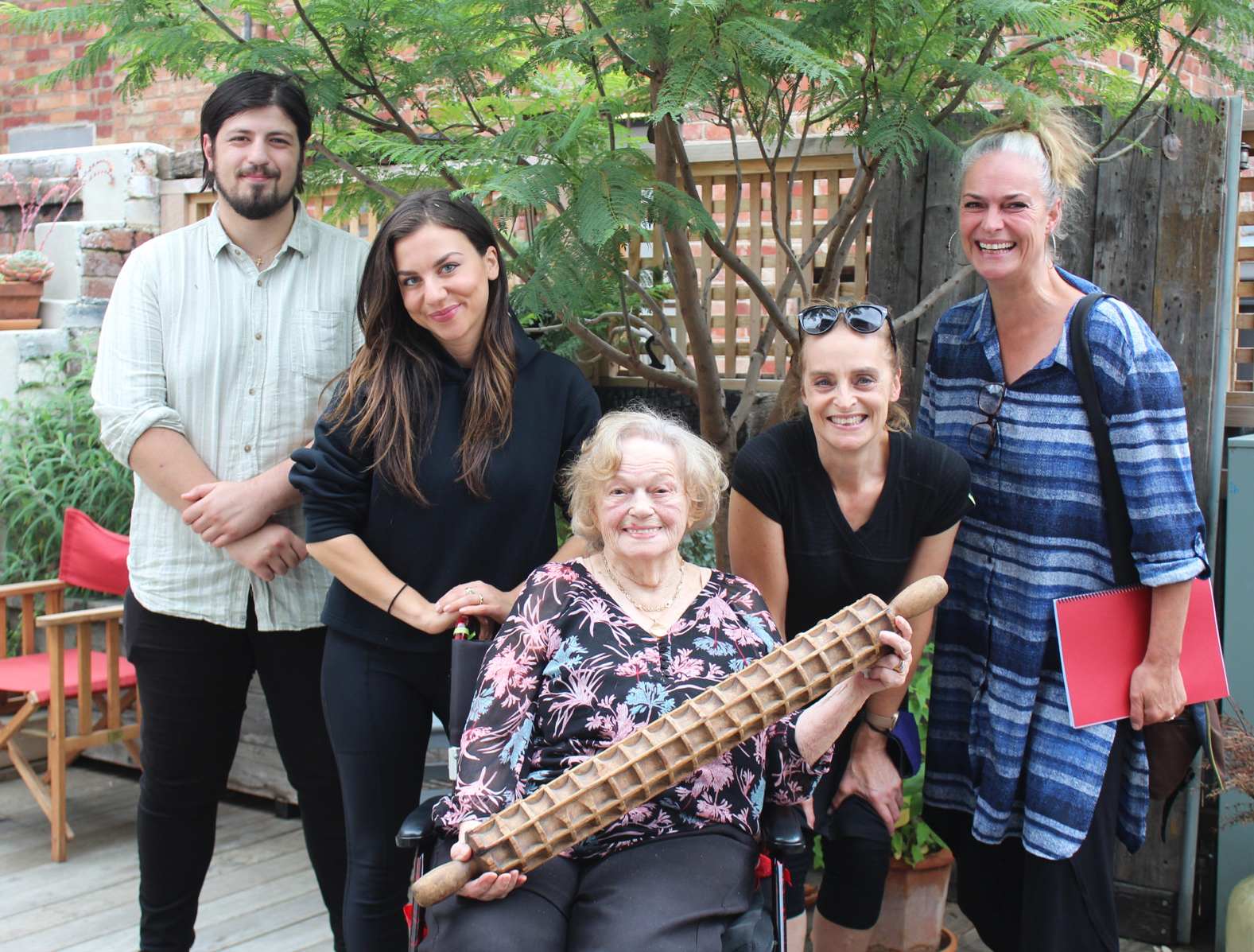 Rina pictured with the actors from the show, who all have Italian heritage, holding the original rolling pin which was used to make ravioli
Despite her young age, Rina began to manage the restaurant and its 20 plus staff, who “gave her a hard time because she was a woman”.
Nevertheless, The Society continued to play host to celebrities such as actor Barry Humphries, writer Gore Vidal, actress Vivien Leigh and American author James Michener, who described his dinner as “the best meal ever”.
“One day, the prime minister at the time walked past the restaurant and asked me what sort of place it was,” Rina said.
“When I explained it to him, he said: ‘I thought all the Italians had left for the war’.
“He ate his first plate of spaghetti at the restaurant and from that day forth, Melbourne’s politicians began visiting the restaurant.
“They honoured me with gifts – one person gave me tickets for a show at the Melbourne Glaciarium.
“I loved ice-skating and wanted to become a figure skater, but my mother forbade it.”
The script concludes by describing the aftereffects of World War II on its protagonists.
Rino returned from New Guinea, disoriented and upset by the horrors of war, while Rina was still working, even after she married and had three children.
“I studied the Commedia dell’Arte during my years of acting and I learned to appreciate the great tradition of Italian theatre,” the show’s director Peta Hanrahan said.
“When the script was pitched to me, I had no doubts in my mind as to whether I should work on it.
“It’s a true story that follows Rina’s history and that of her Italian family in Melbourne, in a very particular era.
“It’s an immense opportunity that allows me to be closer to the Commedia dell’Arte and reflect on how Australians identify with the Italian community.”
The script, dramatised by Hanrahan and entitled La Società Italiana, will be read on April 2 at La Mama Courthouse Theatre at 2:00 pm with refreshments to follow at Johnny’s Green Room in Lygon Street, Carlton.