
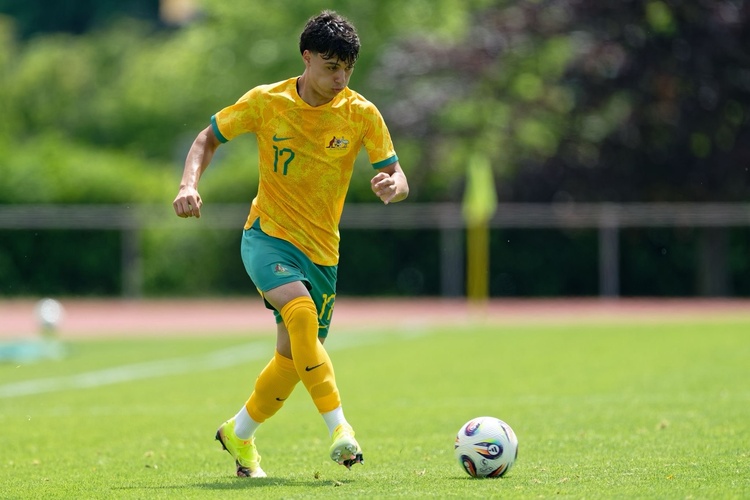
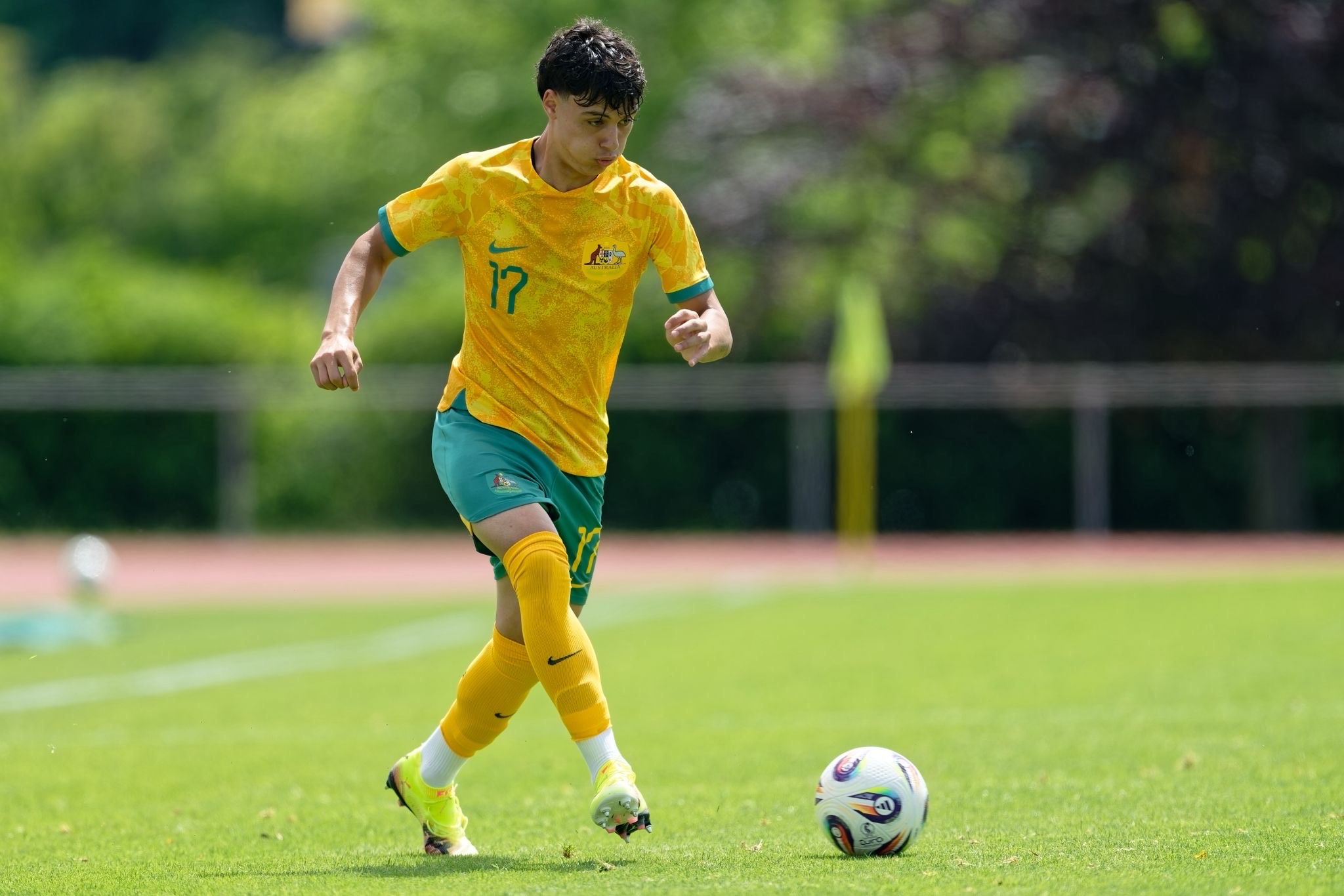
After a year and a half in Italy, it’s clear that Italianisms have already taken hold of the young man. “…and nothing” he says after some sentences—a literal translation of the Italian filler phrase e niente.
Leo started his Italian football journey in July 2024—an opportunity that came about thanks to the connections he established when he was younger.
“When I was really young, I lived in Italy for a few years and I was just playing in a small town,” he explains.
“They do many camps where they kind of scout players and they always kept an eye on me, but I wasn’t able to do the trial because I went back to Australia to play.”
Eventually, Leo returned to Italy for a trial with the Cagliari under-18 team. According to him, getting signed by Cagliari was the catalyst for future opportunities.
“I ended up getting a call for the under-18s Australian national team, and due to that I got a lot of visibility,” he recalls.
“From there, I received a few calls by a few teams up in Northern Italy, and one of them happened to be Reggiana.”
Leo’s lifestyle is unique for someone his age. He lives in housing supplied by the club—a shared apartment with teammates right next to the training ground. For lunch and dinner, youth players are given coupons to a local restaurant.
“Everything’s paid for [by the club] apart from breakfast—we’ll do breakfast at home,” he shares.
While he trains once a day from Monday to Friday and plays on Saturdays, Leo still needs to find the time to finish high school. After doing Year 11 at an Italian school, the decision was made to switch to online classes in English.
“Me and my mum decided to do this online American school, just so it was a bit more simple … that way I wouldn’t have to be stressed with football and I could just do it and graduate easily,” he explains, adding how important sticking to a daily routine that balances study and football has been for him.
“[The teachers] give me things to do every day, and it’ll take like four or five hours a day of studying.”
His move to the Serie B club in Emilia-Romagna seems to be doing wonders for his development, as Leo now trains regularly with the first team.
“I’ve been getting called [to train with the first team] quite a bit in these last months, which is really good,” he says, “Because, when you go up there, the level’s way, way higher and it just exposes you to a better level, which will make you then grow as a player.”
Leo says that despite the dramatic jump in quality, he’s perfectly comfortable in the first-team environment.
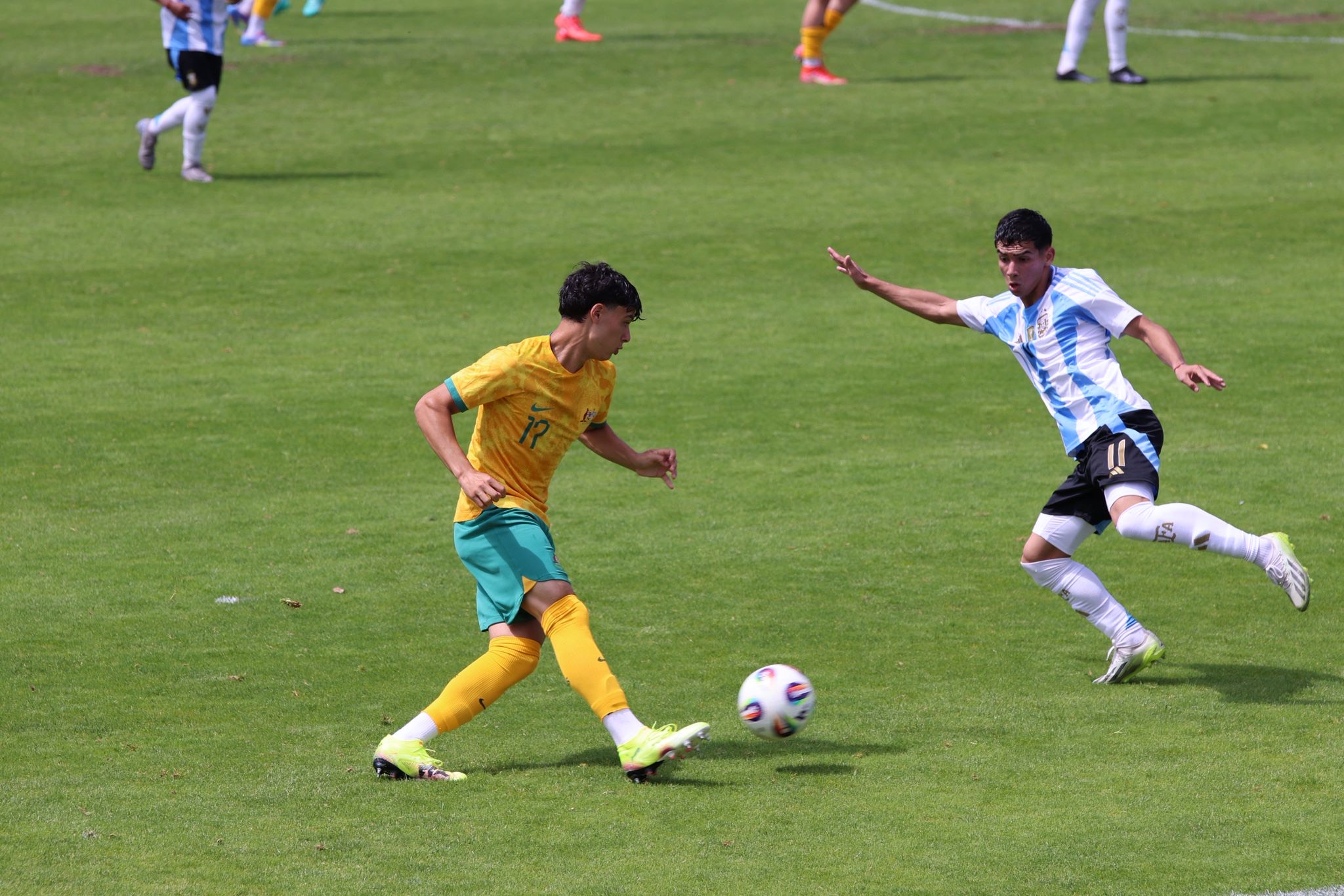
Leonardo Fanari representing Australia against Argentina. (Photo: Football Australia)
“Obviously they’re way, way better than me,” the teenager admits, “but I don’t see a big, big difference.
“I think they’ve just got way more experience, and physically they’re way bigger and stronger than me, but when I go there, it’s like a natural thing—like a natural switch where … you’re automatically more focused, more concentrated,” he explains.
“Everything just gets quicker in your mind, which means when you play, you’re so controlled in what you do.
“It’s hard, obviously, but I think your body just adapts to that level and then you can play better.
“[The first-team players] bring you up to that level. They force you to be at that level, because if you’re not, they won’t call you again or the players will get mad with you…,” he reveals, giving an insight into the highly competitive nature of professional football, where teenagers are expected to show an emotional maturity beyond their years.
“I remember a few other guys doing a technical drill with me,” he recalls, “and even then, they’re not giving you easy balls—they’re giving you really hard passes—and you’ve got to be able to control them at a high level and play them quick.
“I remember once when my [youth] teammate made a mistake with his control—the first touch—and the players just literally ripped into him, saying, ‘Come on, you’ve got to do better!’
“You’re not really a kid when you go up there—they treat you as a teammate and you’ve got to play to that level.”
From the way Leo talks about the quality of football he witnesses at these training sessions, it’s clear that no amount of pressure can outweigh how much he enjoys being there.
“Every training session you go up there, they’re always doing special things,” he says, “but what impresses me the most is their simplicity, like their first touch, their control, how they touch the ball, how they move on the pitch—they’re so relaxed, confident and they don’t make simple errors.
“It’s just so clean … everything. You won’t really find a Lionel Messi in the squad, but you’ll find 11 guys who have mastered the basics, which is just so nice.”
Being a 17-year-old living away from home in a foreign country has been challenging, but Leo chooses to view his experience as character-building.
“It’s obviously hard to adapt,” he admits. “[Things are] changing all the time—changing teams, your place … you’re not living with your parents—it’s very tough.
“But at the same time … sometimes I look back and I tell myself that I’ve done a really unique thing, and it helps me grow.
“[I can] look back and be proud of what I’ve been doing.”
When asked about his ambitions regarding landing a professional contract, Leo says his short-term goal is simply to keep improving on the pitch.
“I haven’t really thought too much about what will happen in 12 or 24 months to be honest,” he says.
“I’m just really focused on what I will do now—and then the rest I’ll leave to my agent.”
Wherever he ends up, Leo Fanari will be one to watch for Australian football fans.