The theme posed a provocative question: why are more and more women beginning to view heterosexual relationships not as a promise, but a risk?
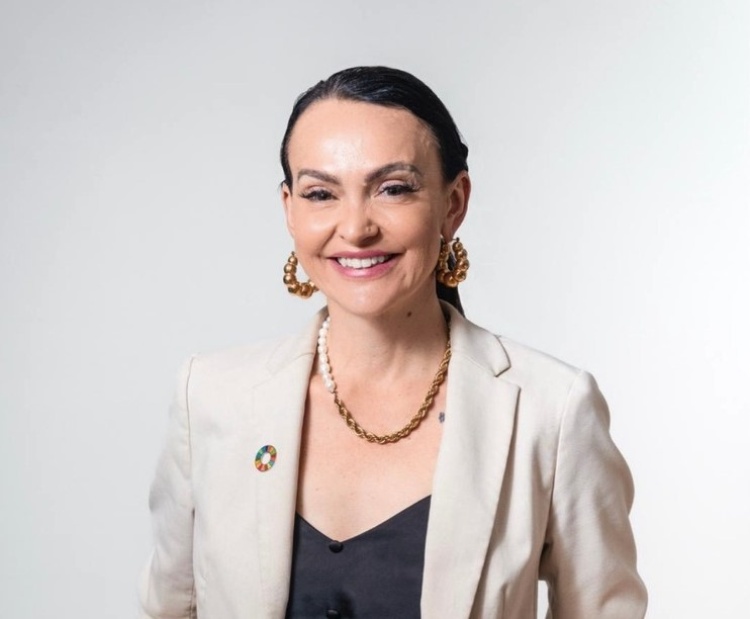
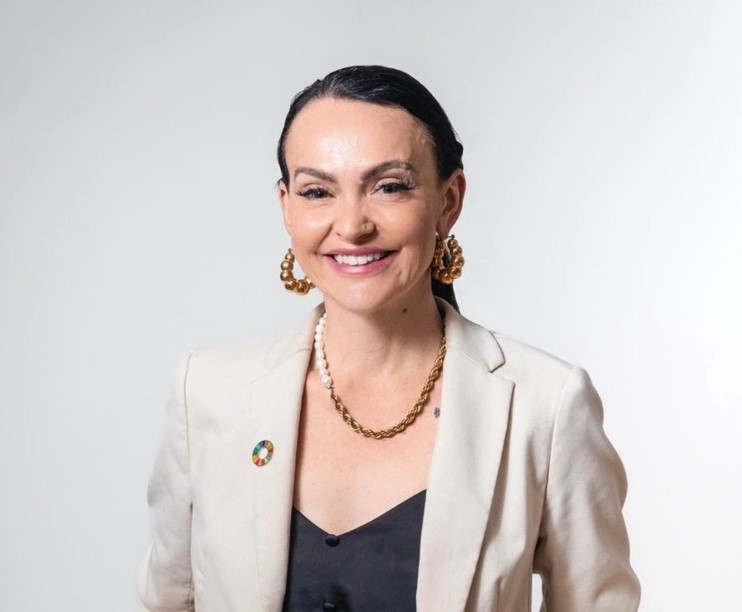
Based in Sydney, Portolan is a researcher, academic and writer whose work focuses on intimacy in the digital era and the tensions shaping contemporary desire.
“Dating apps are not simply tools,” she argues. “They are cultural systems that are rewriting how we imagine love.”
Alongside her academic work, Portolan is also Managing Director of Horizon Communication Group in Sydney, a career built over more than a decade in the communications sector.
Her parents migrated to Australia from Friuli in the 1960s, already married at the age of 19. At home, the family spoke Friulian rather than Italian.
In a country where the Italian community was often associated with Southern Italian identity, Mediterranean cuisine and visible cultural markers, Portolan’s family remained somewhat outside that narrative. Her blonde, green-eyed mother was often mistaken for French.
“We were different from Australians, but also from the Italians here,” she recalls. “We couldn’t really live an authentic migrant story because we were quite different—Northern Italians without a large community around us.”
Italy, however, remained a constant reference point through childhood summers in the family village and later through her studies in Bologna.
“I fell in love with Italian culture while I was there,” she says, “Florence, Rome, the art, the theatre. Everything is amplified, even the way love is experienced.”
When Portolan began her research, the dominant narrative still centred on “finding the one”—the idea that romantic love was the essential first step of adult life. Today, that narrative is beginning to fracture.
Drawing on data collected during the pandemic, Portolan developed the concept of “jagged love”—yet the phenomenon predates COVID-19.
The pattern is familiar: someone downloads a dating app, scrolls through profiles, maintains several conversations, then encounters disillusionment—ghosting, banality, even hostility. The app is deleted, only to be downloaded again later.
“Many people told me, ‘The longest relationship I’ve had is with the app itself,’” she recalls.
The perceived abundance of choice often generates insecurity rather than confidence.
“There’s this constant feeling that the grass is greener somewhere else,” Portolan explains.
“Dating apps reinforce exactly that idea—you can keep scrolling forever, there will always be someone else.”
The paradox, she says, is clear: we seek uniqueness within systems designed for replaceability.
This shift is not limited to younger generations. Portolan notes that around one third of divorces in Australia involve people over 50, with the phenomenon of “grey divorce” continuing to grow.
Many women, she observes, now seek companionship without cohabitation. A model known as Living Apart Together (LAT) is increasingly common: intimacy without merging households or finances.
“Almost all the women over 50 in my focus groups didn’t want to move in with a partner again,” she reveals.
“They wanted someone to go to the cinema, theatre or dinner with, but not someone living in their home.”
This dynamic sits at the heart of the Heterofatalism panel. For Portolan, the term describes a growing expectation that entering a heterosexual relationship may lead to negative outcomes.
“It’s almost a sense of inevitability—the feeling of stepping into something that will end badly: more domestic labour, less satisfaction, structural imbalances.”
In her latest book, Ten Ways to Find Love and How to Keep It (2025), Portolan addresses a common misconception about her work.
“Many people look at my research and think I’m against love. I’m not,” she says. “I’m very much in favour of love—but I believe the concept needs to be expanded.”
The idea that love should “complete” a person, Portolan argues, is problematic. No one should be the missing piece of someone else.
“People tend to build a pyramid with romantic love at the top and everything else—friendships, family, passions—underneath. But in reality, these forms of love are equally important,” she says.
Romantic love, in her view, is only one element in a broader ecosystem that includes friendship, creativity, family ties and personal passions. When identity and meaning are concentrated entirely in the couple, relationships become overloaded.
Alongside her current work, Portolan is launching a new research project with the collective Ascolta Women, inviting Italian-Australian women to share personal stories about love, marriage, family, migration and cultural change.
The project seeks participants from different generations and backgrounds, and LGBTQIA+ stories are explicitly welcomed. Those interested can contact her at lisaportolan@gmail.com.
“Love is such a charged space,” she says. “We approach it with enormous vulnerability.
“Whether it’s about sex or long-term intimacy, there is always negotiation and conflict. The question is how you navigate that path, and which values you hold most important.”
Love, Portolan concludes, is not an algorithm to optimise nor a destination to reach once and for all. It’s a fragile ecosystem that requires equity, time and responsibility.
And it’s precisely this fragility that makes it necessary.