The tour began on February 25 at the Duke of George in Fremantle, near Perth, and will continue through Sydney, Brisbane, Auckland, Wellington, Picton, Christchurch, Alexandra and Canberra before concluding on March 14 at the Paris Cat Jazz Club in Melbourne.
Ten concerts across Australia and New Zealand will close a tour that originally started last autumn and was partly postponed due to health issues.
For Ciarla, returning to Australia is nothing new. “I think this is the fifth or sixth time I’ve come here,” he says, “It’s a country I know quite well and really enjoy—the level of music is very high.”
Having arrived only a few days ago, he laughs about a small moment of culture shock.
“At night I heard strange sounds outside my window—strange animals,” he says with a smile. “It’s a nice feeling. It reminds you that you’re on the other side of the world.”
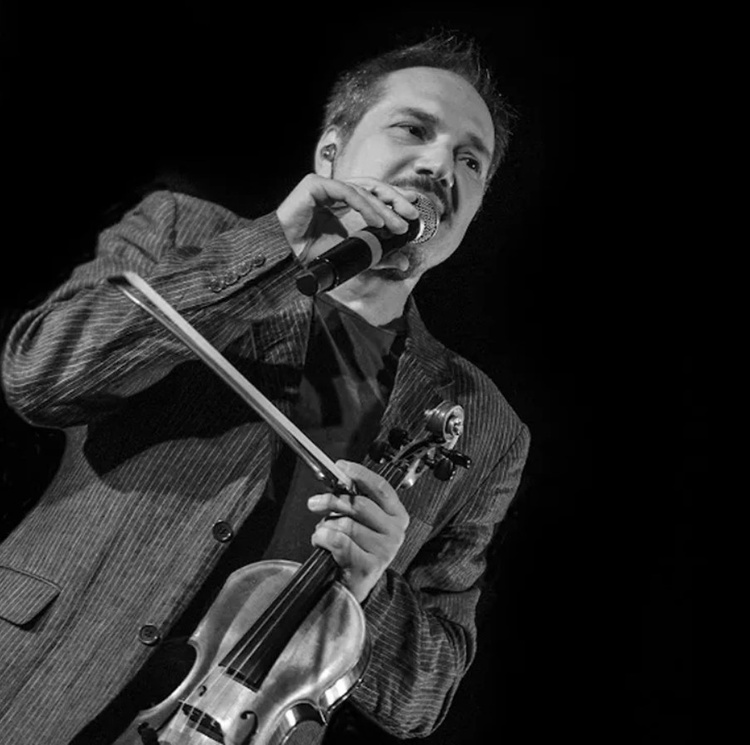
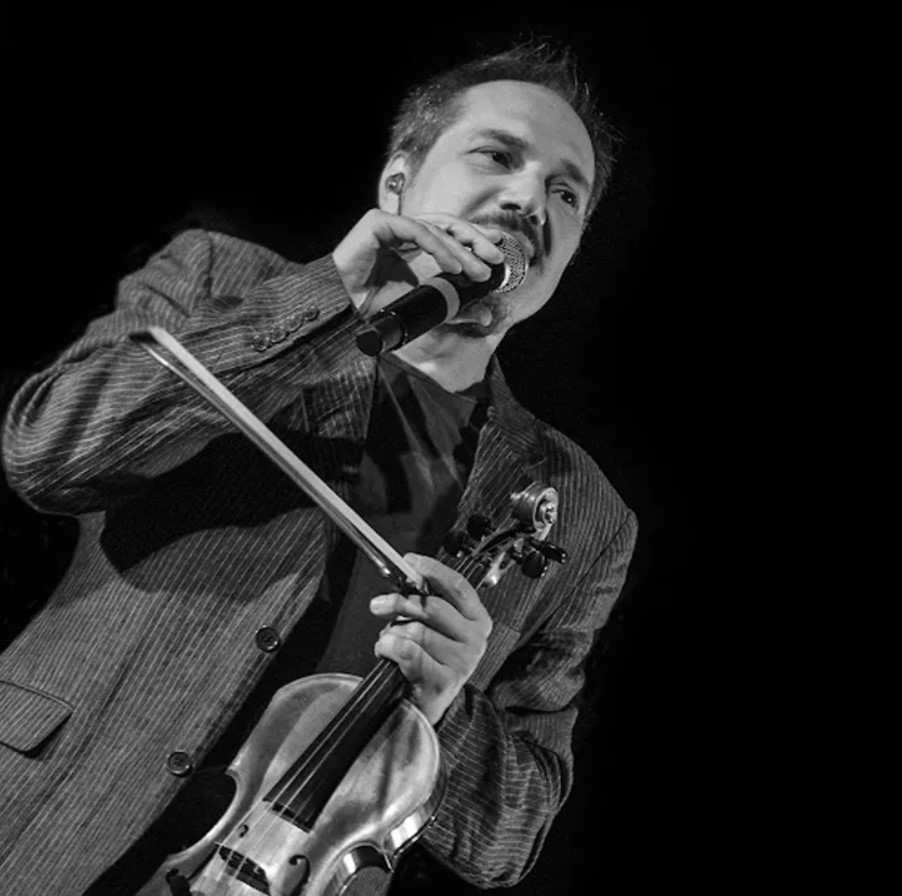
On stage, however, audiences should not expect a traditional violin recital. Ciarla creates what he calls his “solOrkestra”. Using a loop machine, he records and layers sounds live, building bass lines, harmonies and rhythms in real time.
The violin becomes percussion, double bass, even guitar. At times he sings, whistles or incorporates toy instruments.
“The loop machine is a hell of a device,” he explains, “It lets you record live, in the moment. It’s like a continuous sonic mirror.”
He discovered it about a decade ago almost by accident. “I borrowed one from a colleague just to try it out … and never gave it back.”
Behind this creative freedom lies a rigorous background. Ciarla trained classically at the conservatory, earning a degree in violin and specialising in orchestral performance. Jazz entered his life early.
“I started improvising when I was 12,” he recalls, “Keith Jarrett had a huge impact on me.”
In the 1990s he moved to the United States, where he completed a master’s degree, a doctorate and spent three years teaching at a university in Arizona.
“They were important years,” he says, “I studied intensely and constantly challenged myself.”
Ciarla’s artistic path has never been linear. “People would tell me, ‘Leave jazz and do only classical,’ or ‘Leave classical and do only jazz.’ But I never wanted to choose,” he shares.
Growing up in a household where music ranged widely—“from Bach to the Beatles, from Neapolitan songs to Indian music”—Ciarla embraced eclecticism from an early age. At 18, he was already playing in an arbëreshë folk group, influenced by Balkan sounds.
“I preferred to keep all my musical loves and let them flow into my own language,” he says.
That philosophy gave rise to Mediterramìa, the project he will present in Sydney. It was born during the Covid-19 pandemic, almost out of necessity.
“I was asked to record some video concerts. At first, I wasn’t convinced,” he admits. “Then I thought, ‘If the audience isn’t there, let’s make them more visual.’”
The turning point came on the Tremiti Islands, off the coast of Molise. “I suggested recording there and stayed for four or five days. It became a kind of working holiday. That’s where Mediterramìa was born,” he reveals.
In one of the pieces, the sound of the sea can actually be heard.
The program blends original compositions with arrangements from the Italian musical tradition, filtered through improvisation and layered textures.
At other stops on the tour, particularly in jazz clubs, Ciarla performs a repertoire more explicitly rooted in jazz. Yet the underlying approach remains the same: moving freely across musical languages without rigid boundaries.
“When you love music deeply, it’s hard to choose,” he says. “I like everything.”
Looking ahead, he hopes for a future “with fewer genres and more personality”.
After this Australia–New Zealand tour, Ciarla may return in 2027 with an ensemble from Molise as part of an international touring project supported by Italy’s Ministry of Culture.
For now, though, he has an appointment in Sydney—with a violin that never stands still.