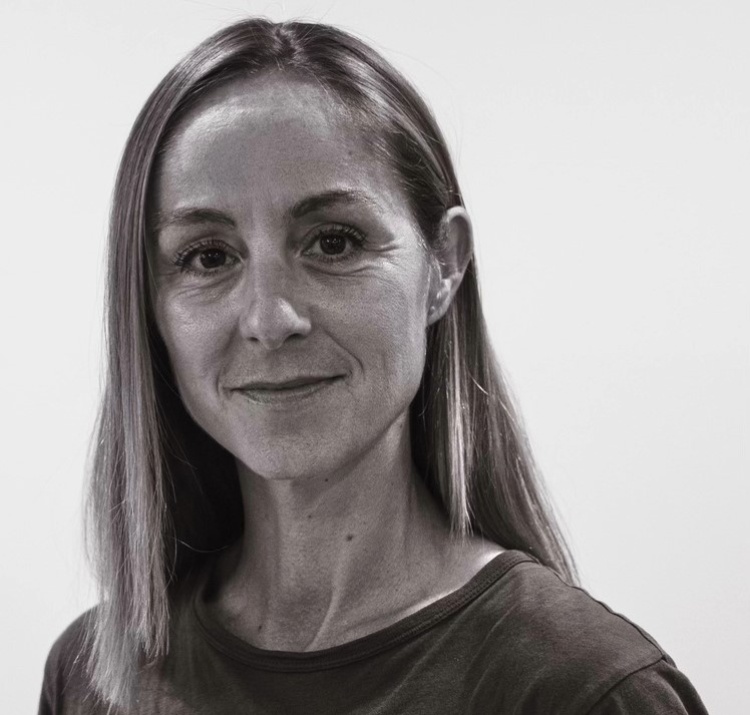
She lives in Sydney and for more than twenty years has worked as a set designer and production designer on international film and television productions. Her role is to design and construct environments—not simple backdrops, but credible spaces where a story can unfold.
She arrived in Australia in 2003. After training in Milan, where she studied set design at the Accademia di Belle Arti di Brera, she decided to leave to improve her English and test herself in a completely different context.
“I came here to do a three-month course,” she recalls. “I didn’t have a single day—not one moment—of homesickness.”
The early years, as is often the case for migrants, required some adjustment. Then came her entry into the Australian film industry, which Garanzini describes as surprisingly broad and dynamic.
From smaller initial jobs she quickly moved to increasingly large-scale productions, eventually finding herself within the complex machinery of major international sets.
Among the projects she has worked on are large productions such as The Great Gatsby and Alien: Covenant, Australia, Hacksaw Ridge, Pirates of the Caribbean: Dead Men Tell No Tales, Shang-Chi and the Legend of the Ten Rings, as well as Thirteen Lives and Godzilla x Kong: The New Empire.
“We start long before the actors arrive,” she explains, highlighting how much of a set designer’s work is concentrated in preparation, planning and physical construction.
“I start at 7:30 a.m. and finish at 6:30 p.m. I eat lunch on the run,” she says frankly.
One of the most fascinating aspects of set design, she explains, is that each film forces you to learn something new. Every project is a world of its own, with its own rules.
At the moment, for example, she is working on a production involving military naval vessels, immersing herself in technical details she had never previously considered.
“Right now, I’m working on a film about 1940 warships,” she reveals, “You need to know everything: what the cannons are called, how the engine room works.
“Each time you have to become an expert in things you’d never thought about.”
It’s a profession that demands constant research, collaboration with consultants and almost surgical precision.
In recent years the industry has changed rapidly. Garanzini observes the growing integration between physical sets and visual effects.
“What’s changing even more is the interaction with special effects,” she explains. “Today, many scenes are planned in advance with digital pre-visualisations, and the work on set develops in continuous dialogue with post-production.
“Storyboards still exist, but they’re quickly transformed into digital pre-visualisations.”
She also describes the use of immersive technologies, such as large LED screens that allow environments and landscapes to be simulated during filming. “It’s no longer just blue screens,” she says, “The actor can already see the environment around them.”
Among the experiences she recalls most enthusiastically is The Great Gatsby, for its level of detail and research: “It’s one of those films where nothing is left to chance.”
Then there is Thirteen Lives, based on the true story of the rescue of the boys trapped in a cave in Thailand, where the set design team recreated extreme environments: caves, water, claustrophobia-inducing spaces. In this case, reconstruction became central to the storytelling.
From Milan, Mara Garanzini has brought artistic and technical expertise into one of the most competitive and complex industries, contributing to productions seen around the world.
And perhaps the reason she continues to love this work, despite its demands, lies in that sense of wonder it still offers.
“It’s a job that, in all its complexity, gives something rare back to you,” she concludes. “It almost makes me feel like a child again, just for a moment.”