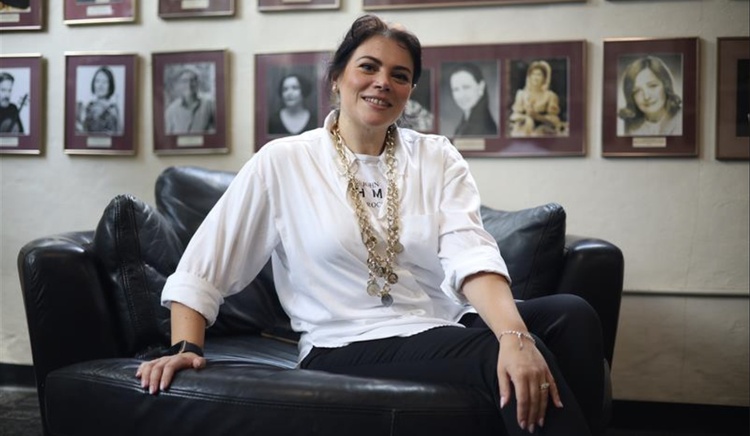
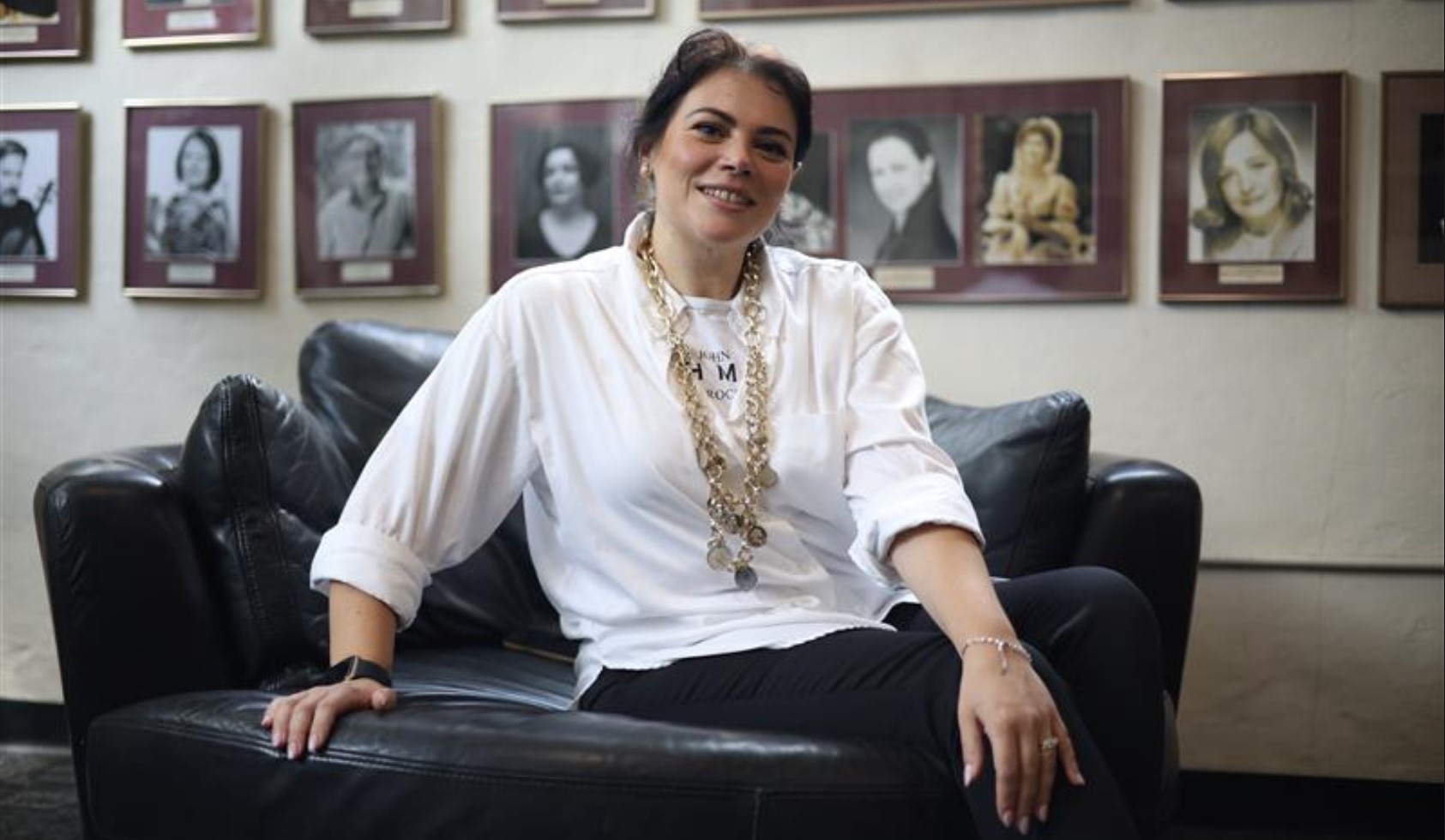
“It’s a dream,” she says. “The Sydney Opera House is an iconic theatre, the symbol of Australia. You see it on postcards and think, ‘Maybe one day.’
“Being here now makes me very happy.”
Leva’s enthusiasm extends beyond the stage itself: “The working atmosphere is wonderful, everyone is extremely kind and professional. I’ve been here for a month now and I still don’t feel homesick—that means I’m having a really good experience.”
Born in Reggio Calabria, Maria Teresa Leva graduated with top marks from the Francesco Cilea Conservatorium. Her path, however, did not begin with a calling to opera.
“As a teenager I dreamed of being a pop singer,” she reveals. “I even took part in some TV talent shows. At the beginning, I didn’t like opera at all.”
She entered the Conservatorium almost by chance, on her father’s advice, when she was just sixteen.
“I had never even seen an opera live,” she admits, adding that the precise turning point came in the theatre.
“My teacher forced me to go and see an opera,” Leva recalls, “It was Turandot, with the great Giovanna Casolla. I cried the whole time—it was a shock.
“I walked out of the theatre thinking that maybe this was what I was meant to do.
“Years later, I sang Liù alongside Casolla. I told her that story and she wrote a dedication for me on the score. It’s a memory I treasure.”
From 2014 onwards, Leva’s career gained momentum when she won the Ottavio Ziino Competition in Rome and simultaneously debuted as Mimì in La bohème and Micaela in Carmen, followed by a succession of roles that took her to major stages in Italy and abroad.
Aida, Cio-Cio-San, Violetta, Amelia, Leonora, Adriana Lecouvreur: complex, demanding characters that require both technical solidity and deep emotional involvement.
Her repertoire moves naturally between Verdi and Puccini. “They are both great loves of mine,” she says. “With Aida I feel I have something extra to say, even if the story isn’t among my favourites—it’s Verdi’s music that gives me a particular energy and vocal colour.
“Butterfly, on the other hand, completely overwhelms me: the day after a performance I’m emotionally drained. It’s an opera that goes through you physically.”
For Leva, authenticity is essential: “If you don’t live the story yourself, you can’t convey it. What reaches the audience is real emotion.”
Singing abroad also means carrying a strong sense of identity. “Italian singers are very highly valued outside Italy,” she says. “Here, as soon as you say you’re Italian, everyone lights up.
“It’s our culture, our heritage, something we carry in our blood. It’s an added value that we often don’t know how to make the most of.”
At the heart of everything lies technique. “It has to be maintained every day, even in the smallest daily habits,” Leva explains. “The elasticity of the vocal cords is fundamental.”
And then there is silence, almost ritual: “Before and after a performance I need silence. It’s as if the voice needs time to focus and then to rest.”
Among her recent engagements is also her debut as Tosca, an important step that marks a further stage in her artistic journey, alongside the great Puccini and Verdi roles she continues to perform on prestigious international stages.
A journey that now brings her to Sydney with Liù—a character that symbolically completes a circle begun many years ago, when Turandot first revealed to her the transformative power of opera.