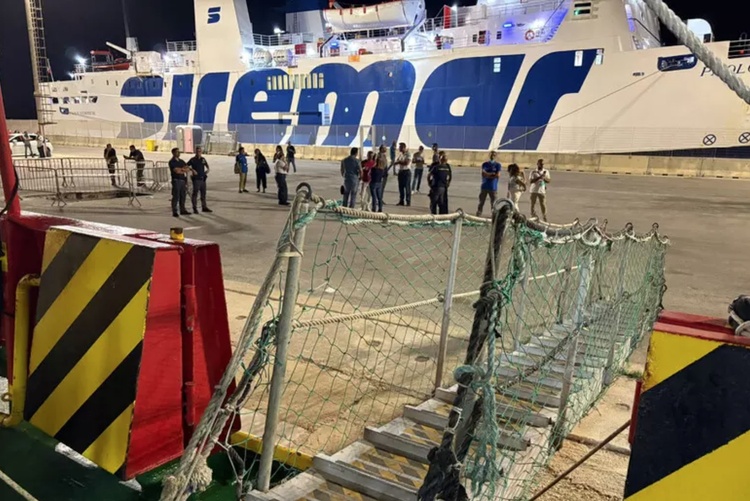
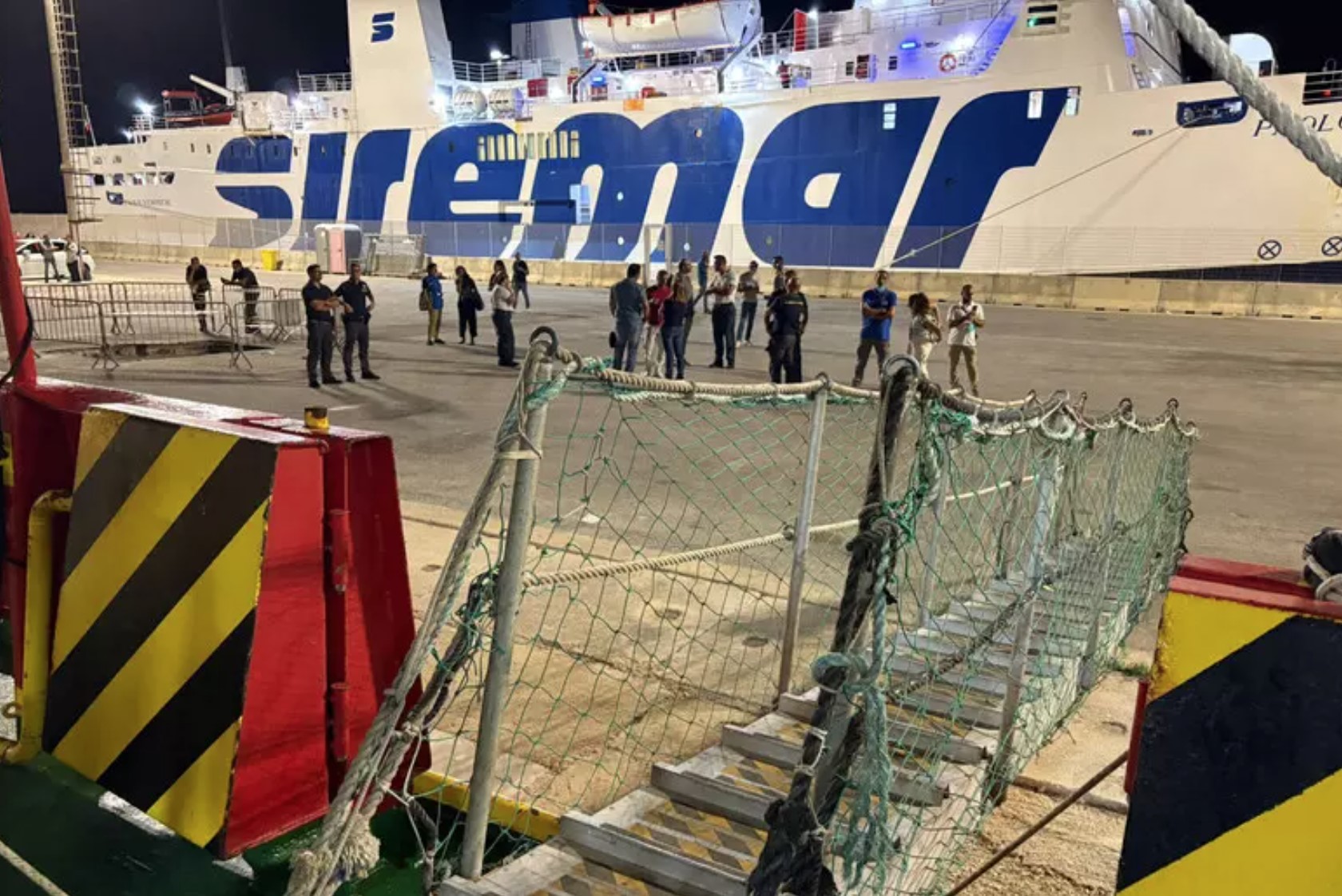
The administrative detention was issued under the so-called Piantedosi decree and signed jointly by police, the Guardia di Finanza and the Coast Guard, according to Italian public broadcaster Rai.
The operation followed a rescue carried out on Saturday night, August 23, near Pantelleria in the Sicilian Channel. Local outlets reported that the Interior Ministry had confirmed Genoa as the designated “place of safety” at around 2:35 a.m. on Saturday, a choice the NGO criticised as “inhumane” given distance and sea conditions.
Despite the assignment, the ship altered course and entered Trapani around 9:30 p.m. Saturday to land the 10 survivors, including several unaccompanied minors, after medical checks on the quay by health officials.
“We were aware Genoa had been assigned,” mission lead Beppe Caccia told ANSA, explaining the decision to opt for the nearest safe harbour amid rough seas.
The impoundment was based on Decree-Law 1/2023, later converted into Law 15/2023, which requires NGO rescue vessels to sail “without delay” to the port assigned by authorities and discourages multiple rescues in succession.
Violations are punishable by fines and temporary detention of the vessel; similar cases have previously resulted in 20-day detentions under the same framework.
The decree, often referred to as the Piantedosi decree after Interior Minister Matteo Piantedosi, has drawn sustained criticism from rights bodies and NGOs, who argue it hampers life-saving operations by assigning distant ports that remove ships from rescue areas for days.
The Council of Europe Commissioner for Human Rights urged Rome to withdraw or revise the law soon after its introduction, and in late 2024 an Italian judge referred aspects of the law to the Constitutional Court.
Humanitarian groups say Italy’s policy has coincided with a rise in deaths on the central Mediterranean route and recurrent detentions of NGO ships.
Data cited by Reuters in early 2024 noted more than 2600 people dead or missing in the central Mediterranean over a 12-month period following the decree’s entry into force, up from roughly 1600 the previous year.
The Italian government defends the rules as necessary for orderly disembarkations and maritime safety.
Under past practice, administrative detention typically sidelines vessels for weeks and may carry fines for the captain and operating NGO.
Authorities in Trapani have not publicly specified the Mediterranea’s detention length, but precedent under the decree has seen impoundments on the order of 20 days for similar violations.