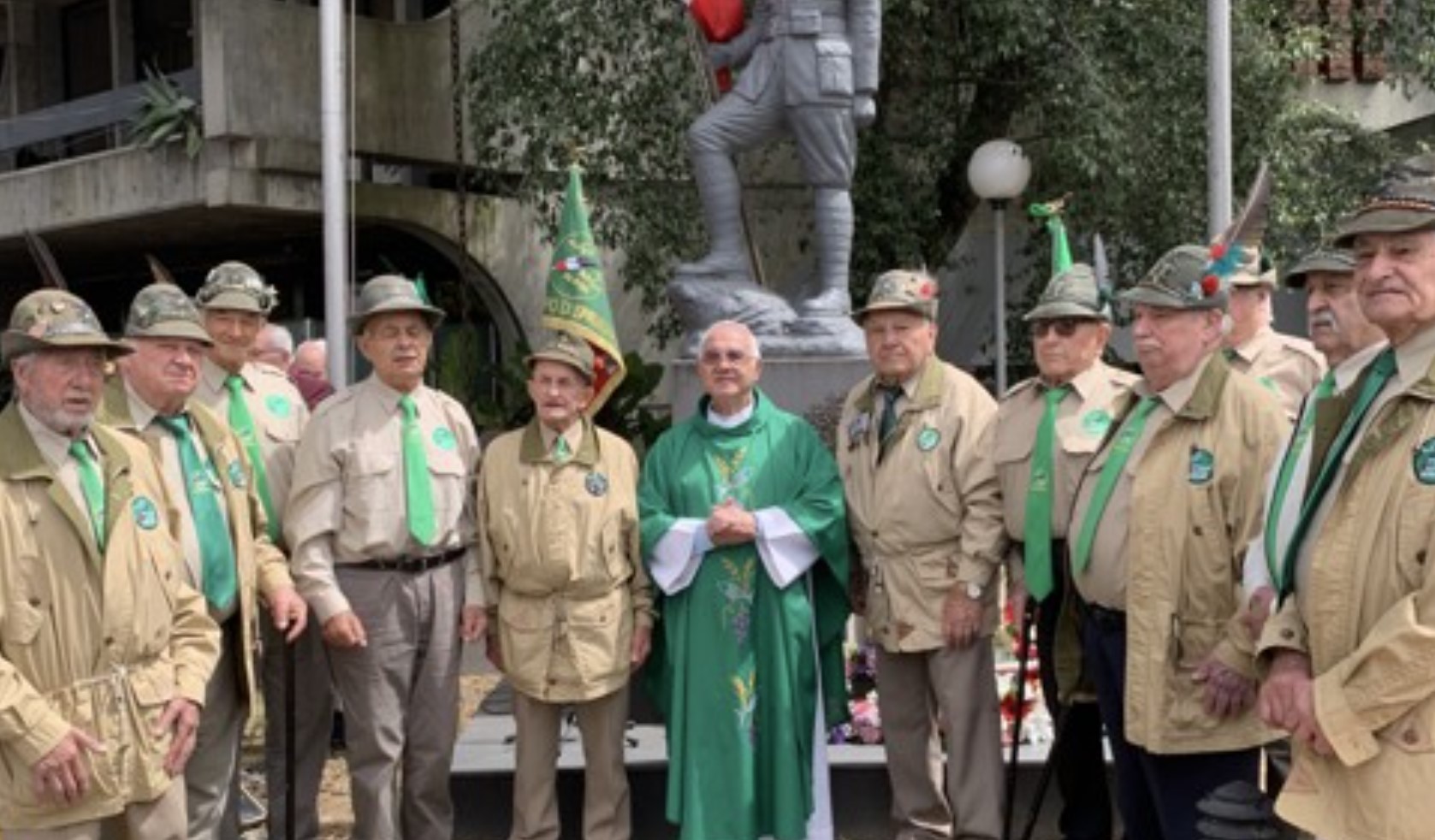
The annual appointment is an act of respect and gratitude.
Eighty-four years after the disastrous Italian expedition in support of Nazi Germany, which ended with the collapse of the front along the River Don and the dramatic winter retreat between December 1942 and January 1943, the Alpini of Melbourne met at the Veneto Club in Bulleen on February 1.
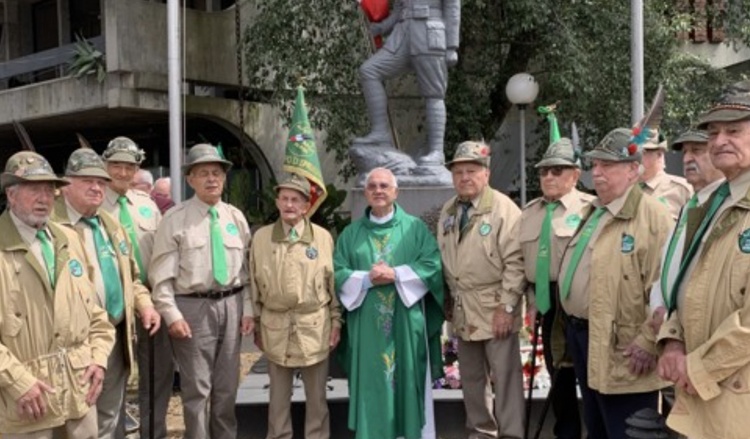
The day began with a Mass and the laying of wreaths at the Alpino monument, a symbolic site of deep significance for the community.
It was a moment of reflection for those who lost their lives in uniform and an opportunity to pause and consider the senselessness of war and its consequences, then as now.
“No one wants war, because it never brings anything good—only harm,” said a moved Riccardo Meneguzzi, head of the Melbourne Alpini group, who personally organised the commemoration.
“When I think of the Russian campaign, to me it was a futile war. Why did they send all those people there? Wars should never be fought.”
Meneguzzi revisited one of the harshest and most painful chapters in Italian military history. At the beginning of 1943, when the Red Army launched its offensive against the Italian units and the Alpine Army Corps stationed along the Don, a journey without return began for thousands of men.
The retreat became a desperate march: exhausted soldiers forced to move on foot with inadequate equipment, minimal food and ammunition, crossing territory controlled by the enemy, with night-time temperatures plunging to minus 30 degrees.
In those extreme conditions, the Alpini surpassed every limit of physical and psychological endurance, fighting battles that would enter the history of the Italian Army. The death toll was devastating: of the 57,000 men of the Alpine Army Corps, 34,670 never returned home.
“I feel this ceremony as a duty,” Meneguzzi said. “The commemoration began as a tribute to the veterans of Russia and was started by Angelo Job, who had experienced that campaign firsthand.”
After Job’s illness, the responsibility passed to him. For around 15 years he has continued the commitment, motivated in large part for deeply personal reasons: two of his brothers died during the Second World War—one in Germany and the other, Erminio, went missing in Russia.
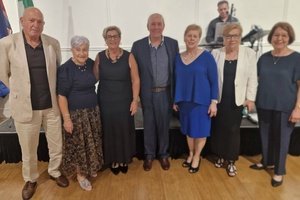
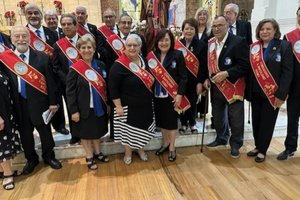
This year’s commemoration was attended by around 50 people, with no official authorities present.
The ceremony nonetheless unfolded with solemnity, marked by the playing of Il Silenzio, the laying of two wreaths—one dedicated to all fallen Alpini and one in memory of Erminio—and a moment of shared reflection to close the day.
For the head of the Melbourne Alpini, remembrance is not an exercise in nostalgia but a civic responsibility towards the present and the future. “Many young people today do not know the history of the Russian campaign,” he observed.
“Perhaps they have heard about it from their grandparents, or perhaps there is no one left to tell them. Yet it is one of the most important chapters of the Second World War.”
Memory, he explained, remains the only safeguard against indifference and the risk of repeating the same mistakes.
The ceremony in Bulleen concluded with a heartfelt tribute to the past and a message directed at younger generations: do not forget, question the meaning of those sacrifices and reflect on the value of peace.
“It’s easy to forget,” he said, “If you stop commemorating, everything disappears in a short time. Remembering is the only way to give meaning to what has been.”