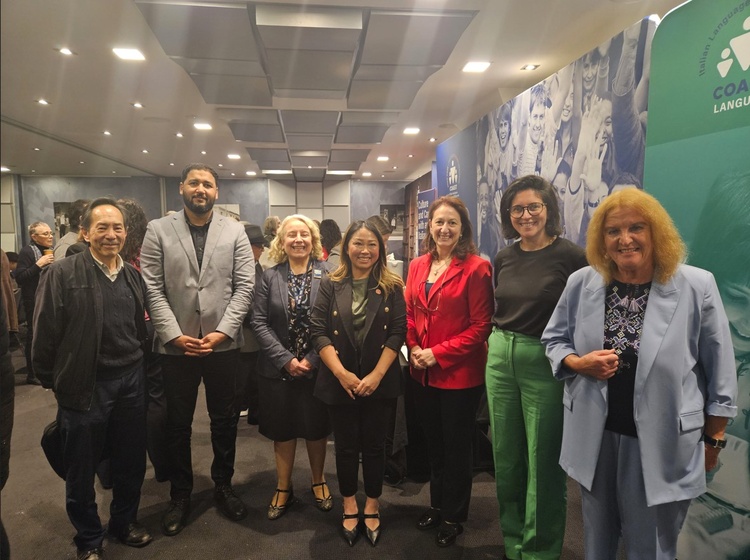
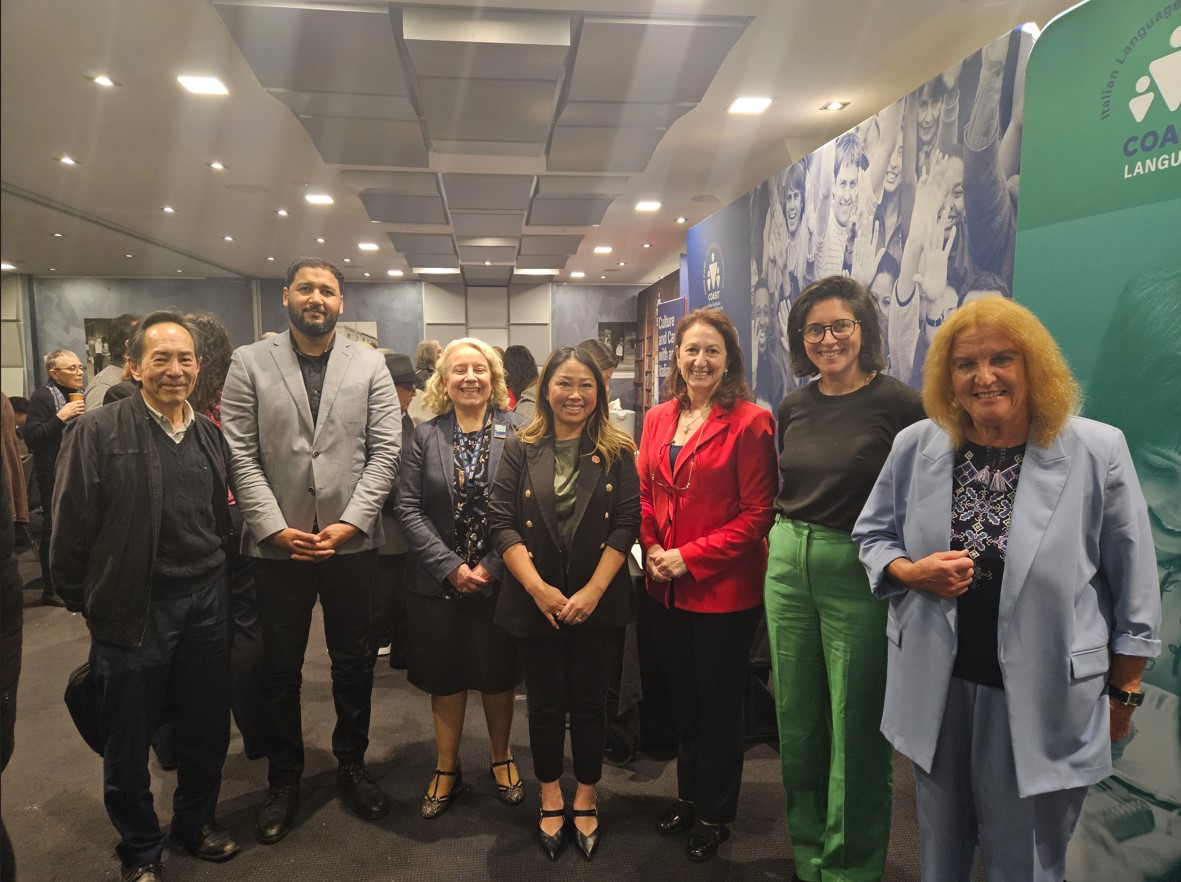
On Saturday, participants of the State Library Users Organisations’ Council (SLUOC) Forum walked past the rich exhibit to take part in a very special event. The Forum brought together many involved in curating and developing multicultural collections across the Australian community, as well as users and students of such collections.
The SLUOC committee organised the first Multicultural Collections and State Library of Victoria (SLV) seminar. They possibly underestimated the impact of such a forum.
Participants representing a range of ethnic backgrounds, as well as stakeholders from the Australian Museums and Galleries amongst others, gathered to deepen their understanding of the holdings at SLV and its links to the many multicultural communities which shape modern day Australian society.
The Forum participants were keen to examine the role of multicultural collections from the perspective of their own communities and explore opportunities for closer collaborations with the SLV.
Community-based multicultural collections hold a range of artefacts, some of which the SLV cannot hold as they focus more on documents, maps, diaries and archival information, etc. Toni Burton, Collection Curation and Engagement Manager at the SLV, provided a fascinating account of the varied work and the collaboration with multicultural communities to bring some of these to life through exhibitions, as well as the care and curation of artefacts.
The Italian Historical Society and Museo Italiano provides a successful example of the importance of ‘community-based’ multicultural collections. As the Hon. Marco Fedi, CEO of Co.As.It. stated in his welcome address, the importance of these collections is based on capturing the stories of migrants, often to fill in the gaps of Australian history.
Fedi referred to the success of the first exhibition organised by the SLV and an Italian community group as part of Australia’s bicentennial celebrations. The exhibition told the story of Italian migration to the land down under through a carefully curated collection of artefacts. The success of the exhibition led to a collecting agreement between the Italian Historical Society and the SLV.
This weekend’s Forum was organised by a highly dedicated group of SLUOC committee members. Involved were the President Emeritus Professor David Garrioch, Carole Woods, Ian Keese, Peter Johnson and Elizabeth Triarco, the Manager of the Italian Historical Society and Museo Italiano. This dedicated group represents the voices of many users of SLV and their focus on the weekend was on multicultural collections.
SLUOC recognises that the State Library of Victoria is a treasure trove for many writers, historians, architects, heritage officers, students, teachers, researchers and those who seek to find answers about their family’s settlement or a particular community. There are as many reasons to draw on the SLV collections of maps, journals, newspapers, records and other artefacts as there are multicultural communities which make up our society.
Some communities have been able to bring together and curate their own collections, such as the Chinese Museum. However, this Forum provided an opportunity to harness the resources and strengths each offers through a collaborative conversation.
Elizabeth Triarco provided a fascinating overview of the importance of the work of multicultural collections as she recounted the Italian Oral History Program. This program is one of the first such initiatives to capture the stories of early Italian migrants in Australia. It resulted in over 400 oral histories recorded onto cassette tapes, now digitised.
This collection has gained even more significance over the years as it records stories told in dialects which have disappeared from use in Italy. This collection formed the basis of the Italian Historical Society and Museo Italiano which boasts a strong collection of artefacts ranging from letters, photos, artworks, clothing and books. Also, a traditional Sicilian puppet used in the Opera dei Pupi, a creative asset which has recently been recognised as culturally significant by UNESCO.
At this point, I must declare that not only did I hear about the collections as an audience member of Forum discussions, but I was also invited to participate by providing an opening address and moderating a panel discussion.
Panellists included Elizabeth Triarico; Mark Wang, CEO of the Chinese Museum of Australia; Dr Mahmoud Mohammed of the Islamic Museum of Australia; Esther Gyorki, Head of Collections and Interpretation at the Jewish Museum of Australia; Maru Jarockyj, Director of the Ukrainian Museum of Australia and Tammy Nguyen, CEO of the Vietnamese Museum of Australia.
The representatives of multicultural collections described the particular significance of their own unique items. These included Ukrainian holy books, one of which dates back to 1669; a suitcase full of traditional Chinese garments never used for over half a century (due to the common migrant ambition of fitting into Australian life rather than being seen as different), items of the Indigenous Yolŋu people of Arnhem Land and Muslim Makassan seafarers from Sulawesi at the Islamic Museum which evidence the long history of Muslim and First People interactions. There was also a poignant letter written by a young Vietnamese boy who was a refugee separated from his father by war.
Each panellist outlined the importance of the collections. For some who came as refugees, artefacts are particularly precious as they survived in the pockets and amongst the few belongings of those who fled persecution. The gaps in the collections speak as loudly as the artefacts themselves. For some, who represent countries currently involved in conflict, the items hold a precarious significance as history is unfolding.
The Forum discussions not only provided insights into the value of the collections but provided a sense of the common challenges for community-based multicultural collections, including access to appropriate climate-controlled spaces to house artefacts, funding limitations and their impact on many aspects of resourcing, access to partnerships to share resources and even cost efficiencies.
However, discussions also provided opportunities for all participants to be part of an initial ‘think-tank’ discussion on ways of working with and through SLUOC and the SLV to ensure that the work and the resources in such important collections could be better accessed and utilised by all community users.
Through Forum discussions it became increasingly clear that the collection held by the SLV and the multicultural collections held by specific community groups all play a critical role in enhancing social inclusion, identity and community cohesion.
Each of the organisations fosters and enhances cultural capital possessing the ability to narrate human stories through artefacts provided by human actors. These cherished artefacts are often gifted to the respective organisation to ensure that stories are told, rather than pass into insignificance.
SLUOC brought together many custodians of stories through this important forum.
By the time participants walked out of the Museo Italiano, old and new friends came together to deepen their commitment to ensure migrant stories were part of modern Australian history.