The company’s founder, Umberto Frattali, has lived an exciting life full of twists and turns.
Hailing from the town of Anagni, in the Lazio region surrounding Rome, he has lived in Australia for more than five decades.
If Frattali had never visited Professor Giovanni Colacicchi in Florence, he would never have met the professor of the Italian department of the University of Melbourne, Colin McCormick, and probably would never have arrived in Australia.
Professor Colacicchi was born into a noble family and his mother could not breastfeed, so he was nourished by Frattalli’s grandmother.
Over the years, the two families remained close.
Professor Colacicchi went on to head the Academy of Fine Arts in Florence, where Frattali studied at the Magistero d’Arte, graduating as an interior designer.
Frattalli’s serendipitous meeting with Professor McCormick in Florence marked the beginning of a new chapter of his life.
“Professor McCormick asked me what I wanted to do in the future and when I replied that I didn’t know, he asked me why I didn’t consider migrating to Australia,” Frattali said in an interview with Rete Italia.
Italy was in the wake of its economic boom in the mid-1960s and Frattali, who at the time didn’t even have a clear idea of where Australia was, headed here on the Galileo Galilei ship.
He docked in Port Melbourne on Palm Sunday of 1967.
He spent his first days in Melbourne with the McCormick family, struggling to overcome the language barrier and getting work where he could.
“I was a gardener and I worked in a factory in Bulleen that produced giardiniera [pickled vegetables],” he said.
“I stayed at the factory for a year before resigning, and then started working in my industry.”
As Frattalli returned to his roots in his new home, he met his future wife Maria, a Calabrian woman who had migrated to Australia at the age of eight.
The couple went on to have three daughters.
For around 15 years, Frattalli worked for various architecture firms, including the Buchan Group, which built some of Melbourne’s major shopping malls.
Having entered into partnership with a colleague, he worked on the design of the Hilton Hotel, which is now Pullman Melbourne on the Park, located in front of the MCG.
The enterprising Italian then started working for himself.
“It was mainly drawing and planning, but then someone asked me if I could construct the buildings so I got in touch with carpenters, plumbers and electricians, while still working at the Buchan Group,” he explained.
“I had 14 private construction sites at the same time.”
In 1985, after resigning from the architecture firm, Frattalli registered a company and officially became a property developer.
After building around 200 homes and earning the prestigious Master Builders Award in 1995, he decided to change direction.
“I started building factories with prefabricated concrete panels and, after building around 300 of them, I realised that I was paying exorbitant amounts of taxes,” he said.
“My lawyer, Ferdinando Butera, advised me to buy some land.”
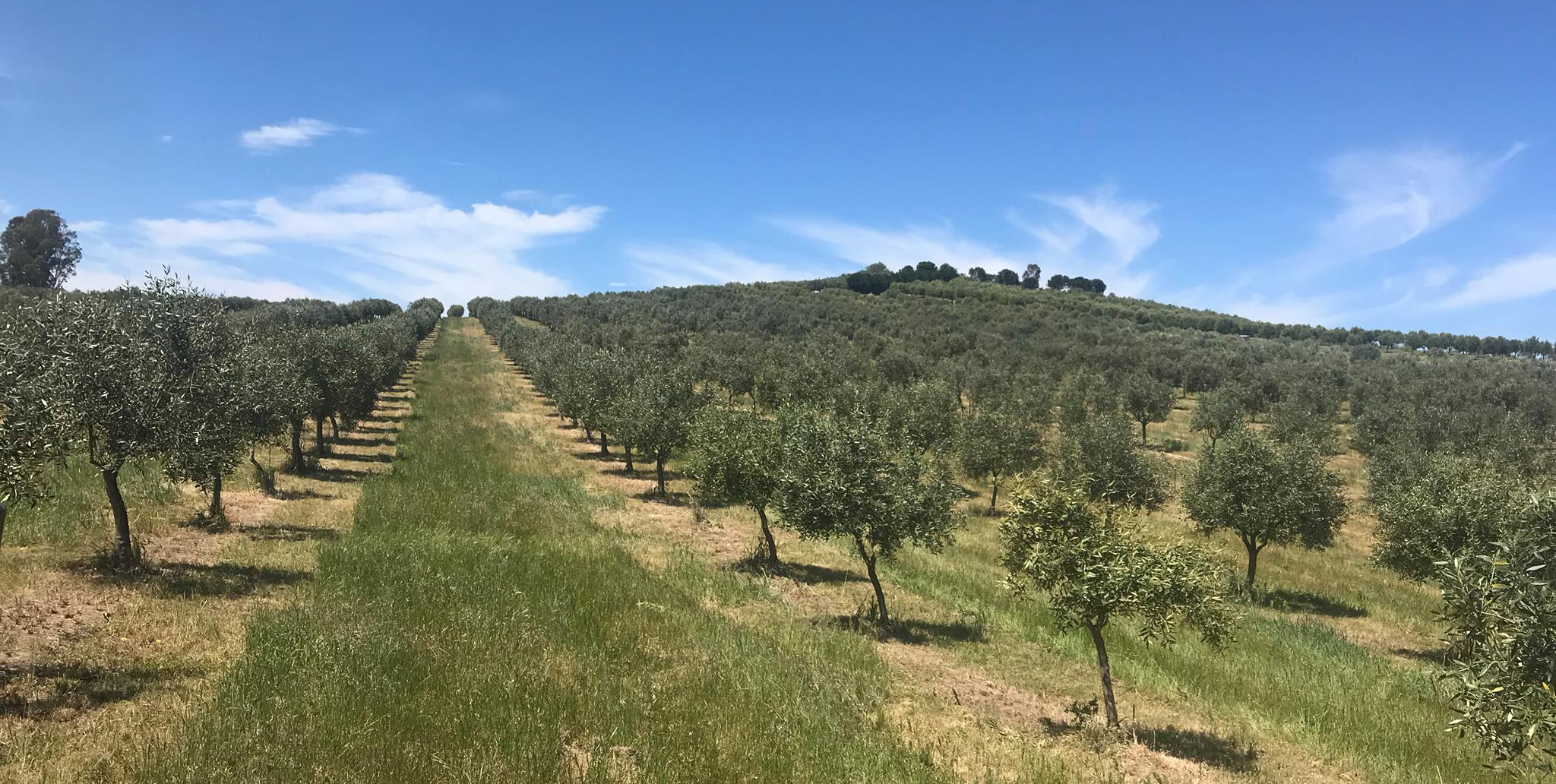
Not the type to do things by halves, Frattalli bought 200 acres of land in Yea, a town located 100 kilometres north-east of Melbourne at the junction of the Goulburn Valley Highway and the Melba Highway, in the Shire of Murrindindi.
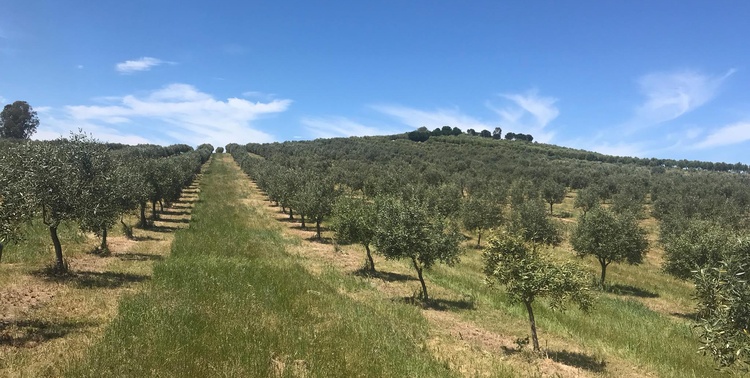
In 2004, he began planting olive trees; today he has 7500 trees comprising 13 varieties, including Frantoio, Leccino, Pendolino, Kalamata and Kalamata Jumbo.
Drawing on his professional experience, Frattalli first built the family home on the property before purchasing Italian and German machinery and beginning to produce olive oil.
Today, Frattali produces 20,000 litres a year of Murrindindi extra virgin olive oil.
“The olives are processed onsite within 24 hours of harvesting, to preserve the natural flavour of the fruit and to ensure the quality of the olive oil being extracted,” he said.
“My product is authentic, pure extra virgin olive oil, containing no other oils.”
Murrindindi extra virgin olive oil can only be found at the Yea oil mill, but you have most likely tasted it in some of Melbourne’s finest restaurants, to which 80 per cent of Frattalli’s produce is sold.
“At first I went around to restaurants to have my product tasted and one of my first customers was Pietro Porcu, the chef-owner of Da Noi in Toorak,” he said.
“Now, they come to me, and sometimes I have to refuse new supplies in order to maintain the quality.”