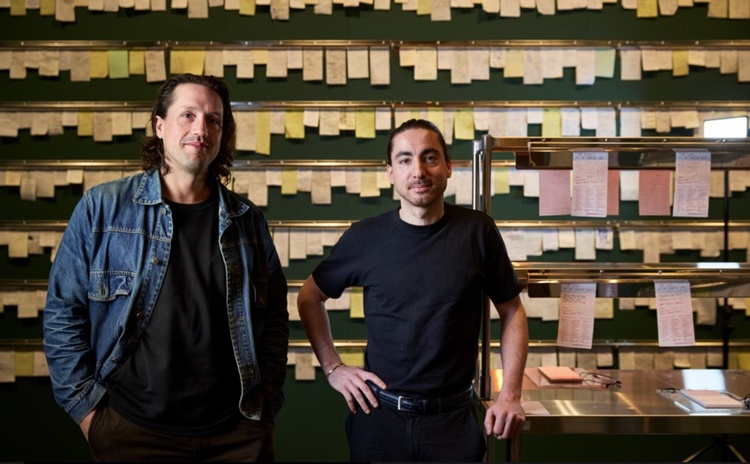
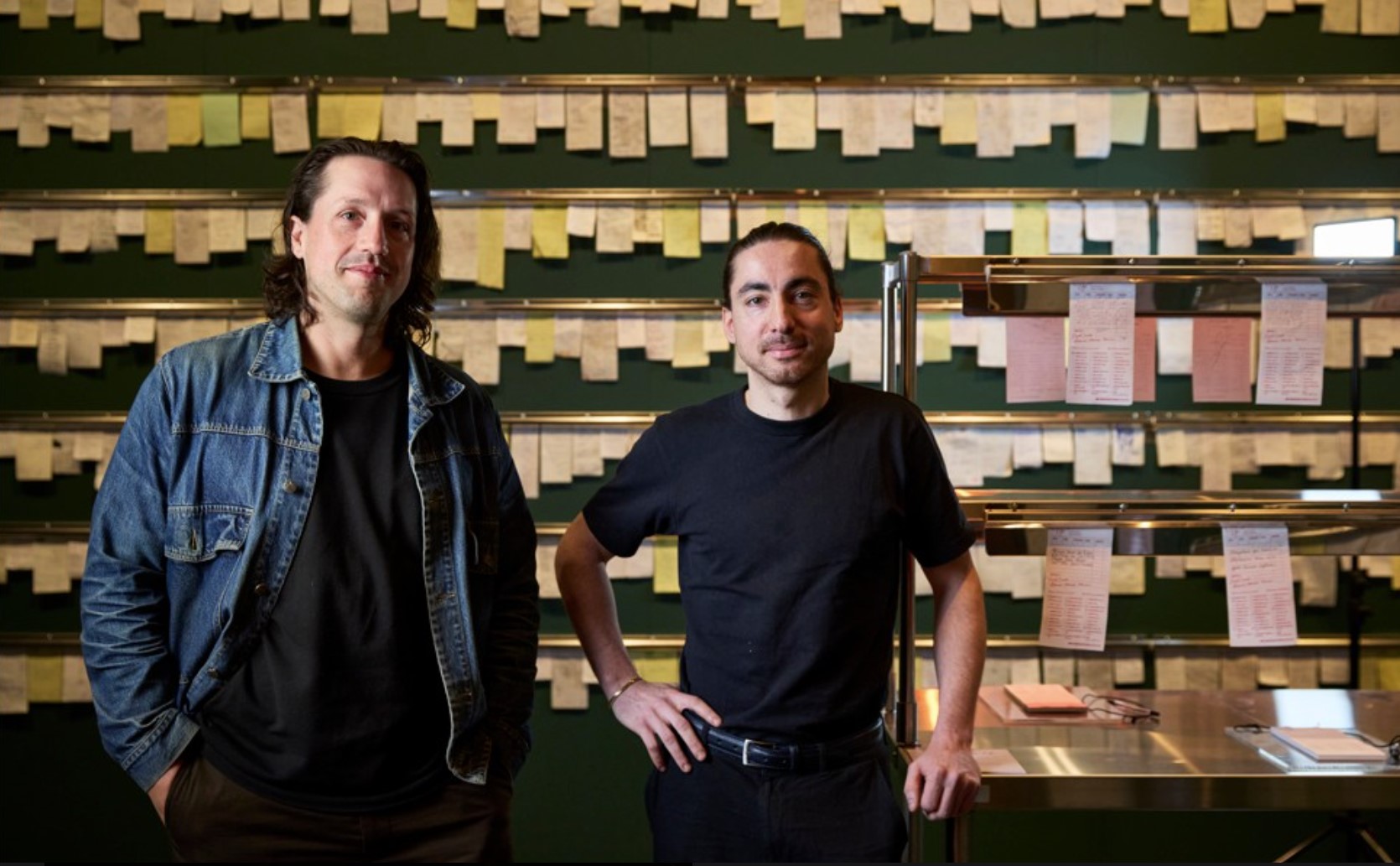
These are the ideas that inspired third-generation Lebanese restaurateur Daniel Saade and filmmaker Redmond Stevenson to create Order Up, an interactive exhibition at the Immigration Museum, open until April 6. The show celebrates Melbourne’s rich multicultural tapestry through its vibrant hospitality industry.
“We created a 25-minute immersive experience to give audiences a taste of all the cultures that make up Melbourne,” explained Saade and Stevenson. “This exhibition is an ode to the city, to its restaurants and to the people who have built and continue to sustain them.
“Our hospitality industry stands on the shoulders of migrants who for generations have fed this city. We take it for granted, but it’s such a gift to be able to experience all this.”
In a room where every inch of wall space is covered with handwritten order slips, visitors catch a glimpse of a world where languages and flavours intertwine. Italian, Filipino, Greek and more, all scrawled in haste during a busy service period or written neatly in quieter ones.
Two video panels positioned at opposite corners of the room show a continuous flow of images: chefs at work, waiters rushing between dining rooms and kitchens, women kneading dough and endless strings of orders hanging above the pass, that point of contact (and sometimes conflict) between the kitchen and the front of house.
At the centre of the space, a recreated counter invites visitors to write their own order, inspired by a favourite dish or a cherished dining memory.
The idea for the exhibition was born about eighteen months ago, and the duo spent over 700 hours creating the multimedia installation. The satisfaction, they say, has been immense.
“Some of the restaurants we featured came from personal connections, others from recommendations and some through good old Google searches,” the creators revealed.
“Either way, everyone welcomed us with open arms and fed us! They had an idea of what we were doing, but not the full picture. We arrived with cameras and microphones, and nobody asked too many questions.”
Among the iconic venues featured are Pellegrini’s and Donnini’s, establishments that have written pages of Melbourne’s culinary and cultural history.
“I saw this project as an opportunity to showcase a part of Melbourne’s culture that’s exceptionally important, but sometimes underrepresented,” said Marco Donnini, second-generation Italo-Australian restaurateur and co-owner of Donnini’s on Lygon Street with his brother Riccardo.
Donnini immediately embraced the proposal, impressed by the professionalism and passion of the two creators.
“Growing up in a purely Italian kitchen gave me so much. The smell of minestrone stayed with me for years, even in my clothes. Humble food is extraordinary, it gives you emotional reward when people love it,” he shared.
For Donnini, cooking and sharing food is not only an act of cultural exchange, but also one of spiritual connection.
As for the display of hundreds of handwritten order slips, Donnini praised the nostalgic beauty of such a simple, often overlooked ritual.
“When I was young, I used to write all the orders in cursive,” he recalled, “My grandmother, though, wrote in block letters.
“She’d throw my slips back at me and tell me to rewrite them properly!
“Now that orders are printed from computers, that part is gone,” he added. “But when something is lost, something new always emerges — something that makes our work easier and faster.”