For the past twenty years, Patrizio Buanne has travelled across Australia as if returning home each time, welcomed by audiences who continue to regard him as one of their most loved performers.
His early 2000s breakthrough with Il Mondo by Jimmy Fontana, sung in both English and Italian, immediately positioned him in a market open to linguistic and musical crossover.
“In Italy, I’m not as well known,” he admits during our interview. “I was singing with an orchestra when that world was being labelled as old-fashioned.
“Now, many Italian groups are rediscovering that very repertoire.”
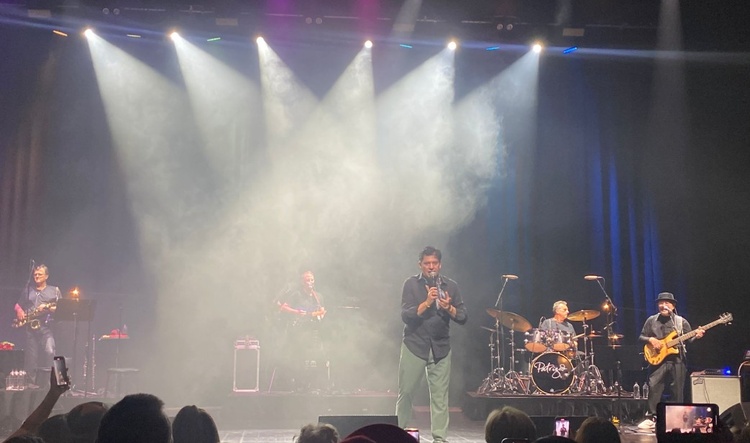
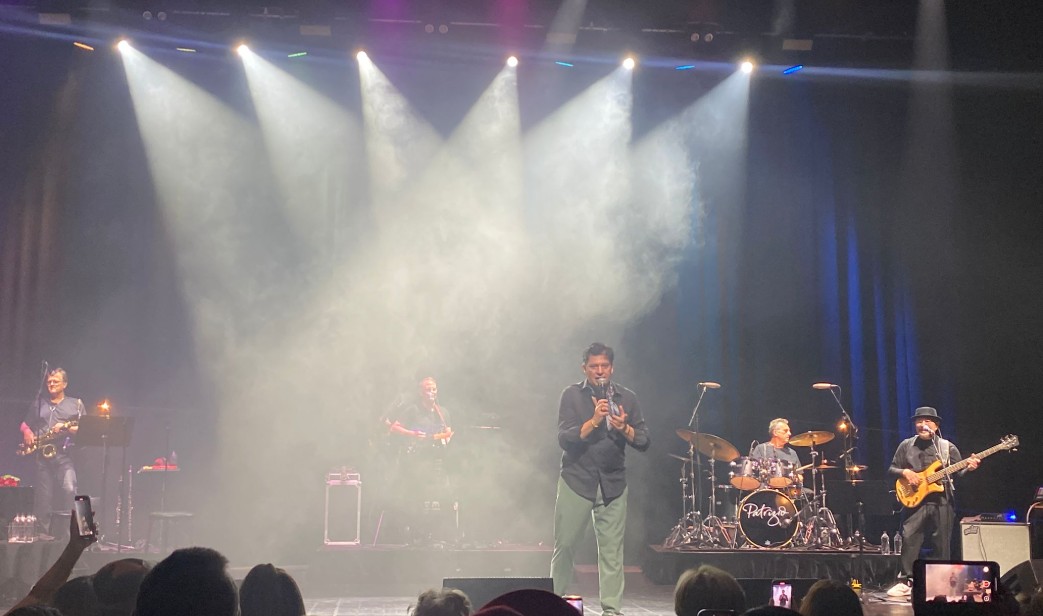
The numbers speak for themselves: more than 20,000 copies sold and a stage presence that continues to draw crowds wherever he performs—the 3000 people who filled the Palais Theatre in Melbourne on December 7 for the opening night of his 20th Anniversary Tour are clear proof of that.
The atmosphere, already lively on arrival, built as soon as Buanne stepped on stage, with his charisma driving the energy of the night.
“It doesn’t matter to me whether I’m performing for 300 or 3000 people—the passion is the same,” he says, repeating his personal mantra: “Applause is always the artist’s bread.”
On stage, Buanne delivers a classic repertoire—Modugno, Cutugno, Rocco Granata, Jimmy Fontana—all presented with fresh arrangements that respect the melodic roots while giving them a contemporary edge.
At the Palais, the audience sang along at full volume, swept up by a confident and polished performance. One of the most anticipated moments of the night arrived with the appearance of Italo-Australian actress and singer Silvia Colloca, who joined Buanne on stage for a duet—one of the evening’s most warmly applauded highlights.
The tour, organised by TEG Dainty and described by the singer as “a declaration of love to Italy”, continues on to Adelaide and then Sydney, tracing a familiar path through a country that has given him space, attention and a substantial part of his career.
Born in Vienna to Neapolitan parents and raised among languages, traditions and a strongly Italian musical heritage, Buanne brings an emotional depth to Australian stages that goes beyond individual songs. “I sing emotions, trying to stay true to who I am,” he explains.
“I never wanted to be a Fiat. I prefer to be a Maserati,” he says with a smile, neatly capturing his style: less noise, more identity.
As the Melbourne leg comes to a close, the connection between Buanne and Australia appears stronger than ever—a dialogue that has lasted two decades and shows no sign of slowing down.