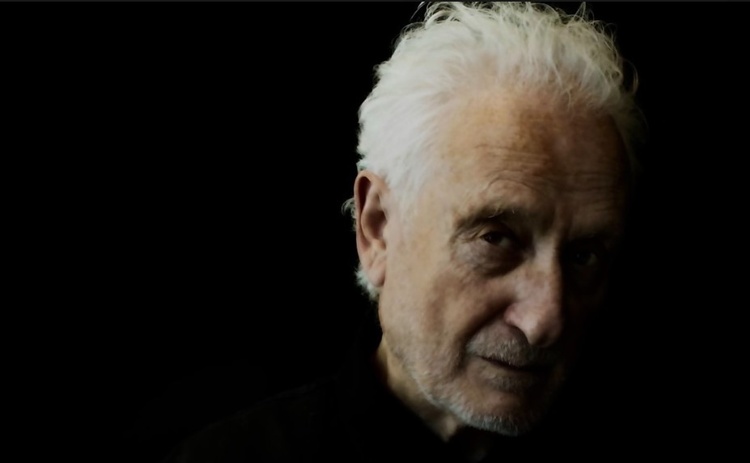
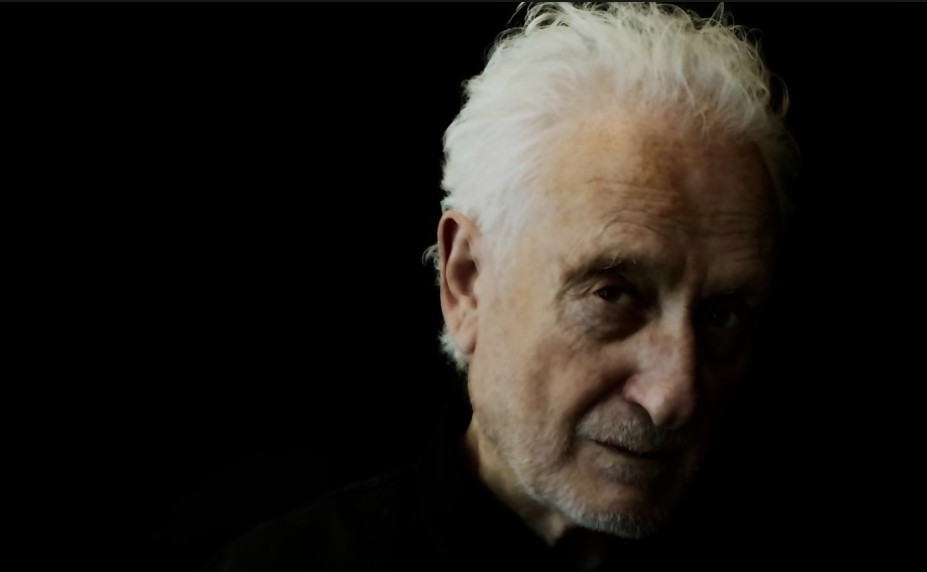
When I contacted Piero Gesualdi - a respected professional in design, fashion and hospitality in Australia - I had to persuade him to share his story.
Even while recording the interview, he kept asking, “I still don’t understand why, with all the talented Italians out there, you want to talk to me?” He insisted there was nothing exceptional about him.
But judging by what’s said in Melbourne, that doesn’t seem to be the case at all.
Migrating from Basilicata at the age of seven with his mother and sister, Lucia, they joined his father in Fitzroy in 1956 - the year of the Melbourne Olympics.
Gesualdi had always been drawn to beautiful things, leading him to enrol in the Architecture and Design course at RMIT in 1967. However, despite his great passion for architecture, he never completed the course.
“Design was a bit too dull for me; I needed something more lively. This was during the years of the hippies, so I decided to follow that trend,” he explained.
That ‘trend’ first took him to Afghanistan, then to Pakistan, Turkey and eighteen unforgettable months in India.
“At that time, these countries weren’t yet considered tourist destinations. If it were today, I don’t think I would have visited Afghanistan with the same carefree spirit I had when I was twenty,” he admitted.
Those years of discovery in places rich in history, tradition, colours and flavours radically changed the young Gesualdi. “All my senses were literally bombarded by the different customs and traditions of those countries,” he recalled.
“Coming from the Australia of those days - which, to put it mildly, was a bit rough around the edges - I was deeply fascinated.”
It was from this pilgrimage in the early ‘70s that his decision to venture into the world of fashion was born.
“At that time, the Italian fashion capital was Florence, before Milan took over. So, I often travelled to the Tuscan capital,” he explained. These visits to Florence were both business trips and great opportunities for discovery.
As a result of his many visits, Gesualdi became friends with many Florentines who opened their hearts to him. “They were market people, a bit peculiar, but they taught me so much.”
Always fascinated by the creations of emerging young designers - and thanks to his connections in the Florence markets - Gesualdi discovered the design of a then-almost unknown Giorgio Armani.
He decided to invest in the designer, becoming one of the very first in Australia to do so, even bringing Armani’s clothing line Down Under.
“I had opened high-fashion boutiques in both Sydney and Melbourne. But I wasn’t just representing Italian fashion; I also sold the creations of other young designers, like Jean Paul Gaultier, before he became a global phenomenon,” Gesualdi revealed.
Masons, the brand of Gesualdi’s boutiques, was so iconic at the time that the elite within both Australian capitals soon became his regular clients. Among them was one of the most controversial Italian restaurateurs in Melbourne, Rinaldo “Ronnie” di Stasio.
“As often happens when you’re on familiar terms with someone, you end up talking about various nonsense. Among the many things, there was this idea of opening a café that evoked the style of the European ‘grand café’.”
That seemingly absurd idea became reality when, thirteen days before Christmas in 1986, Gesualdi and Di Stasio opened the unforgettable Rosati on Flinders Lane.
But how does one go from success in the high-fashion business to success in the culinary world?
“There’s a saying in London: ‘If you can clothe them, you can feed them’,” answered Gesualdi.
He describes Rosati as a “big madness” - not only for its grand spaces and ostentatious architecture, but also for the concept behind it, something that had never been developed until then.
Rosati is a name I often heard during my years in Melbourne’s restaurant scene, having worked with many veterans who had worked at or frequented the venue. Today, it’s still considered the pioneer of avant-garde dining in Victoria’s capital. The restaurant was so iconic under the guidance of Gesualdi and Di Stasio that it was chosen as the location for Kylie Minogue’s Got to be Certain music video.
“It had the style of a lavish European grand café, with nods to Florentine art and Art Deco - featuring a huge handcrafted wooden counter and intricate mosaic flooring,” Gesualdi described.
“Many of our customers were the crème de la crème of Melbourne, while, in contrast, there were also those from the older generations of European immigrants, whom we reminded of some bistro or café they used to frequent in their home country.”
Today, Piero Gesualdi has returned to his first love of architecture, but in his own unique way. “I opened this shop, MondoPiero, in 2016. I consider it the culmination of my life’s pleasures,” he said.
“I sell products that I love to surround myself with and that, if I had a larger home, I would definitely use in my décor.
“But, my home is like a monastery; it has no distractions. All my distractions are here.”
Even though he is not listed among the designers, Gesualdi has always been esteemed for his vast professional experience. So much so that he was called upon by Tony Nicolini -famous for founding the DOC restaurant chain - to revamp what later became a prominent venue in Albert Park called Italian Artisans in 2018.
MondoPiero feels like an art gallery. Located at the beginning of Brunswick Street (if you’re coming from the city) in Fitzroy - which has been Gesualdi’s home since 1956 - it evokes the idea of a museum hall where private collections are exhibited.
The ambient soundproofing, with an echo reminiscent of a religious chapel, also contributes to this impression. Speaking softly seems appropriate as you admire unique pieces imported from Italy, France, England, the Netherlands, Japan and many other places.
Some of Gesualdi’s own creations are featured inside MondoPiero, such as imposing tables or spacious shelves displaying many unique pieces. Among these are items from the Officina Profumo-Farmaceutica Santa Maria Novella, founded in Florence way back in 1612.
Also notable are the exclusively handmade aluminium trays from the London brand Kaymet, awarded the prestigious Seal of the Royal Household of England, and the knives from the Florentine Berti family, master cutlers since 1895.
Every piece on display carries a fascinating generational story, from the exquisite craftsmanship behind their creation to their unique beauty. Needless to say, the prices are congruous with the quality and rarity.
“My partner Michele and I only purchase artisanal products with a great story behind them. Michele handles the administrative and purchasing side, while I serve as the guide,” explained Gesualdi, adding that despite Michele being Maltese, her Italian is much better than his.
As can happen when living on the other side of the world, Gesualdi has lost touch with both the language and the rest of his family left in Basilicata. “Occasionally, I return to visit the little town where I was born and raised,” he shared.
“But it’s quite off the beaten track and there’s no public transportation to reach it.
“It’s a remote little town imbued with that unique beauty of Southern Italy.
“A lot of people often ask me when I’ll retire. This is my retirement,” he said.
“I’m not cut out for golf or fishing. MondoPiero is the centre of my universe and, at my age, I say that without shame.”