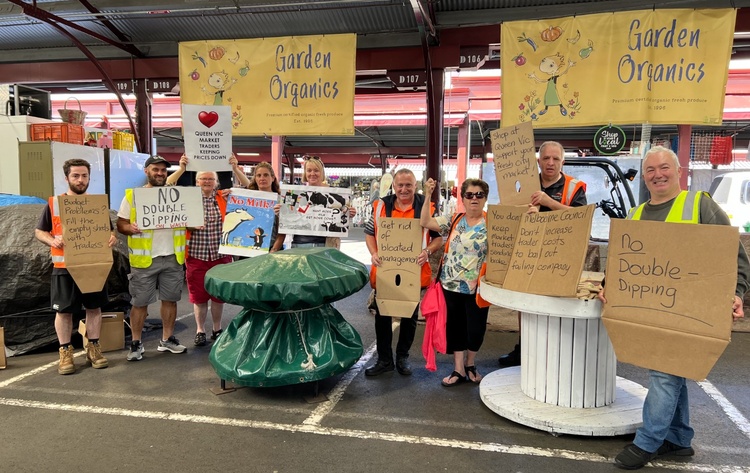
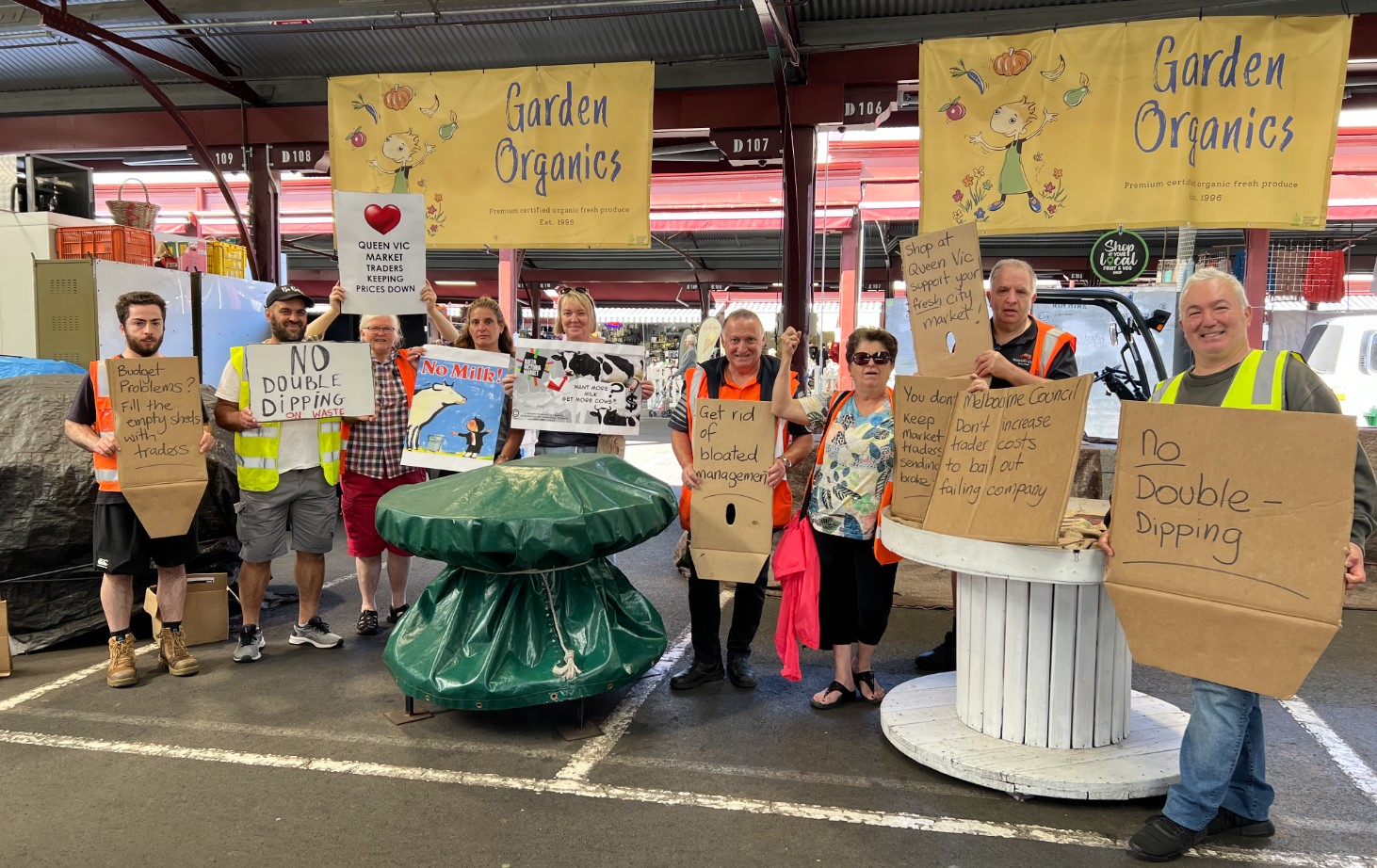
Still the largest open-air market in the Southern Hemisphere, QVM is now a historical landmark and a key institution in Melbourne. However, for the first time in its long history - it was inaugurated back in 1878 - fruit and vegetable traders went on strike last Tuesday, February 25 in response to mounting challenges.
The traders expressed frustration and anger over a surcharge on electricity and waste disposal costs, which they say were previously included in the fees for each individual stall.
“We are asking for more empathy towards the traders,” said Rocco Tripodi, owner of Queen’s Harvest, a family-run business spanning three generations.
“If they keep adding charges, we will have no choice but to raise the prices of our products as well. Students, pensioners and those on low income will no longer be able to afford to shop at the market for reasonably-priced goods.
“Our goal has always been to offer fresh, high-quality products at affordable prices - that is the true purpose of a market, and it always has been for QVM,” he added.
Despite being competitors, all the fruit and vegetable traders still operating at the historic market unanimously decided to strike.
“We’ve had our differences in the past, but for the first time, we’re united in making our voices heard,” said Frank Fontana, owner of Fontana Brothers.
For Fontana, these additional charges “tipped the scales”.
“We’ve noticed extra expenses that could easily be eliminated,” Fontana continued.
“The removal of wooden pallets costs the company $40,000 a year, yet there used to be a trader who handled it for free.
“They pushed him out too. For fruit and vegetable scraps, we suggested reaching out to a farmer who would take them at no cost. These are concrete proposals to reduce unjustifiable charges.”
During the last election campaign, the City of Melbourne’s Lord Mayor, Nick Reece, had pledged to freeze costs for QVM traders.
“We understand how difficult it is to operate during the market renewal period, which is why no trader will see an increase in rent or licence fees for the next four years,” he had stated.
“We think he should step up and genuinely care about the market, not just when he’s running for election,” said Fontana.
When asked to respond to the traders’ strike, Mayor Reece said, “The company [managing the market] understands [the traders’ situation] and will make fair decisions to ensure the market continues to thrive.”
Meanwhile, QVM CEO Matt Elliott said he was “disappointed by the actions of a small number of traders, which will negatively impact the vast majority of the trader community and market customers”.
“In the past ten years, the daily rent for a single stall has increased by the equivalent of a cup of coffee, despite significant rises in operating costs,” he added.
“But the time has come to share some of the rising costs associated with providing the services traders need to run their businesses. We communicated these charges in August 2023 to prepare them for the change.”
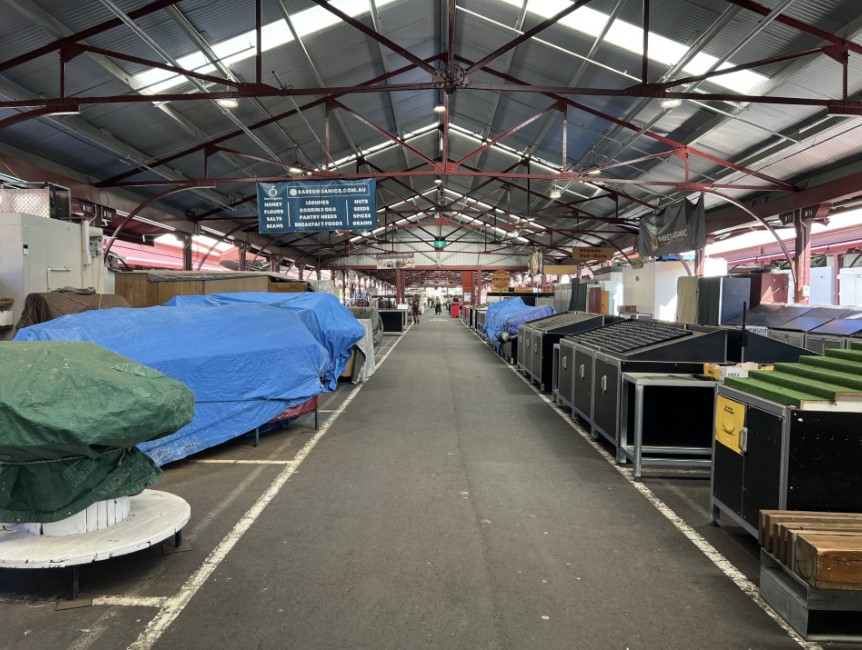
The area of the market left completely empty by the strike
The new fees require traders to pay a daily charge for electricity ranging from $0.40 to $11.67 and for waste collection and disposal from $0.41 to $7.63 (with fees varying depending on the trader’s stall type and size).
For example, a fruit and vegetable trader with six stalls and a cold storage unit will pay an additional $31.05 per day, while a general trader will pay $0.81 per day.
“We believe this is a fair, transparent and reasonable approach that balances costs across all areas of the market,” Elliott added.
“But our door remains open to discussing the implementation of these fees in a positive and constructive manner,” he concluded.
“If we continue down this path, the Queen Victoria Market will become a museum,” Fontana said.
“And if that’s what you want, keep going. Otherwise, step up. Start cutting costs and strengthening your traders.”