According to the Fondazione Nazionale Carlo Collodi, which this year marks the bicentenary of Carlo Lorenzini’s birth, his book Pinocchio has been translated 669 times—into 192 languages and dialects.
Known by his pen name Collodi, he was born in Florence on November 24, 1826. He was a journalist and writer for adults and children—and among the highest paid of his time.
The story was first published in instalments in Giornale dei bambini between 1881 and 1883 under the title Storia di un burattino (The Story of a Puppet).
Since then, it has inspired countless adaptations: for cinema (most recently Roberto Benigni in 2002 and Guillermo del Toro in 2022), television (Luigi Comencini’s 1973 Rai series), Disney’s 1940 animated film, a Japanese anime, a 2003 musical by the Pooh and Edoardo Bennato’s 1977 concept album Burattino senza fili.
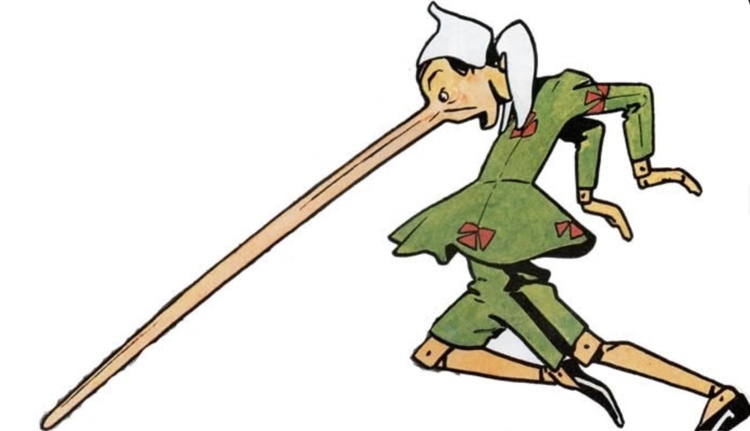
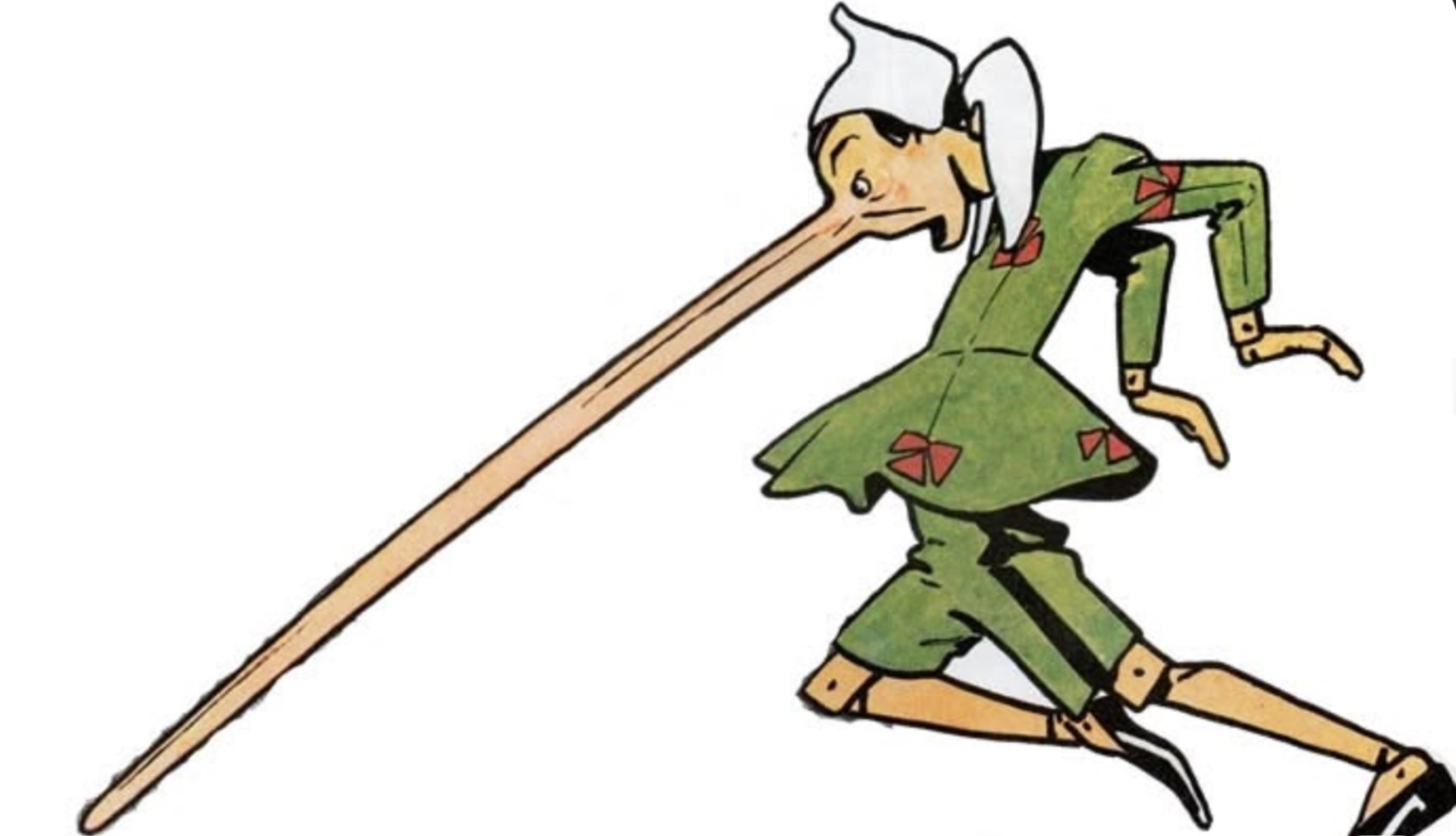
In 1883, the instalments were expanded into a single volume, illustrated by Enrico Mazzanti. The most famous edition, however, remains the 1911 Bemporad version with Attilio Mussino’s iconic images.
Among contemporary illustrators who have tackled the story are some of the most distinguished names in Italian publishing—each imprinting it with their own imaginative world and style.
Guido Scarabottolo’s Pinocchio is graphic and pared back, almost carved from wood. Andrea Rauch’s is built from bold patches of colour and instinctive brushstrokes. Lorenzo Mattotti’s is hypnotic, where characters become chromatic concepts absorbed into colour itself. And then there is Roberto Innocenti’s, who is perhaps the most internationally renowned Italian illustrator today.

Roberto Innocenti
In 2024, Innocenti was honoured with a retrospective, Illustrare il tempo, at Palazzo Medici Riccardi in Florence. His Pinocchio, first published in Switzerland in 1988 and later in Italy by La Margherita, is hyper-realistic and densely detailed, with vertiginous perspectives and meticulous attention to every element, creating an almost cinematic narrative.
Initially, Innocenti did not want to accept the commission. “So many had already illustrated it,” he recalls. “Then I decided to historicise it, to set it in the time and place where the story was written.” The place and time were the Pistoian Apennines in the second half of the nineteenth century.
“I didn’t want fantasy illustrations,” he explains. “I knew the landscape, and I researched photographs. The architecture is true to the period.” The same world was depicted by the Macchiaioli painters Giovanni Fattori and Silvestro Lega, contemporaries of Collodi.
As for the characters: “They look like the peasants I saw as a child,” he says, “I was born in 1940, and from 1884 to then their appearance had hardly changed. The poor wore hand-me-down clothes, especially their ‘Sunday best’, which lasted longer than work clothes.”
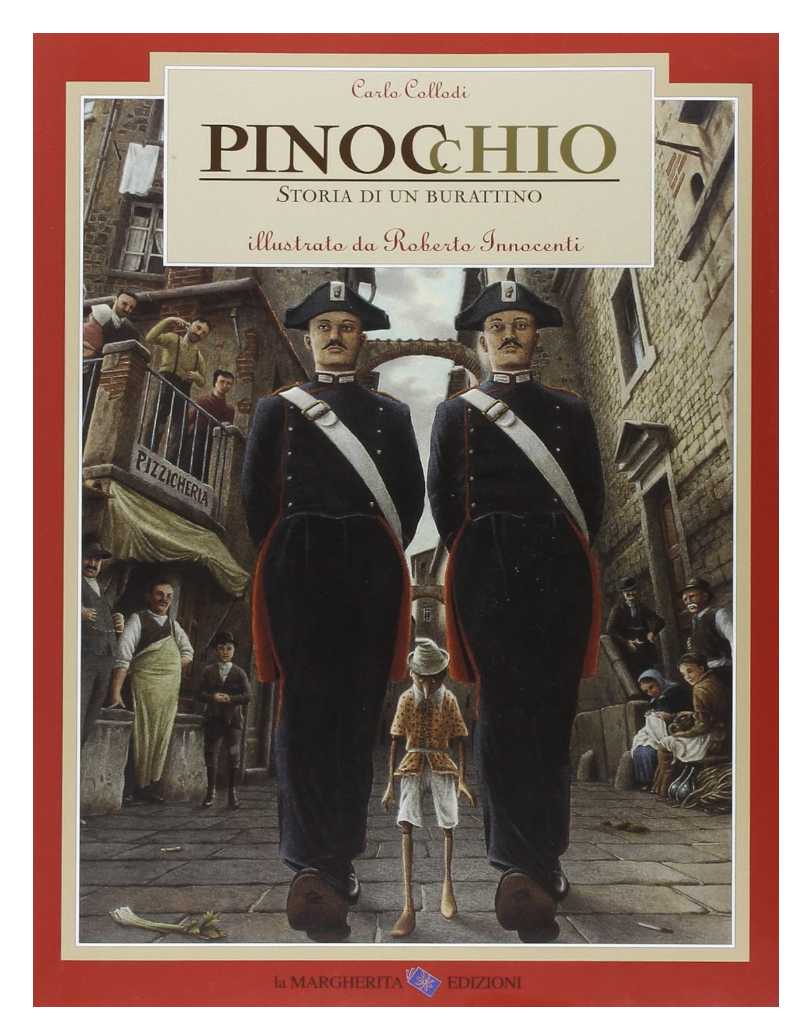
The edition illustrated by Roberto Innocenti
How, then, was Innocenti’s Pinocchio born? “I thought of a log of wood, the protagonist of the first scene,” he reveals, “A piece of wood that has had no childhood, no experience, suddenly told to go to school.
“How would he react? He is unprepared for everything, naïve, ready to believe any lie.
“In that piece of wood I see myself,” Innocenti continues. “I grew up during the war. I didn’t have a childhood either. I knew hunger, cold and fear—the same things Pinocchio experiences. There are very dark aspects in the story.” This darkness, paradoxically, is what make it so compelling for children.
Pinocchio experiences everything: hunger and fear, but also desire, loneliness, evil disguised as good (the Coachman), and good disguised as evil (Mangiafuoco).
“He is welcomed tenderly by the Fairy and then rejected without mercy,” notes Daniela Marcheschi, president of the National Edition of Carlo Lorenzini’s Works and author of essays including The short nose and The places of Collodi, The places of Pinocchio.
This emotional richness, possible only in a comic register capable of holding contradictions together, explains why Pinocchio has fascinated readers for a century and a half, generating countless interpretations.
“Many of them lack historical and philological grounding,” Marcheschi observes, adding that these works often attribute to Collodi ideas he never expressed.
Esoteric readings, she argues, are unfounded—Collodi was not a Freemason. Nor does the Blue Fairy represent socialist Anna Kuliscioff.
Perhaps the most striking misreading is the moralistic interpretation of the ending. In the final chapter, Pinocchio becomes human and exclaims: “How ridiculous I was when I was a puppet! And how happy I am now to have become a good little boy!...”
“In that exclamation mark followed by ellipsis lies the author’s entire thought,” Marcheschi explains. Through comedy, Collodi distances himself from his protagonist, subtly mocking him for abandoning the restless drive that once defined him.
Collodi, shaped by the ideals of the Risorgimento, reasserts the theme of responsibility: a people should never renounce action or the pursuit of progress. The authoritarian reading of the ending, she argues, stems from a distorted interpretation of Italian unification.

Daniela Marcheschi
Even the killing of the Talking Cricket must be read carefully. He is no moral teacher but a figure who speaks in tautologies, offering nothing of substance.
Less widely known is Collodi’s interest in women’s emancipation. He read John Stuart Mill as well as Vincenzo Gioberti, who argued that women should be true companions to men and opposed the double standard on adultery. Giuseppe Mazzini, too, encouraged women’s emancipation and their role in educating new generations.
Where Edmondo De Amicis in Cuore assigns tenderness to women and authority to men, Pinocchio reverses the roles: Geppetto embodies care and affection, while the Fairy sets the rules.
In the end, Pinocchio remains a great novel about childhood and the passage into adolescence. “The ‘ridiculous’ one is not the puppet, but the child,” Marcheschi concludes.
The miracle and desperate adventure of becoming an adult is present from the book’s very first scene, where Geppetto dares to dream that log of firewood—still alive and capable of sprouting—into being.