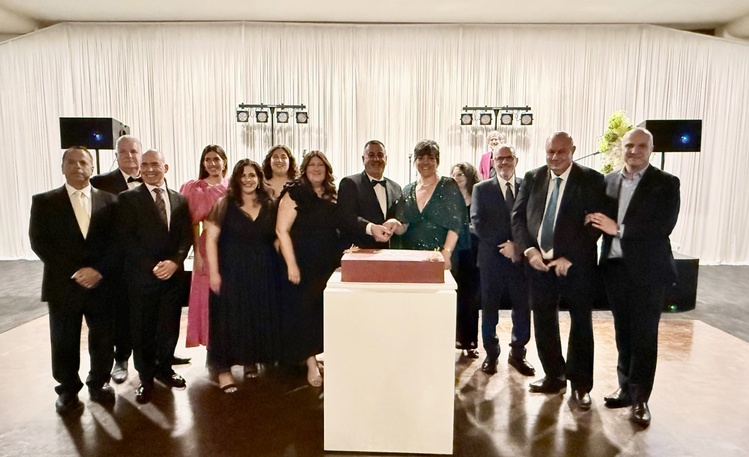
The celebrations unfolded over several days leading up to the major religious festivities on Sunday, October 26. The first event, on Saturday October 18, was a gala dinner at the Festival Function Centre in Findon—a warmly attended occasion that brought together associations, local authorities and many community members.
The evening was hosted with professionalism and warmth by well-known journalist Rosanna Mangiarelli.
Among the most anticipated guests was the mayor of Caulonia, Francesco Cagliuso, who travelled from Italy for the event—a particularly meaningful presence given that Saint Hilarion is the patron saint of his hometown.
This connection between Adelaide and Caulonia is one of the defining threads of the St Hilarion Society’s history, continuing to link families and traditions despite the distance.
Several speeches retraced the origins of the society and its seven-decade journey. One of the most moving moments was the address by Rosemary Velardo, chair of the Society committee, who spoke about her childhood and the legacy left by her grandfather, Giuseppe Ciccarello, along with co-founders Ilario Lamberto, Ilario Fazzalari and John Costa.
Velardo recalled the spirit of those early years, when in 1955 a group of Italian migrants chose to keep alive in Adelaide the cultural and religious traditions of their hometown.
“They already felt at home in Adelaide,” she said, “where they had brought the family values and faith that shaped their lives back in Calabria.”
It was in 1955 that they founded the Society of Saint Hilarion with a clear mission: “To serve God under the guidance of their Patron Saint and to support those in need and the sick.”
Alongside the religious celebrations came fundraising and community initiatives that soon expanded the scope of their work.
In 1980, with strong community backing and government support, Saint Hilarion’s took its first steps into aged care. The goal was to ensure that elderly Italians could “spend their later years in an environment that honoured their cultural and spiritual roots”.
Today, the Fulham and Seaton facilities house more than 170 residents and provide home and social care services to more than 140 people. “None of this would exist without our founders and the work carried forward across the decades,” Velardo concluded.
Italian Consul Ernesto Pianelli, accompanied by his wife Natalia, brought official greetings from the Italian government.
“It’s an honour to be here celebrating the 70th anniversary of the Society of Saint Hilarion—a milestone that reflects a remarkable legacy of dedication, care and community,” he said.
His remarks highlighted not only the organisation’s history, but its lasting impact on social life in South Australia.
Another warmly applauded speech came from Vince Greco, chair of the religious and cultural committee, who reflected with emotion.
“Who could have imagined, 70 years ago, that the seeds planted by a small group of devoted migrants would grow into the thriving organisation we celebrate today?” asked Greco.
He traced the Saint Hilarion Society’s long tradition of annual festivities, processions, cultural programs and community events, underscoring how the organisation has always remained “deeply community-centred”.
He also recalled the “courageous and forward-thinking” decision to move into aged care—a choice rooted in compassion and long-term vision that continues to serve both the Italian community and others.
Among the political authorities present were the Hon Joe Szakacs, representing Premier Malinauskas; the Hon Zoe Bettison; the Hon Mark Butler; the Hon Jing Lee; the Mayor of Charles Sturt, Angela Evans; and community leaders such as Luisa Greco, Marinella Marmo and Gina Marchetti, representing SAMEA, Com.It.Es and the Adelaide Italian Festival.
Mayor Cagliuso also addressed the audience, expressing the ongoing connection between his town and the Adelaide community.
“This community from Caulonia has always maintained a deep relationship with Italy and with our Caulonia. When I return home, I will bring your message back to the community,” he said.
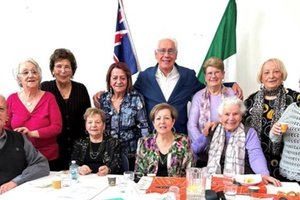
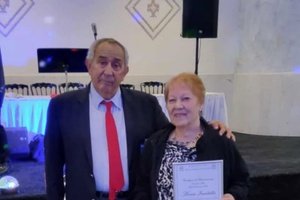
The evening closed with music, tarantella dancing and a strong sense of togetherness, including the presentation of a life-membership award to Antonietta Cocchiaro, greeted with warm applause.
The following Sunday, October 27, the community gathered for the procession from the church of Mater Christi to Gleneagles Reserve, accompanied by the Maltese Queen of Victories Band, religious associations with their banners and many faithful.
At the Reserve, the solemn Mass began after the Welcome to Country and was presided over by Archbishop Charles Balvo, with Father Franco Lacanaria and Father Germano Baiguini.
Readings were given by Silvana Noutta and Francesco Placanica, while students from St Michael’s College read the prayers of the faithful.
The symbols carried to the altar—an olive branch, photographs of the founders, the aged-care charter, a lantern, the Bible and the original 1955 statuette—silently told the story of 70 years.
In his final remarks, Greco spoke of the Society’s early days. “Many believed it wouldn’t last… yet they remained steadfast,” he said, urging younger members to step forward so that the tradition may continue “for many generations to come”.
The celebration continued at the Reserve with a large community festival: live music, performances, Italian cars on display, dances by the Mother Teresa Association, artists including Sopranos Mira Sangregorio, Siesta Cartel, Giri and Brando, the traditional spaghetti-eating contest and, at dusk, fireworks.
Thousands took part in a celebration that brought together generations and continents.