The story of Signorinella pallida, written in 1931 by Libero Bovio, set to music by Nicola Valente and performed over time by dozens of Italian singers, still resonates today in the memories of those who experienced the pain of leaving their homeland.
From this ancient song, Angelo Pricolo, a pharmacist by profession and an established director in Melbourne, outlined the features of his latest documentary, Signorinella: Little Miss.
The film embodies nostalgia and resilience, paying tribute to the hundreds of thousands of women who, silently and bravely, built an essential part of Australian history.
Following the unexpected success of Lygon St – Si Parla Italiano, now considered a cult phenomenon, Pricolo and his collaborators Jason McFadyen and Shannon Swan felt compelled to go further.
While the 2013 film focused on a single street and largely male voices, this new work seeks to give space to women and their invaluable migratory memories.
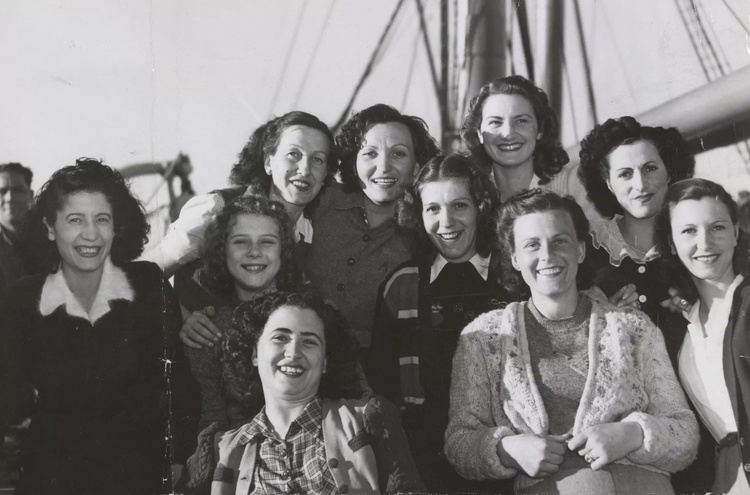
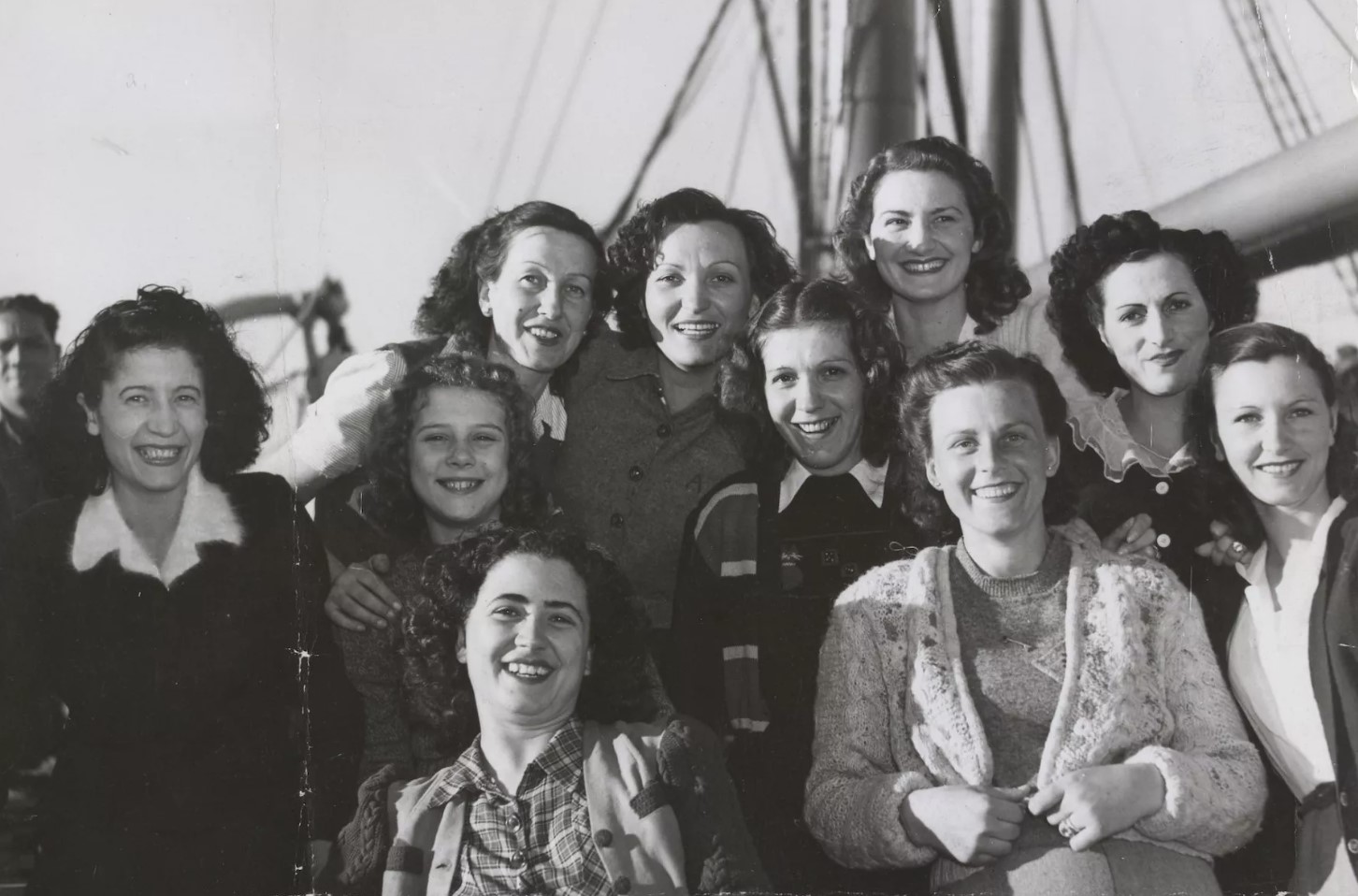
In the aftermath of the Second World War, entire Italian families left their homeland in search of a better life in Australia. In the shadow of the conflict, many men were interned, leaving their wives to manage children, homes and fields alone. These women did not collapse under the weight of hardship. Instead, they rolled up their sleeves and endured. Not only did they preserve what their husbands had built, they transformed it into something greater.
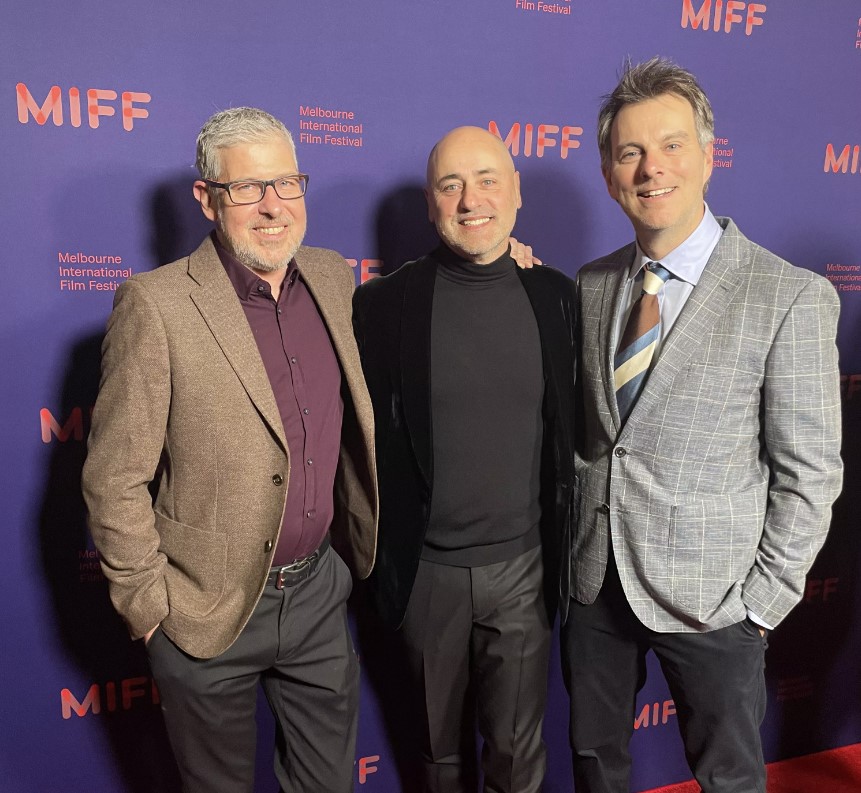
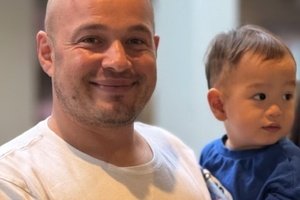
Left to right: Jason McFadyen, Angelo Pricolo and Shannon at the Melbourne International Film Festival
“Women did so much, and I am the son of one of them,” Angelo Pricolo told us during our interview.
“What strikes me is that they faced the same difficulties as men, and many more. They were women in the 1930s and ‘40s, and there was already a strong social barrier dictated by the conceptions of the time, as well as the difficulty of a new language and the obstacles imposed by fathers.”
Among the privileged witnesses of this story is Mary Marino, who arrived in Australia in 1934. She was interviewed for the documentary at the age of 99 and, on August 11 this year, celebrated her 100th birthday.
Marino’s father and brothers had established a sugar cane plantation in Queensland, and it was she, along with other women, who managed the land in the their absence.
“There was the heat, there were flies, there was no water - and yet we had to survive,” she recalled in Signorinella. And not only did they survive, they thrived.
“Marino, in particular, is a woman of unique consistency,” added Pricolo. “When we first spoke on the phone, I was struck by her incredible lucidity; it was like speaking with a peer.
“And at the end of the conversation, she immediately sent me archival photos of her family via text. She is truly phenomenal.”
The story of Signorinella does not follow a chronological timeline. Instead, it unfolds thematically, crossing worlds and transformations. First and foremost, there is food, the primary language of identity and sharing. Initially, meals were simple, prepared for fellow compatriots who had just arrived. Soon, however, trattorias and restaurants became institutions. Italy found its place on Australian tables, replacing tins of spaghetti with pasta prepared with culinary skill.
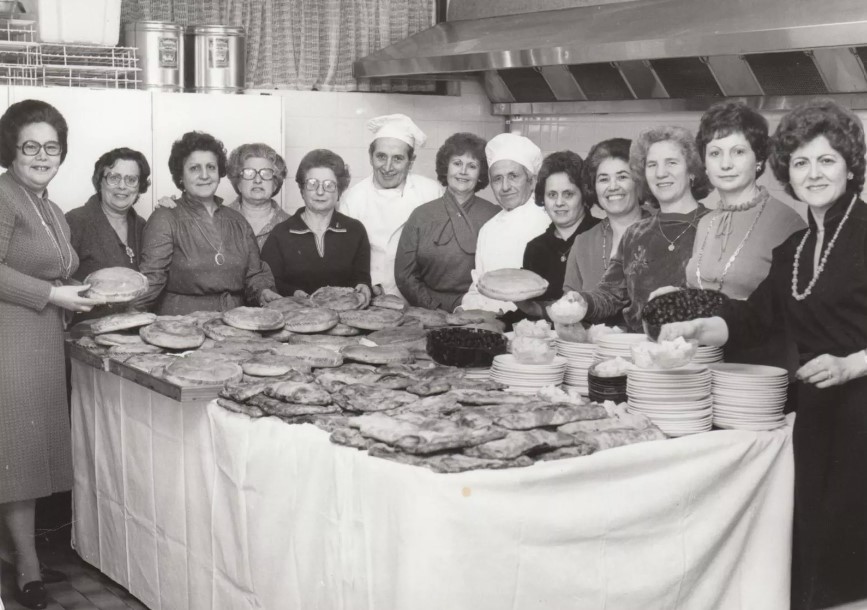
A photo from the 1970s taken in the kitchen of the Ibleo Social Club in Northcote, showing the women of the committee preparing dinner ahead of a ballroom dancing event
Fashion is another field where Italian women left an indelible mark, from invisible seamstresses in back rooms to designers who dominated the catwalks. This is the story, for instance, of Terry McClain Paliani, who was Miss Italy in 1956. Paliani was an extraordinary woman with a life worthy of a novel, who brought Italian style to Australia at a time when people still dressed in British clothes and colourful hats. Carla Zampatti, a fashion legend and one of Australia’s most prolific and shrewd designers, lived another noteworthy life.
The film also explores politics, media and the value of archival images, which form an emotional thread throughout. Some old photographs, animated with artificial intelligence, bring to life faces unseen for decades.
“At first there was fear: it could seem shocking to see a father or grandfather moving again after so many years,” Pricolo said.
“But with the families’ consent, those images became a moving heritage, a bridge between past and present.”
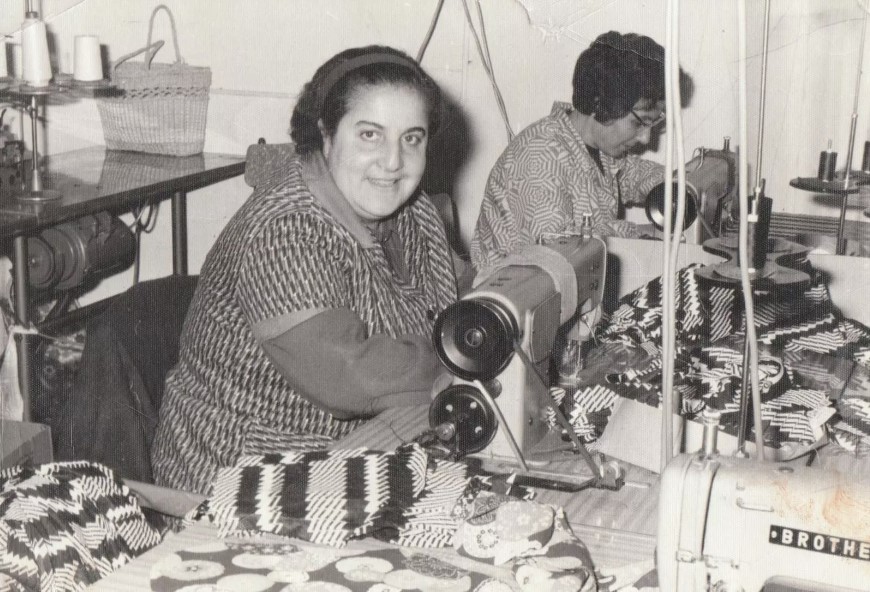
Giovanna Antoci working in a textile factory in Brunswick in the ‘70s
The film is not only about memory, but also about restoring dignity to thousands of tireless migrants. For Pricolo, it also represents a deeply personal journey. Born in Australia to Campanian parents, he recalls living two parallel lives.
“At home it was like still being in Italy, but outside there was Australia,” he recalled.
“As one woman interviewed in the film says, I too did not like my skin, I did not want to stand out. I just wanted to blend in with the others. It’s the typical story of every immigrant.”
Over time, however, pride overcame his sense of estrangement. Today, he feels so Italian that he took his two children to Naples for four months so they could connect with the culture and language of the Bel Paese.
“Nothing excites me more,” he confessed, “than hearing them mix English with Neapolitan, when they say, ‘N’copp (on top of) the table!’ Dialect is a richness.”
Behind this documentary lies the journey of a man who chose cinema as a form of testimony. Twenty years ago, he made his first film, Fighting the Dragon with Luck, a documentary about heroin addiction that achieved great success. That film marked the beginning of a creative path he has followed ever since.
Signorinella: Little Miss was warmly welcomed by the Melbourne International Film Festival, which is a testament to its universal appeal. Upcoming screenings include Wednesday August 20 at Cinema Nova in Carlton and Saturday August 23 at The Capitol.
The documentary will then be distributed nationwide as part of the ST. ALi Italian Film Festival by Palace Cinemas.
“My mother says in the film, [in it she says] ‘We couldn’t speak with language, so we spoke with our hands!’ It’s the perfect summary of the story we tell,” said Pricolo.
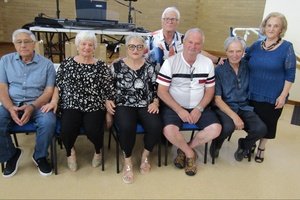
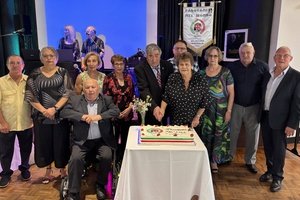
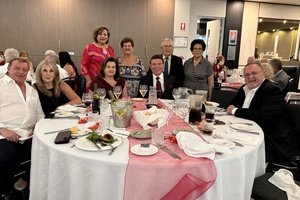
“I also want to recall the North Balwyn Senior Citizens Club, which every Monday transforms into an Italian venue. It is frequented mainly by women, but also by some men, and there is always music and dancing.
“It has been such an important meeting place for my mother since we lost Dad and seeing them all together exchanging stories was the inspiration to open and close the film with them on the dance floor.
“They may move more slowly, but the passion is always the same.”
These women, who sewed clothes, cut sugar cane and welcomed immigrants in boarding houses, did not simply build families and communities; they wove the very fabric of Australian multiculturalism.
Many were proxy brides, others young girls forced to leave with their parents and some were entrepreneurs. But in each of them was the ability to face the new with dignity and creativity.
Today, their stories live again thanks to a film that shines a light on them, finally entrusting them to collective memory. “Almost like childbirth”, the pain is forgotten and only what has been created is seen.