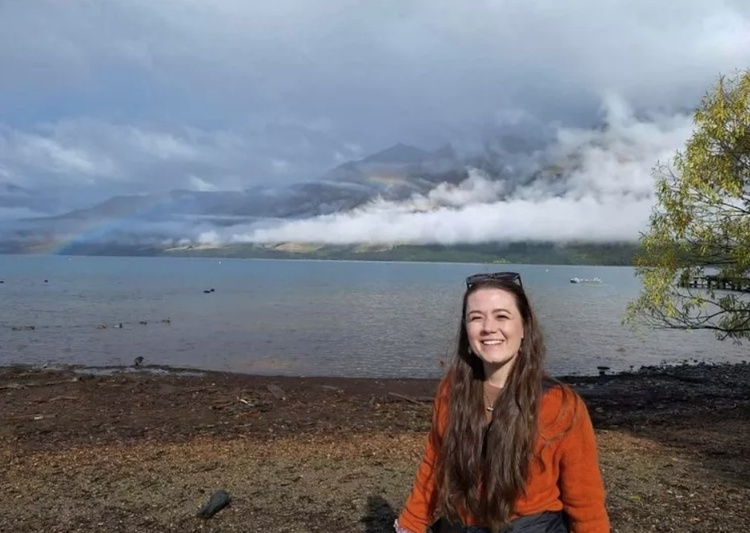
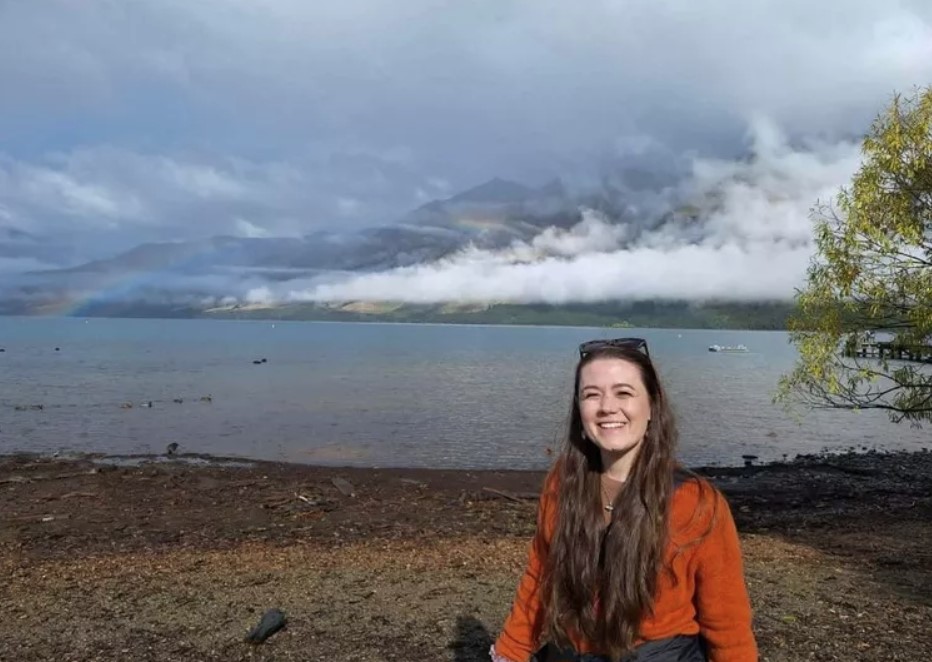
For Talia Walker, Senior Policy Officer at the New South Wales Department of Education and scholar of Italian language and pragmatics, Italian was exactly that: not a language automatically “inherited”, but a conscious achievement.
Walker’s maternal grandparents migrated from Abruzzo to Australia between the 1950s and 1960s. At home, however, Italian was not the main language.
“We didn’t speak it between parents and children, but it was always there,” she explained. “My grandmother and my mum spoke it constantly.”
Her first trip to Italy at the age of eight marked a turning point. The excitement of discovering an extended family she had never really known collided with the frustration of not being able to communicate.
“I had all these uncles and cousins, but we couldn’t really talk. That’s when I realised what was missing,” she recalled.
From then on, the choice felt almost inevitable. At high school, faced with French or Italian, she chose Italian and never let it go: HSC, university, PhD.
What left the deepest mark, however, was not just the language itself, but the people who taught it. “I had incredible Italian teachers,” she said.
“They were always the most passionate, the most human. That had a huge impact on me.”
It’s no small detail, as today Walker works at the heart of Australian education policy.
The most profound shift, though, happened in her personal life. It was only as a teenager, once she began speaking Italian with greater confidence, that her relationship with her grandmother changed dramatically.
“She wasn’t just my grandmother anymore. I started to understand her as a person,” shared Walker.
Conversations grew longer. Stories of migration emerged—of her grandfather, who had died before she was born, of life between Abruzzo and Australia.
“Speaking Italian gave us the chance to say more, to understand each other better.”
The awareness that language is not merely a tool, but a relational space, also underpins her academic research. In her doctoral work, Walker studied apologies.
Specifically, she analysed emails written in Italian by Australian students to university lecturers. The findings were far from straightforward.
Students understood that Italian carries different registers and hierarchies, yet when writing from Australia they found themselves in a grey area.
“One student told me she didn’t know whether to behave as if she were in Italy, or as if she were in Australia—but in Italian,” she explained.
Language, in other words, never travels alone. It carries social norms, ideas of authority, distance and respect.
“In Australia, university culture is much more horizontal. You call lecturers by their first name; you’re encouraged to debate. In Italy, that would be unthinkable,” she said.
Australian students tend to offer lengthy explanations, while Italian students often write a brief “there was an unforeseen circumstance”. Two worlds, two visions of academic dynamics.
Today, Walker works in the Early Childhood Outcomes division of the NSW Department of Education, focusing on workforce policy in early childhood education. Her role combines research, data analysis, policy design and high-level advisory work.
“Even though we’re just one small part of a huge system, knowing that our work can shape the beginning of children’s educational journeys is incredibly motivating.”
The move from academia to public policy was not a break, but a continuation: “For me, research is essential to any intervention. You need to truly understand a phenomenon before you can decide what to do.”
It’s an approach she applies beyond the workplace: gather information, recognise what you know and what you don’t, then act.
Alongside her institutional role, Walker has maintained strong ties with the Italian community, including volunteering with the Dante Alighieri Society in Sydney, where she contributed to developing digital communications.
For her, it’s a meaningful commitment, though not always easy to balance with distance. “The Italian community today is much more dispersed. Living outside the city, it’s not always simple to attend events after work,” she explained.
And yet the thread remains unbroken. For Talia Walker, learning and using another language remains a deeply transformative act.
“It opens you up to a different way of seeing the world. It makes you realise that people communicate differently, that values shift.”
“It builds understanding and tolerance. And it’s also incredibly healthy for the brain,” she added.
Rather than an abstract celebration of multilingualism, Walker’s story is a lived reality.
For her, language has been the space where identity, relationships and institutions meet and, at times, finally learn to speak to one another.