There’s still time until 5 p.m. on Friday, June 6 to visit a small yet evocative exhibition with free entry, titled Ancient Lives, located in the west wing of the charming Old Quad building at the university’s Parkville campus - the university’s first building that began construction in 1854.
Co-curated by Caroline Tully and Tamara Lewit, both honorary fellows at the School of Historical and Philosophical Studies at the University of Melbourne, the exhibition is divided into two parts. On the right side of the room is Amor et Mors: Vessels for the Beautiful Body in Life and Death, curated by Tully, which focuses on vessels, many of which are perfectly preserved, used for oils, ointments, perfumes and lotions by women in daily life, as well as on special occasions like weddings.
There are also vessels that held oils used by men during leisure and sporting activities, and - of particular importance in ancient Rome and Greece - those used during funeral rituals.
Meanwhile, the left side of the room is deeply characterised by the cult of wine across different eras. From the Phoenician, Greek and Roman periods to the begging of Christianity in Europe up until the three centuries preceding our own.
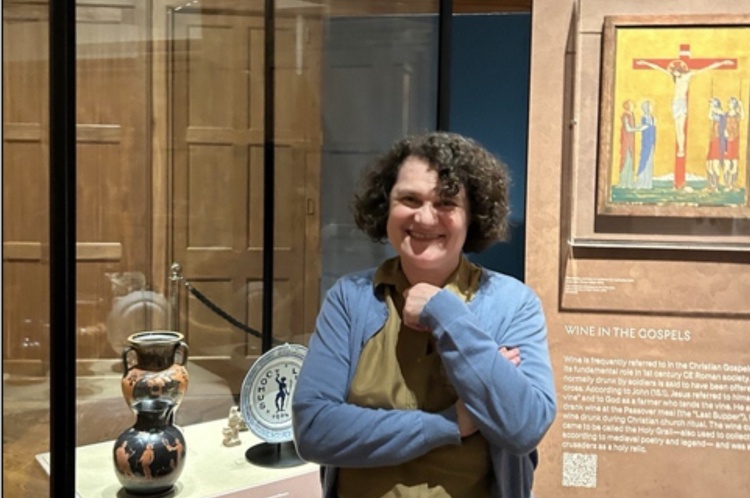
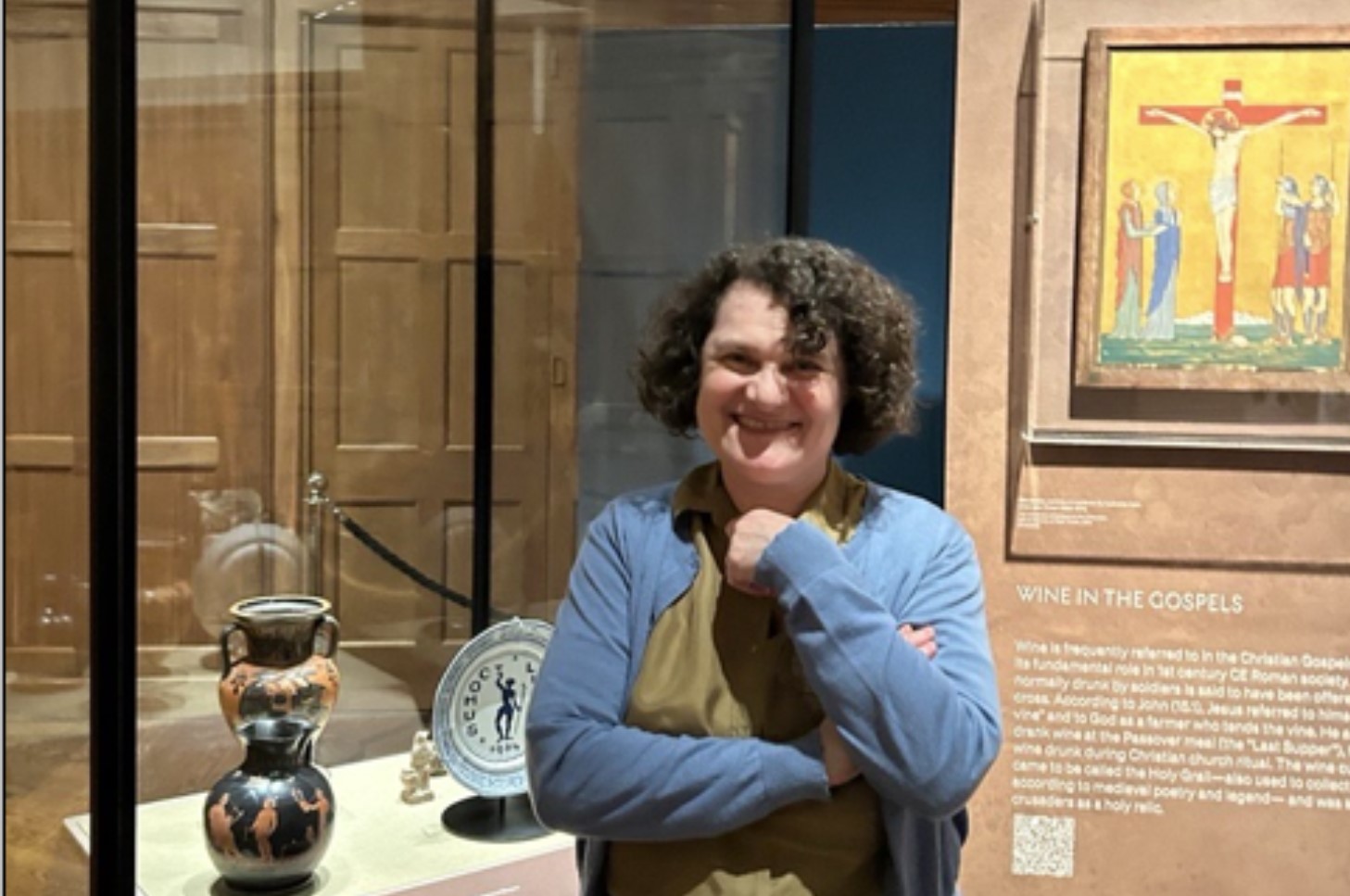
We met with Lewit at the Old Quad last week. It was a particularly gloomy day, but one that was perfect for immersing ourselves in the colourful wonders of the past.
“Every object on display here comes from the university’s private collection, used solely for educational purposes,” she explains.
“These archaeological artifacts are usually not shown to the public, so this is quite an unusual opportunity.”
It’s an opportunity not to be missed, as this collection represents the crown jewel of the University of Melbourne, which has been slowly enriched for over a century, meticulously managed by the Museums and Collections department, which today boasts 300 artifacts, including five ancient Egyptian papyri donated in 1901.
The oldest items selected by Lewit include a Cypriot wine jug depicting a wild sheep dating to the seventh or eighth century BCE, and a Phoenician amphora used to transport wine, dating to somewhere between the fourth and sixth century BCE.
Undoubtedly, the piece that most catches the eye upon entering the room is a large Roman amphora, dating to the first century BCE–CE, probably created on the eastern side of the Italian peninsula and found off the coast of Malta.
“Many of these amphorae have been analysed and organic wine residues have been found still clinging to the inside walls, so we know for sure they were used for wine,” says Lewit.
“But in this one, having been on the seafloor for 2000 years, we couldn’t find any traceable wine residues. But since wine was an essential beverage in Mediterranean civilisations at that time, we have reason to believe it may have contained it.”
The ancient Romans were not only experts in grape fermentation, but also heavy consumers of wine out of necessity, due to water at the time being highly contaminated. The alcoholic and acidic content in wine helped eliminate pathogens in drinking water.
“The Greeks were also big wine consumers, and in the end the drink spread throughout the entire Mediterranean basin,” explains Lewit, “Usually, they diluted it with three to four parts water, and it was often drunk watered down.”
Bread soaked in wine was also sometimes given to young children.
Unlike today’s Australia and other countries with a strong British influence, children were not strangers to alcoholic beverages, as can be seen in an Attic Greek wine jug from 420–400 BCE depicting small children dancing at a festival in honour of the god Dionysus.
I allowed myself a comparison with the Italy I grew up in, where a glass of red wine diluted with water was occasionally offered to me by my grandfather as early as the age of four, since he made wine for the family.
Wine was also part of funeral rituals; it was mixed with herbs, honey, snails and other substances and used as medicine, in addition to being offered to the gods.
The exhibition also explores wine as an integral part of the Eucharist. Lewit has published several texts on wine as a central element during the early stages of Christianity. She then shows us a striking painting by Australian artist John Trinick (1890–1974), depicting the crucifixion of Christ.
“In the Gospel, it says that when Christ was on the cross, he was offered wine that was commonly drunk by the people and legionaries,” says Lewit.
“It was a mixture of water and wine that had been altered by acetic acid bacteria and had essentially become vinegar.
“What he was given was mixed with gall and myrrh, substances considered medicinal and widely used in the Roman Empire to ease excruciating physical pain.”
The exhibition is open Monday to Friday, from 10 a.m. to 5 p.m.