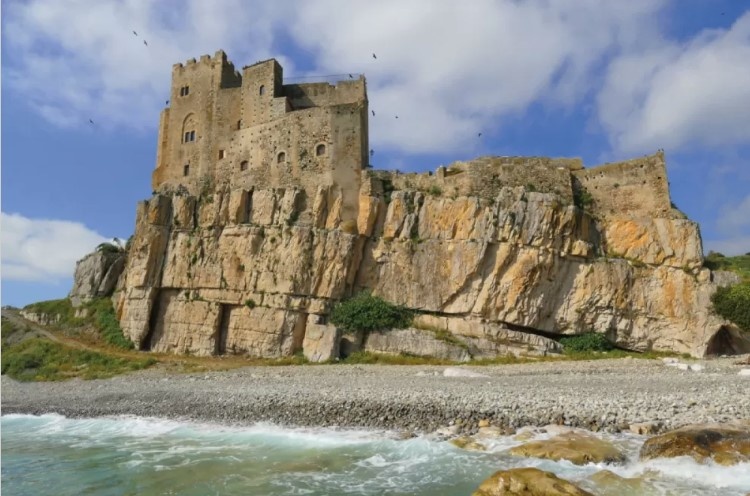

Although most Calabrian castles have ancient origins, often built upon former Byzantine castra (lookouts) against pirates, their monumental appeal today is largely due to the Norman kings, followed by successive rulers - Aragonese, Swabian, Angevin - and eventually the great families of local feudal lords.
Visiting Calabria’s castles means retracing key stages of the incastellamento phenomenon in Southern Italy and the Mediterranean during the Middle Ages, a process that took on unique characteristics distinct from those in other regions.
Key moments in this captivating history include the Arab and Saracen pirate raids (9th-16th centuries) along Calabria’s coasts, which forced coastal communities to retreat to highlands, where the main medieval Calabrian villages now stand.
Another pivotal chapter in the history of Calabrian castles was the era of Frederick II, when the Holy Roman Emperor initiated the construction of monumental castles across Calabria and Southern Italy (the so-called ‘Frederickian castles’).
The theories behind the purpose of these castles are varied - perhaps they were summer or hunting residences, sites of initiation, or maybe even mysterious temples safeguarding the Holy Grail.
To reinforce the defensive role of Calabrian castles, King Charles V established in the 16th century a sophisticated coastal watchtower system.
These cavallare towers, equipped for horseback or designed for lighting night fires and daytime smoke signals, could relay warnings to Naples within 24 hours.
Exploring Calabria’s castles is an evocative journey from the inland fortresses - such as the Castle of Sant'Aniceto, the Norman-Swabian Castle of Cosenza and the Norman-Swabian Castle of Vibo Valentia, each surrounded by strong walls and drawbridges - to true coastal fortresses like the Frederickian Castle of Roseto Capo Spulico, the Aragonese Castle of Belvedere Marittimo and Ruffo Castle in Scilla.
Rich in history, legends and mysteries, these castles defy time and offer their spaces for museums, exhibitions, reenactments and a variety of events that combine art, history and tourist itineraries year-round.
They welcome visitors seeking to discover a lesser-known side of Calabria beyond beaches and mass tourism.
The Calabria of castles invites visitors to explore independently, join guided tours or follow one of the many Cammini di Calabria and historical-nature treks that combine the scenic beauty with the area’s ancient identity.
Recommended castles to explore:
Ducal Castle of Corigliano (CS)
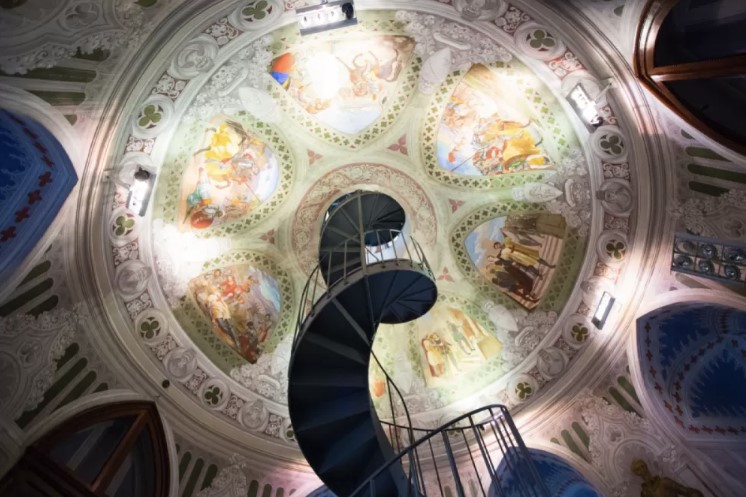
Among the must-see Calabrian castles in the province of Cosenza is the Ducal Castle of Corigliano. Built by order of Robert Guiscard in 1073, it’s famous for its spiral staircase surrounded by frescoes, leading to a breathtaking viewpoint.
Castle of Santa Severina (KR)
The Castle of Santa Severina, a symbol of the town of the same name in the province of Crotone (listed among the Most Beautiful Villages of Italy), houses the Archaeological Museum of Santa Severina, where visitors can admire artefacts uncovered during excavations. It also hosts the Medieval Festival, a historical re-enactment held between May and June each year.

Le Castella (KR)
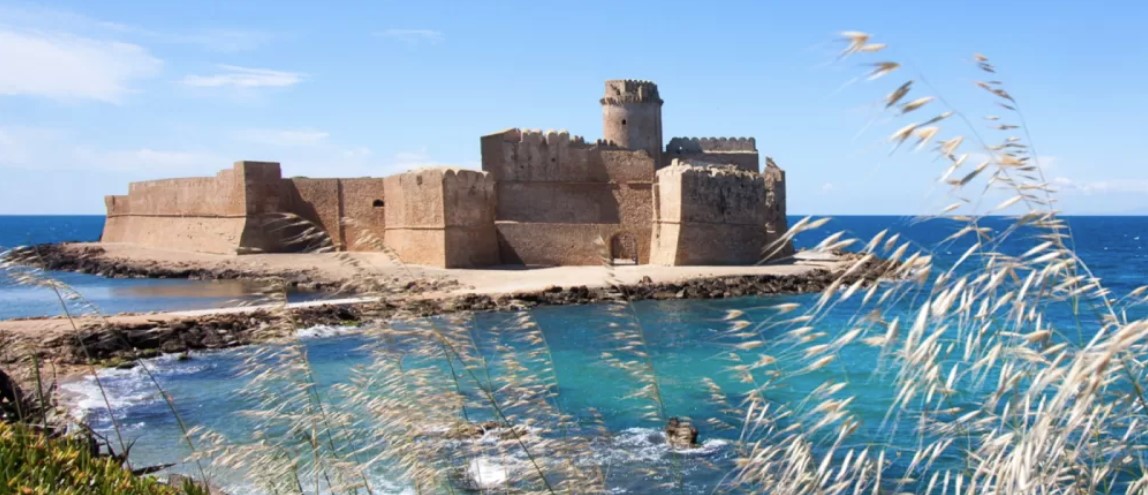
The only Aragonese fortress at water level, and one of the iconic images of Calabria, the complex of Le Castella, in Isola Capo Rizzuto in the province of Crotone, tells tales of attacks repelled with cannon fire and other legendary stories, such as that of a child kidnapped by the Turks who later became the great pirate Occhiali, the “Terror of the Seas”.
Murat Castle (VV)
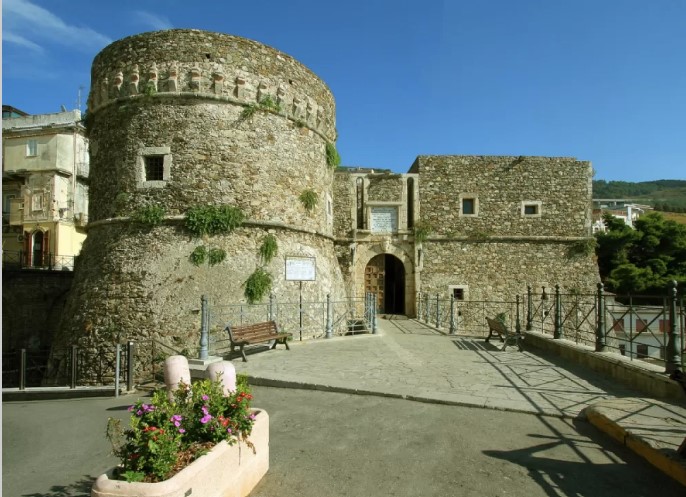
The Aragonese Castle of Pizzo Calabro (15th century), in the province of Vibo Valentia, is known as Murat Castle because the King of Naples, Joachim Murat, was imprisoned and executed here on October 13, 1815.
His remains are still housed in the Church of San Giorgio. Home to the Murat Museum, the castle hosts a historical re-enactment of the event every four years.
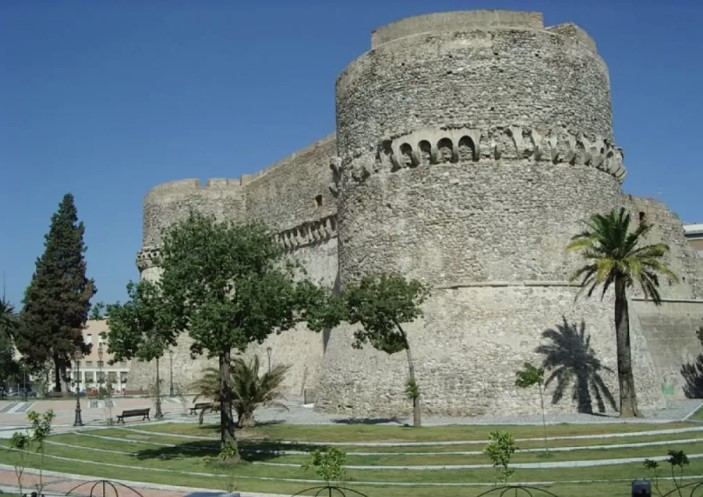
Aragonese Castle of Reggio Calabria
An important remnant of medieval Reggio, the Aragonese Castle of Reggio Calabria (9th-11th centuries) occupies the upper part of the historic centre and hosts temporary exhibitions and cultural events.
Surviving numerous earthquakes, it offers one of the most beautiful panoramic views over the Strait of Messina.
Article and photos by ENIT