It is a narrow corridor of aromas and voices, of clinking cups and clasped hands, a refuge that has preserved timeless stories for seventy years.
The iconic Pellegrini’s Espresso Bar on Bourke Street finds new light in the docufilm Pellegrinis A Melbourne Legacy, a delicate homage to its triumphs, its brutal wounds, and the faces that turned it into a true institution in the heart of Melbourne.
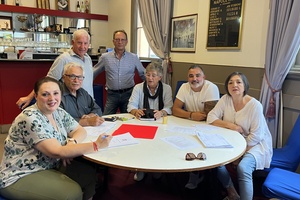
Acclaimed Italian-Australian director, actor, and producer Frank Lotito chose to honour the invisible heritage of a historic establishment that continues to live on between its marble tables – persuaded by the genuine persistence and “numerous phone calls” from Rob Gabriel, an IT professional and loyal Pellegrini’s customer.
“Some years after the tragedy of Sisto Malaspina (the restaurant’s owner with Nino Pangrazio since 1974, stabbed to death on 9 November 2018 during a terrorist attack on Bourke Street, ed.), I started cycling back into the city and would ride to Pellegrini’s for a coffee,” Gabriel recalls.
“A thought stuck in my head and I kept calling Frank because this story had to be told.”
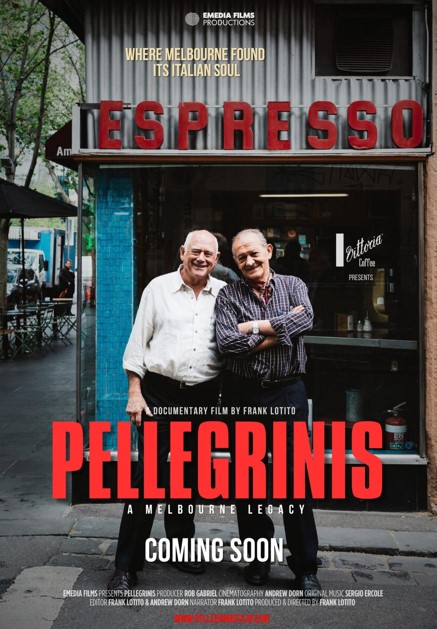
The poster for the docufilm Pellegrinis A Melbourne Legacy features Sisto Malaspina and Nino Pangrazio, who took over the café in 1974.
Convinced by Gabriel’s accounts – by the image of his mornings sipping a hot espresso, ready before even stepping inside, by the familiarity of a business that became home to thousands over the decades – Lotito embarked on a year-long project, “a huge undertaking,” as it was far more than just “putting together a few interviews.”
The first step was meeting with David Malaspina, Sisto’s son and the café’s current custodian.
“We wanted to move with great caution and extreme sensitivity,” Lotito explains.
“We started with David Malaspina, we wanted his blessing. We presented our narrative idea and he gave us permission. Rob did a lot of research at the start to identify who we should interview. With a documentary, the possible directions are endless, especially with a story like this. But we chose to focus on Pellegrini’s as an Italian-Australian institution, one of Melbourne’s historic espresso bars, opened way back in 1954.”
The film doesn’t dwell only on the past: Pellegrinis A Melbourne Legacy also outlines the café’s impact not only on the hospitality scene but on the people of Melbourne themselves—an immeasurable influence that continues to this day.
More than a journalistic piece, it is a heartfelt tribute to Pellegrini’s, to its predecessors, to its bright future, and, of course, to Sisto Malaspina.
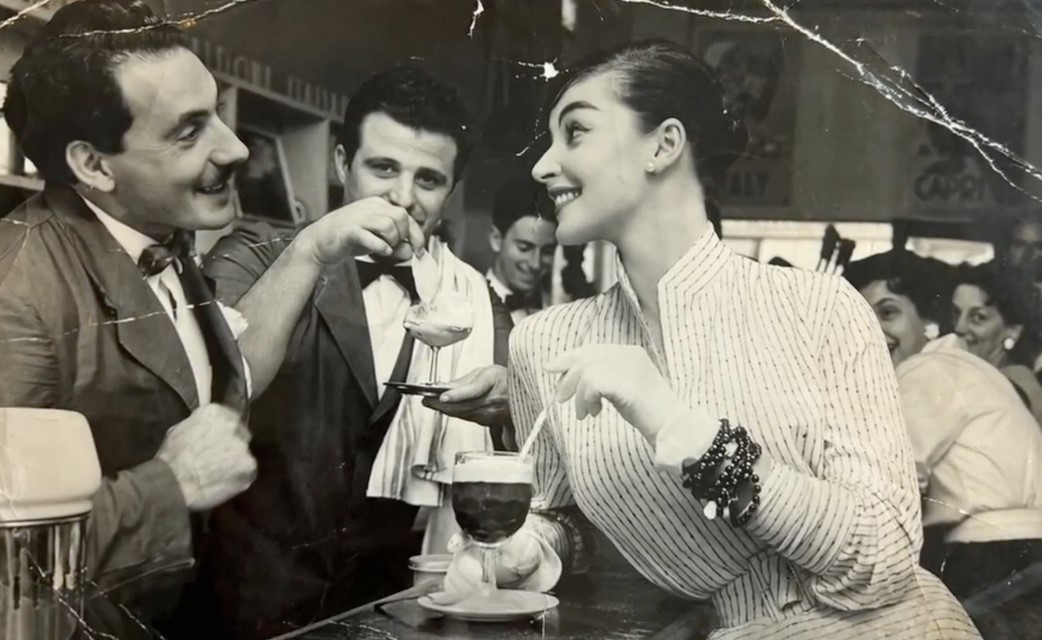
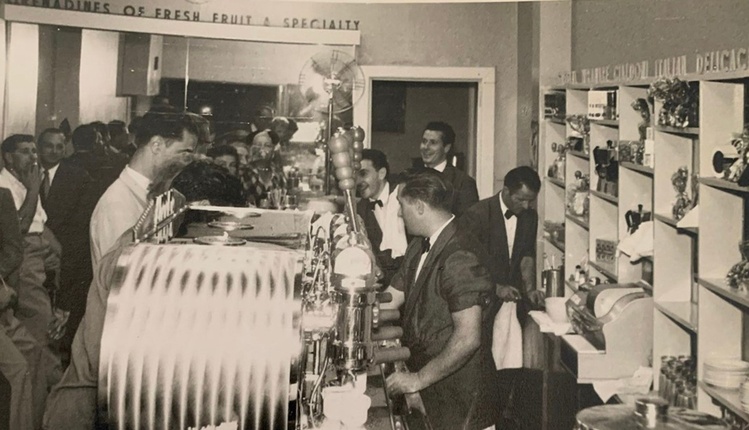
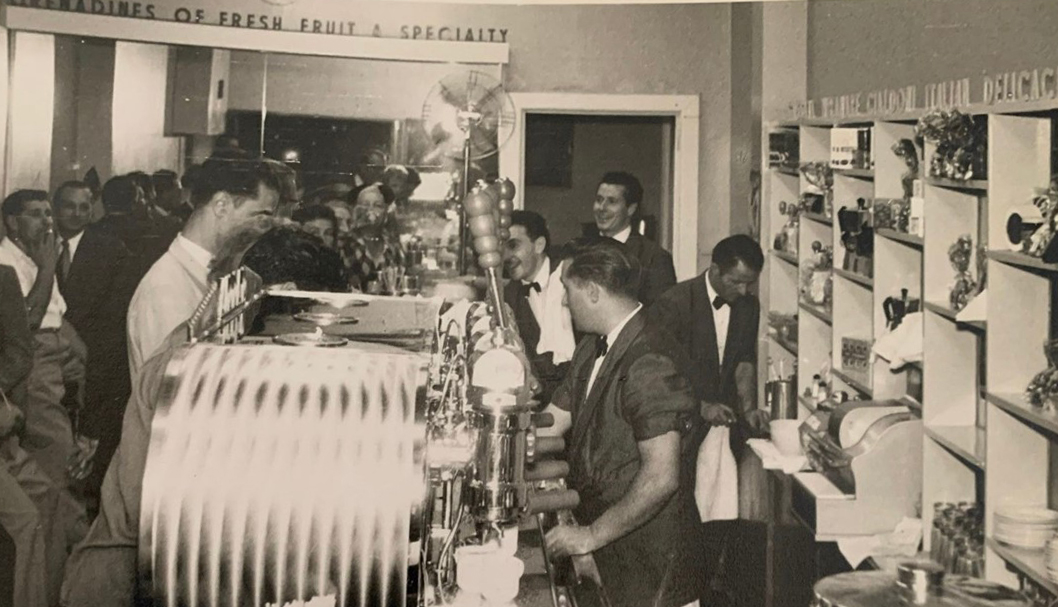
The Pellegrini brothers, Leo (left) and Vildo, in an archival photo at the restaurant and bar in the 1950s.
“We often forget that before 1954 in Melbourne you couldn’t get a coffee, order a pizza, or even a simple plate of pasta. Olive oil was sold in pharmacies, used as medicine or lubricant. My father often tells me about the massive amounts of figs that grew everywhere on the streets, but people didn’t know what to do with them—until we Italians came and said, ‘It’s fruit, you eat it!’” Lotito says with a smile.
“Our docufilm also speaks of this: of our ancestors, parents, and grandparents who arrived in Australia with nothing and created extraordinary success stories.”
It was Italian migrants who introduced the now-celebrated “espresso coffee” to Melbourne in the 1950s. Pellegrini’s, Don Camillo, and University Café were among those proud to claim they were the first to bring an espresso machine to Australia.
“There are so many different stories,” Lotito adds.
“We think the first might have been Nando’s Espresso Café. It was the owner’s mother, Fernando Varrenti, who brought one in around 1952. Unfortunately, when the machine arrived at Melbourne’s port, it wasn’t released because customs didn’t know what it was. They told her she needed a boiler operator’s licence to use it, so it sat at the docks for a long time. When she finally managed to get it out, she set it up in the back of her grocery shop in Carlton. Later, her son decided to use it in the café he opened in the early ‘50s on Elgin Street. But this is just one of many stories, and whether it’s true or not, we can’t be certain.”
In tracing Pellegrini’s long journey, the filmmakers also sought out the café’s original owners, brothers Leo and Vildo Pellegrini, bringing back intimate and moving memories.
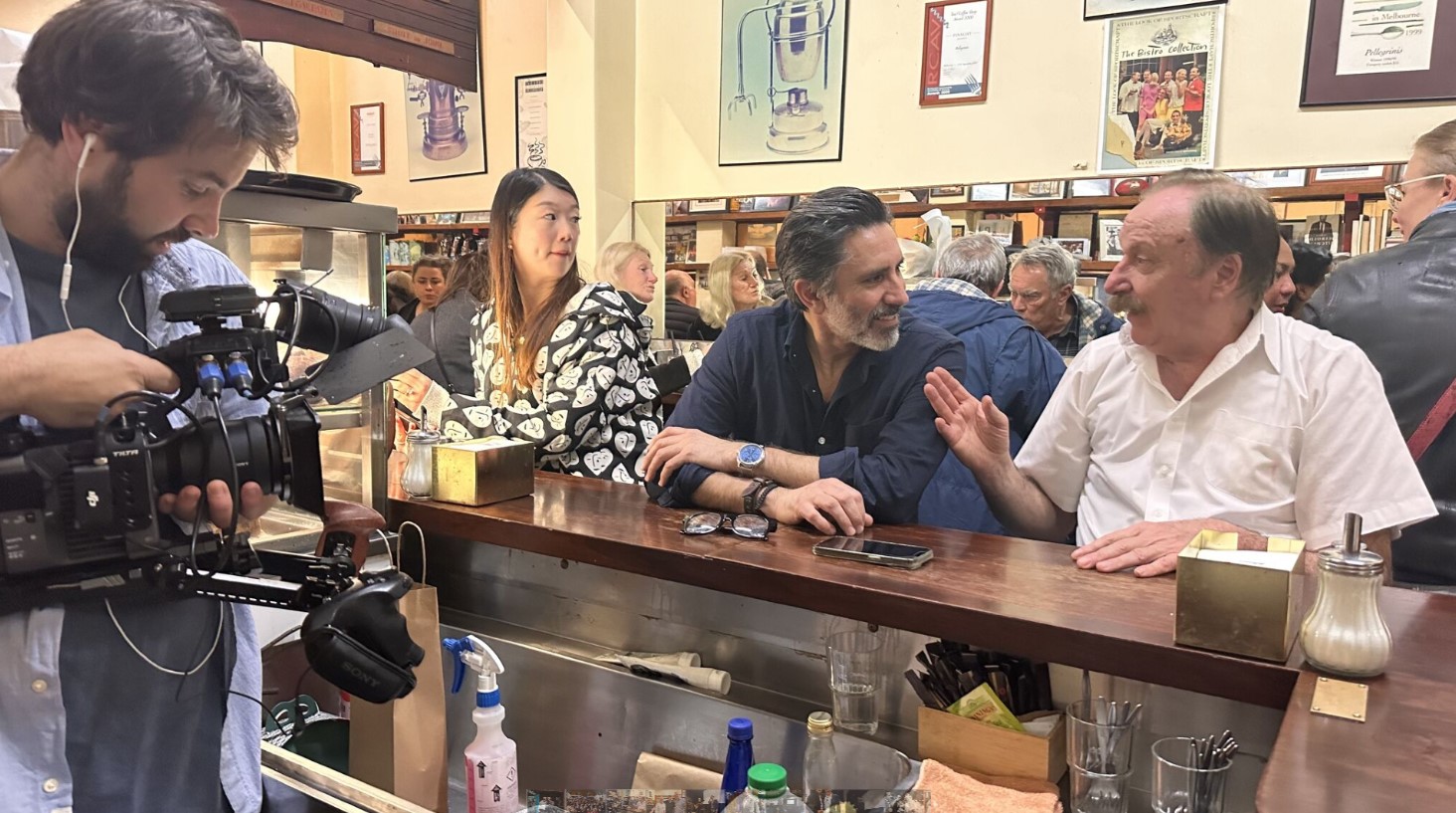
Behind the scenes of the docufilm: Frank Lotito (second from right) interviews Rocco Elice (right), a beloved face of Pellegrini’s, waiter and manager for over fifty years, filmed by cinematographer Andrew Dorn.
“We went to see Leo Pellegrini and interviewed him one afternoon. Sadly, he was already unwell and passed away four days later,” Gabriel recounts, deeply moved.
“We were at his home, trying to talk to him, but he couldn’t manage. In that moment, we realised this docufilm was truly becoming a tribute to an entire generation of professionals.”
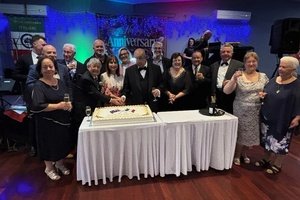
Pellegrinis A Melbourne Legacy has already begun its journey through the community. After a first screening at the Williamstown Italian Social Club – with another set for November 1 – it will arrive at the Veneto Club in Bulleen on October 9, before preparing for a wider release.
“We were very emotional during the premiere, the audience really appreciated it, and many were moved. It was a powerful sign,” Lotito shares, as he awaits an official cinema release date.
And perhaps Melburnians still love Pellegrini’s today, in an era when Italian restaurants continue to multiply across Victoria, because it is not simply a café, but a symbol of belonging that has never lost its essence.
“What I love most is that you can go there alone and you’ll never stay alone: you always meet someone you know, or you can sit at the counter next to a stranger and start chatting naturally,” Lotito explains.
“And then the staff recognise you, they treat you well, they remember your name. The most extraordinary thing is that nothing has changed: the dishes are the same, the service is identical, there are no QR codes or iPads at the tables. After you order, the waiter shouts to the kitchen and your plate is ready in no time—a rare experience in Melbourne. It’s wonderful.”
And for Rob Gabriel, entering Pellegrini’s means “going home.”
“You feel welcomed straight away. It’s a place where you can be yourself, the staff take care of you, it’s really a family,” he adds. “It’s like going to your grandparents’ house: they spoil you and make you feel part of a precious world.”
To stay updated on upcoming community screenings of Pellegrinis A Melbourne Legacy, you can visit the website.