It may not be widely known, but the second-last sense a human being loses before dying is smell. The last is hearing. Our sense of smell plays a remarkably important role in everyday life, and it varies from person to person depending on physical condition. Those who are blind, for example, often develop a far keener sense of smell than average.
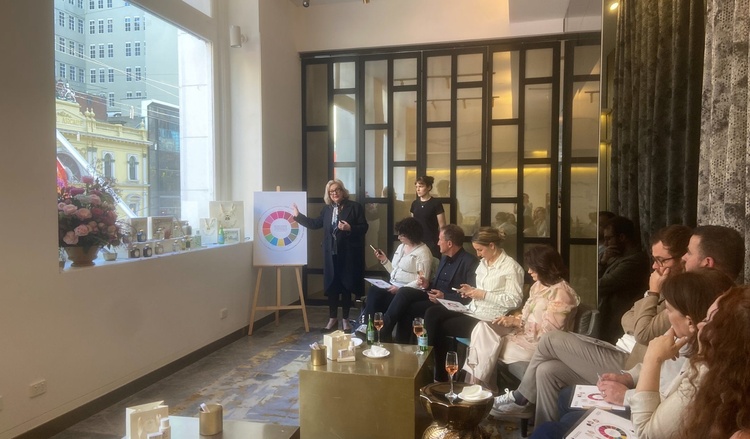
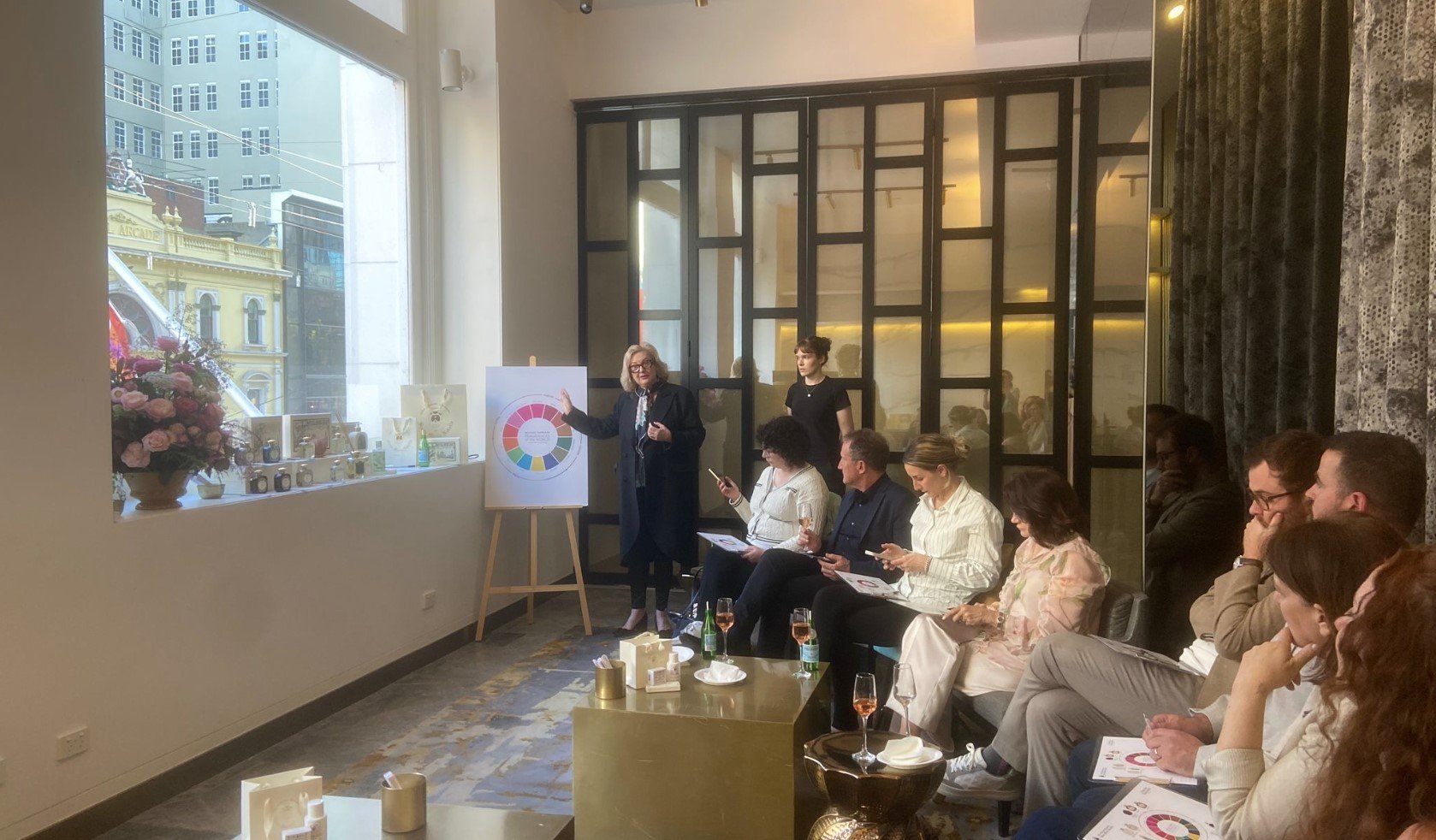
In a fascinating seminar held at Myer on Bourke St—expertly organised by the ICCI Melbourne and led by Lucy Borland, the Australian representative of the historic Officina Profumo-Farmaceutica Santa Maria Novella—the conversation moved far beyond perfume and became a journey into the long history and rich tradition of a small artisanal workshop rooted in the heart of Florence.
Founded in 1221 as a convent of Dominican friars in Santa Maria Inter Vineas (Saint Mary among the Vineyards), a small church just outside Florence’s city walls, its long history of apothecary craft has been intertwined with the city for more than 800 years.
“The French have always said the perfume industry began with them, but that’s not true. It began in Italy,” Borland said at the start.
It was thanks to Catherine de’ Medici, betrothed to Henry II of France, that Santa Maria Novella arrived in Paris in 1533 as a wedding gift.
For the occasion, the workshop created its very first fragrance, still known today as Acqua della Regina, a citrus perfume with a bright, uplifting character intended to capture Florence’s elegance and grace.
The Officina later opened its doors to the public, eventually receiving formal recognition in 1612 from the Grand Duke of Tuscany, who also granted it the title of Royal Foundry. Today the Officina is owned by the investment group Italmobiliare.
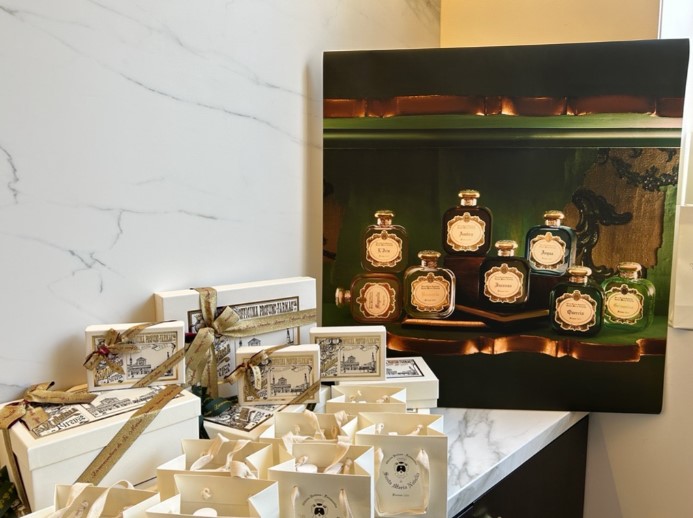
Some of the products from the Santa Maria Novella Perfume range
It was again thanks to Catherine de’ Medici—who often suffered from severe migraines and found relief chewing tobacco leaves grown in her garden—that another fragrance was born: Tabacco Toscano, now one of the most admired scents among perfumers worldwide. Tom Ford, among others, has attempted to recreate its essence several times.
What sets the Santa Maria Novella apart from other famous perfume houses, however, is not simply its history.
“The first product ever made by the perfume house came from necessity,” explained Borland. “Rose Water was mainly used as a tincture to treat illness.
“At the time, people were terrified of drinking water because of the plague, and often mixed rose water with wine or added it to food for its healing properties.
“The roses were picked in May, and even today more than 3000 petals are steam-distilled. The vapour is then captured through a funnel and bottled. There’s no alcohol added.”
Alongside this meticulous craft and the use of the highest-quality raw materials—sourced from the historic garden, which Borland described as looking like something out of an animated film for its sheer beauty and abundance—there is also the expert work of 50 staff, whose families have passed on their craft for five generations.
Borland recalled her visit to the historic Florentine headquarters. “Every one of them can do every task,” she said.
“They don’t spend the week doing the same thing. Watching them work was extraordinary.
“Everything is still done by hand—even wrapping the soap in paper while wearing silk gloves. There’s very little technology, and many of the tools are centuries old.”
During the seminar, guests sampled several of the Officina’s historic fragrances, guided by Michael Edwards’ fragrance wheel, a circular diagram that illustrates the relationships between fragrance families and helps customers understand their own preferences.
Thanks to this mix of unbroken tradition, craftsmanship, uncompromised quality and authenticity—in an age dominated by appearances—the centuries-old Santa Maria Novella brand continues to shine and attract admirers of all ages, even as it remains a niche house.
“I remember a client who visited our boutique in Melbourne’s Royal Arcade,” Borland recalled.
“She had lost both taste and smell, and her husband was supposed to help her choose a gift for a friend. While he was distracted, she began smelling the different fragrances.
“When she got to the iris perfume, she suddenly had a flash—something in her woke up. She couldn’t name what she was smelling, but it triggered something at a sensory level, maybe a dormant memory. She’s never stopped buying it since.”