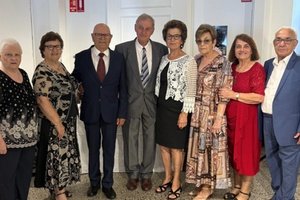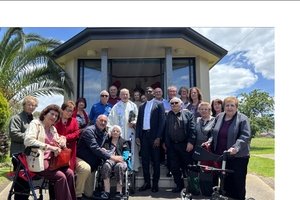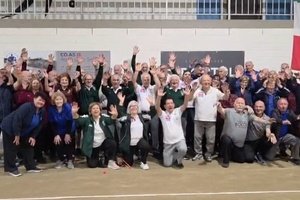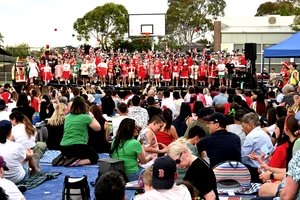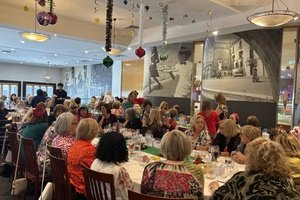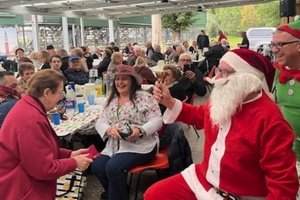
Times inevitably change, and generations continue to evolve. It is now up to the younger Eolians to carve out their place within this well-established community. At the Isole Eolie Society of Melbourne, the mission to keep connected to the sea, traditional customs and cultural heritage of the Sicilian archipelago has never been forgotten.
The community’s calendar is marked by religious events, honouring saints such as Saint Bartholomew, Madonna del Terzito, Saint Stephen, Saint Lawrence and Madonna della Catena, as well as beloved traditions like the annual picnic at Keast Park in Seaford and festive dinner dances that bring generations together.
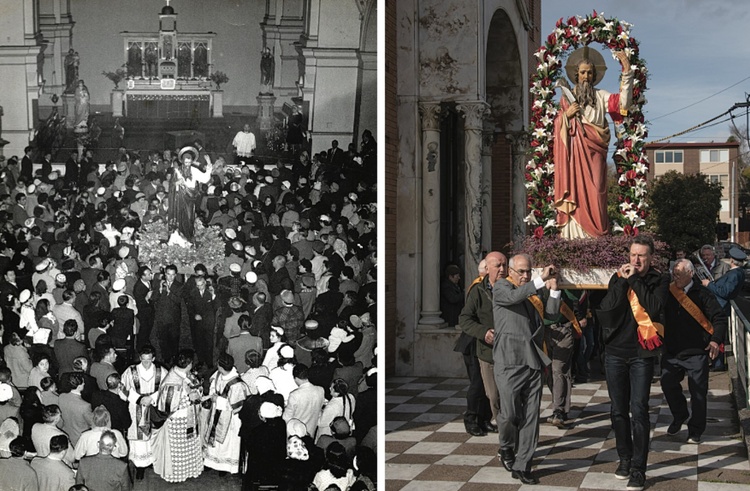
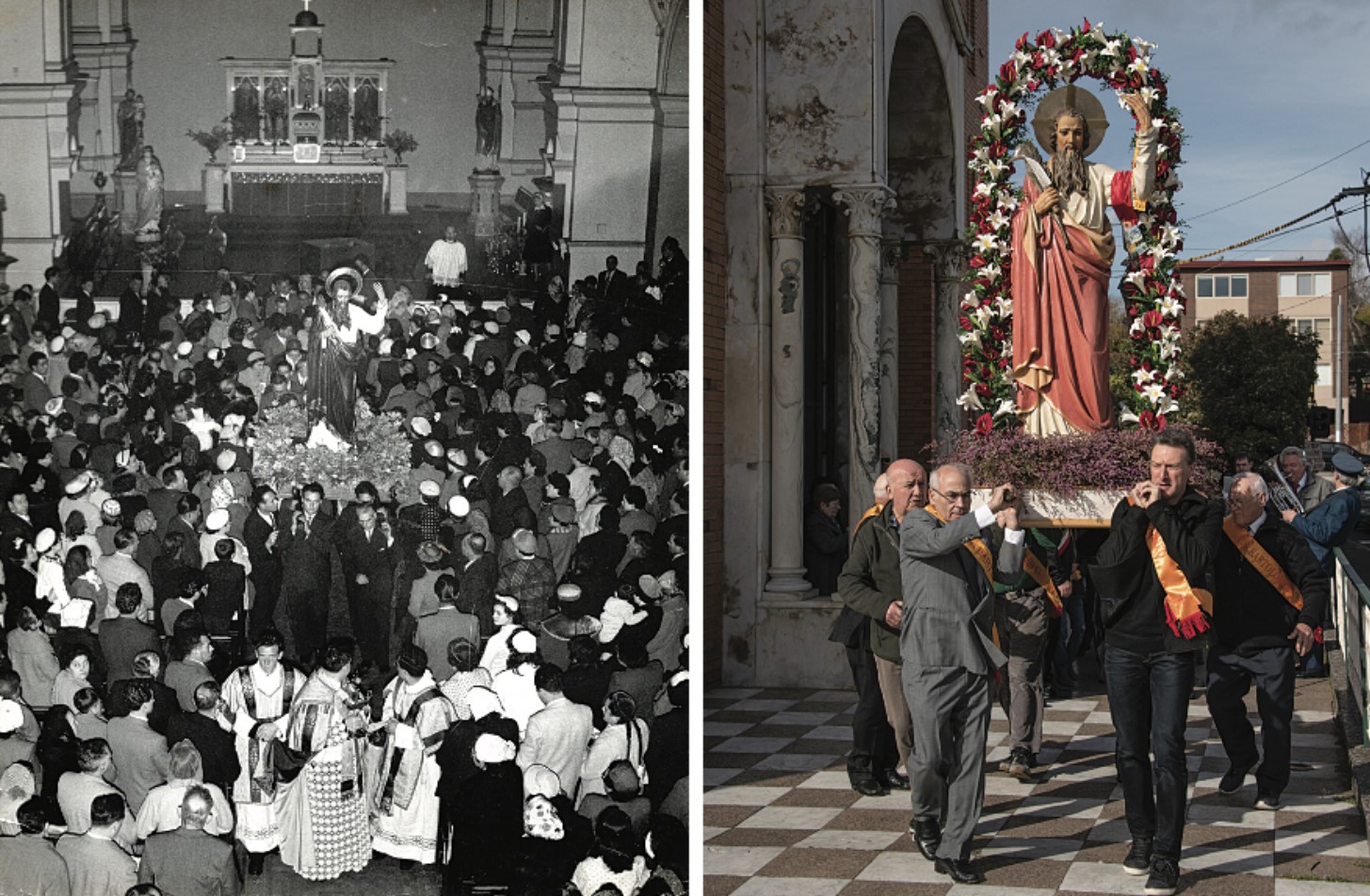
The annual celebration of Saint Bartholomew, the patron saint of Lipari and all the Aeolian Islands, remains the spiritual heart of the Eolian diaspora in Australia. The first mass in his honour was held on August 20, 1928, by Father William Kelly at St Ignatius Church in Richmond, thanks to the initiative of Stefano Tesoriero, then-president of the club.
In the following years, the feast became a cornerstone event for Melbourne’s Eolian community. After a break during World War II, it resumed on August 26, 1945, at Sacred Heart Church in Carlton, drawing such large crowds that police presence was required. In the post-war years, the event expanded beyond its religious roots, becoming a social occasion with dancing and opportunities for young Eolians to meet.
In 1955, a new statue of Saint Bartholomew, carved in Ortisei, was brought to Melbourne and now resides in the shrine of St Anthony in Hawthorn, where the feast has been held since 1972. During the 1970s, the Confraternity of Saint Bartholomew was formally established, and in 1989, it opened its membership to women.
Among the many gestures of devotion, the ongoing donation of flowers by the Santospirito family, now in its third generation, stands out as a cherished tradition.
As mentioned, another major highlight is the annual picnic at Keast Park. First held in 1928, it was only paused during World War II and resumed in 1948. Since then, it has become a treasured annual tradition.
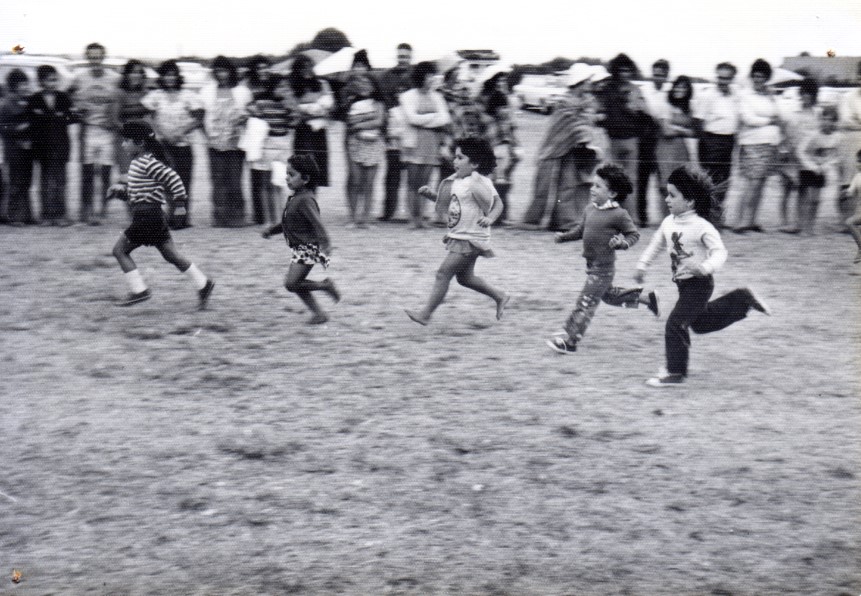
Kids racing at the Keast Park picnic event in 1976
With sack races, watermelon-eating contests and tug-of-war competitions, the picnic has always been a joyful event for all ages. In its heyday, it attracted up to 2000 attendees and gave rise to initiatives like the “Miss & Mr Isole Eolie” contest, with the winners often taking part in fundraising activities and hospital visits after the event.
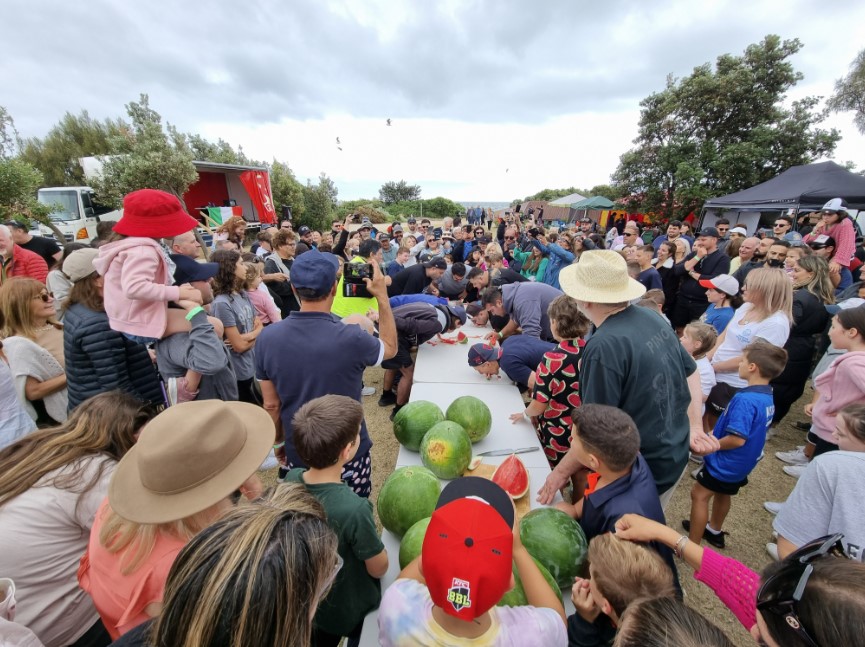
The watermelon-eating contest in 2023. (Photo: Michael Angelini)
But more than anything, the picnic serves as a chance to relive stories of migration and rekindle that ever-present longing to return to the sea of the islands.
Eolians and the Produce Trade: A Story of Roots and Success
Upon arriving in Australia, many Eolians found comfort in the familiar scents of ripe fruit and the vibrant colours of vegetables - a language of the land they already understood. For many, the fresh produce industry became a gateway to economic stability and independence.
Drawing on the knowledge and work ethic honed back home, many opened fruit and vegetable shops, despite the gruelling hours and hard labour. The first Eolian migrants led the way as others followed, often sponsored by fellow islanders who had already settled in Melbourne.
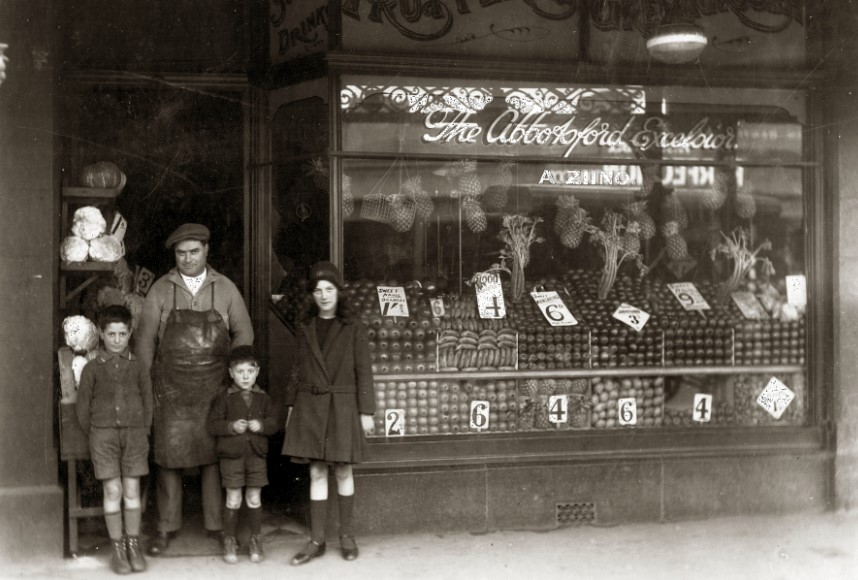
Antonino and Tilda Ziino’s shop in Abbotsford (circa 1924-1946). In the photo is Antonino with his daughter, Marianna, and his two sons, Francesco (right) and Domenico
In this way, the model spread, and Eolians came to dominate the produce trade across Victoria.
By the 1980s, with the rise of supermarket chains, many of these small businesses began to close. Today, most Eolians who started shops in the 1950s and 1960s have since retired.
Some of the prominent families who made their mark in the sector include Narduzzo, Tesoriero & Luca Bros., Casamento, Biviano, Scaffidi, Taranto, Russo, Rando, Natoli, Giuliano, Cincotta, Costa, Mandile, De Luca, Mecca and Dimattina.
A Life of Service to Migrants: Lena Santospirito
The daughter of Eolians from Salina, Lena Santospirito (née Virgona) was a pillar of Melbourne’s Italian-Australian community. Raised in Fitzroy, she worked as a telephone operator before marrying Antonio Santospirito in 1925, and together they had three children.
From the 1920s, Lena devoted herself to volunteer work, often alongside her sister, supporting Italian priests in their pastoral and social efforts and helping families in need.
During World War II, when many Italians in Australia were interned, Lena’s efforts intensified. In 1940, she co-founded the Archbishop’s Committee for Italian Relief, created to support the internees and their families.
By 1946, Lena became the first woman, and the first layperson, to lead the committee, expanding its mission to aid post-war Italian migrants and survivors in Europe.
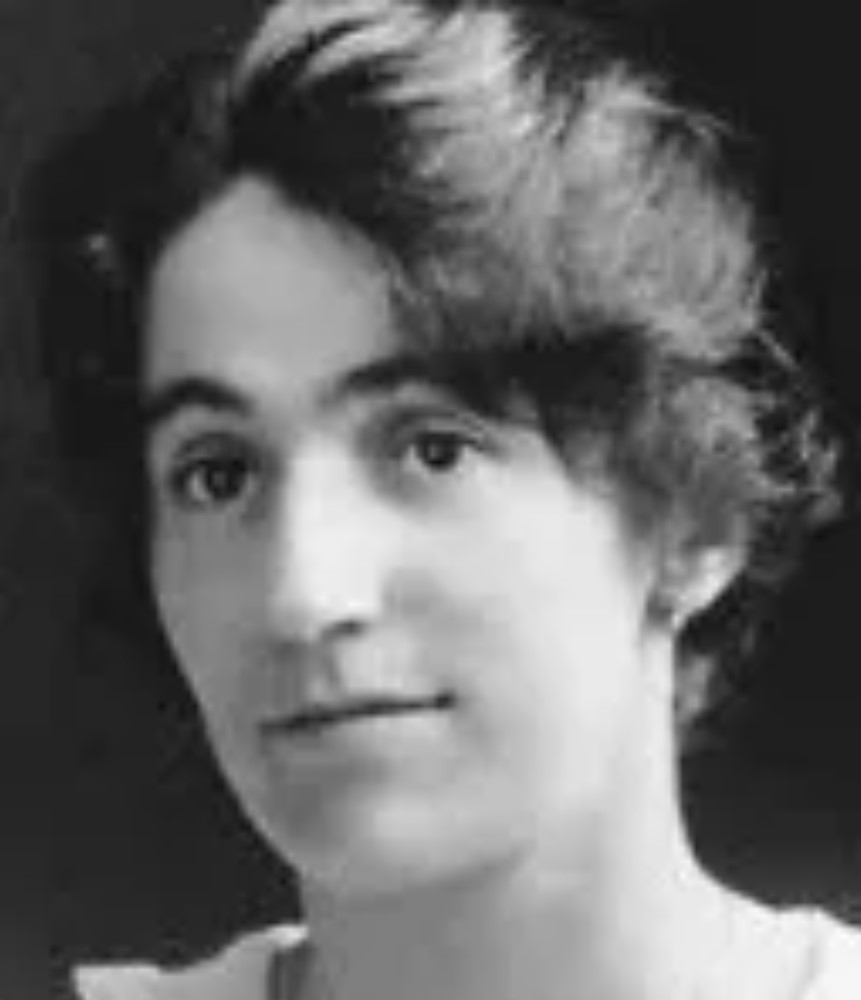
Lena Santospirito
From her living room in Carlton, she helped new arrivals find work and housing, organised social events and fundraising campaigns, and became a trusted figure for many newcomers. Her compassion and tireless work earned her the affectionate nickname La mamma degli italiani.
She passed away in 1983, but her legacy lives on through the Santospirito Collection at the Italian Historical Society in Carlton, a testament to a life dedicated to others and to preserving Italian identity in Australia.