
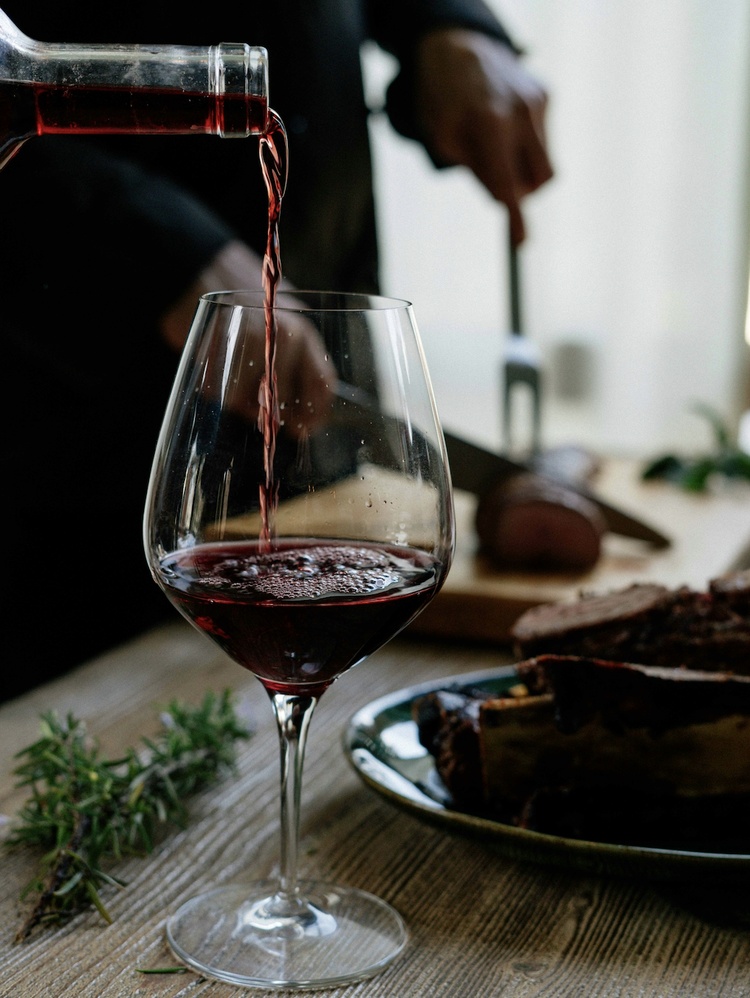
This monthly wine column aims to be a pleasant and interesting read for all those who, like me, love good food and wine. It’s also dedicated to everyone whose life, past or present, is full of experiences rich in aromas, flavours and memories. Wine is one of the very few agricultural products that can consistently communicate its place of origin and offer a wide, colourful array of “languages” when consumed. A glass of wine can bring back long-forgotten memories, places and fleeting moments. They say that those who develop a passion for wine (in moderation, of course) almost always end up making it an integral part of their lives. I therefore hope to pass on to you a passion that, I believe, will never leave me.
For those just starting out on their journey, there are several rules worth knowing, just as there are various schools of thought and professional courses for those who want to delve deeper into the world of wine.
There are so many variables to consider that summarising everything in a single page would be impossible. What follows are some guidelines and tips I’ve picked up along the way, through professional training with both the Associazione Italiana Sommelier (AIS) and the Wine and Spirit Education Trust (WSET), which offers wine courses practically all over the world.
Let’s start with the Italian approach. If you were born and raised in Italy, you’ve likely been exposed, directly or indirectly, to wine and food pairing from early childhood (with some exceptions, of course).
From the family table, where wine would often make a modest appearance alongside meals, to special occasions like Christmas with pandoro and Moscato d’Asti - “half a glass with a little water for the girls, since Moscato is low in alcohol and sweet”, as my nonna used to say.
Italy’s rich food and wine culture has roots that stretch back to ancient times; the Romans themselves followed a Mediterranean diet, produced olive oil and wine, and had technical knowledge of grape fermentation that is still applied today. They even had a kind of etiquette manual on how one should behave at banquets.
What makes Italy’s food and wine culture even richer is its strong regional identity. Each region has its own traditional dish and typical wine that often form a perfect match.
Growing up in Tuscany, it quickly became clear that a Florentine bistecca pairs wonderfully with a red wine made from, or primarily featuring, Sangiovese grapes. The examples are numerous, from Chianti Classico Riserva to Rosso di Montalcino or a pure Sangiovese.
Similarly, someone from Milan will know that classic risotto con ossobuco pairs best with a Pinot Nero blend from the Oltrepò Pavese. In the South, who hasn’t given in to the temptation of spit-roasted porceddu while in Sardinia, paired with a bold red made from Cannonau grapes? And for those with a sweet tooth, cassata siciliana with Passito di Pantelleria - a sweet wine from Zibibbo grapes (also known as Muscat of Alexandria, tracing back to ancient Egypt) - is a well-known and spot-on combination.
Then there are the more technical or daring pairings which, when successful, offer truly unforgettable culinary experiences (though some combinations are nearly impossible to pull off).
Take appetisers like mixed cured meats: fatty and savoury, slightly sweet and aromatic (think of mortadella). These typically call for young, fresh, light and lively red wines like Lambrusco.
There are also gourmet pairings (which are often expensive) that defy traditional rules, such as the famous case of French Sauternes - a noble rot wine made from Semillon and Sauvignon Blanc grapes in the Bordeaux region - creating pure magic when paired with foie gras.
For pasta dishes, a simple tomato and basil pasta finished with a drizzle of olive oil deserves a wine that can balance out its pronounced acidity. I personally enjoy a good glass of young rosé, but a moderately fresh white like a Campanian Fiano works also well.
For meat and fish, much depends on the type, the cooking method and the accompanying sauce. In the case of brasato al Barolo, it’s a given that it pairs well with the same Barolo, made from Nebbiolo grapes, widely regarded as the king of Italian red wines.
The most challenging pairings involve foods with dominant acidity (from vinegar or lemon) or bitter and astringent notes like raw artichokes. According to WSET, when the “harsh” elements of food (acidity, bitterness and tannins) prevail, they diminish the wine’s “soft” elements, such as fruitiness and perceived sweetness, thereby unbalancing the pairing.
Here, personal taste and sensitivity to certain flavours also come into play. Some love extremely spicy food like Indian Phaal curry, whereas I personally couldn’t handle it. For slightly milder curries, I usually go with aromatic white wines like Gewürztraminer or off-dry whites like a German Mosel Riesling.
There are also situations where the umami effect of food - bringing fullness and enhancing salivation - can clash with wine. Think of mushrooms and how their umami intensifies as they cook. On the other hand, if the food has both umami and saltiness, like Parmigiano Reggiano, the pairing is much more manageable.
A sparkling wine, whether it’s a French Champagne from Chardonnay or a Lombard Franciacorta, with its refreshing acidity and fine bubbles, works wonders in cleansing the palate from the richness of cheese.
In any case, it’s always worth remembering that when you’re in good company and sharing a delicious meal, any wine can bring joy to the palate and help create memorable experiences.