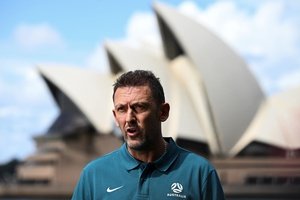
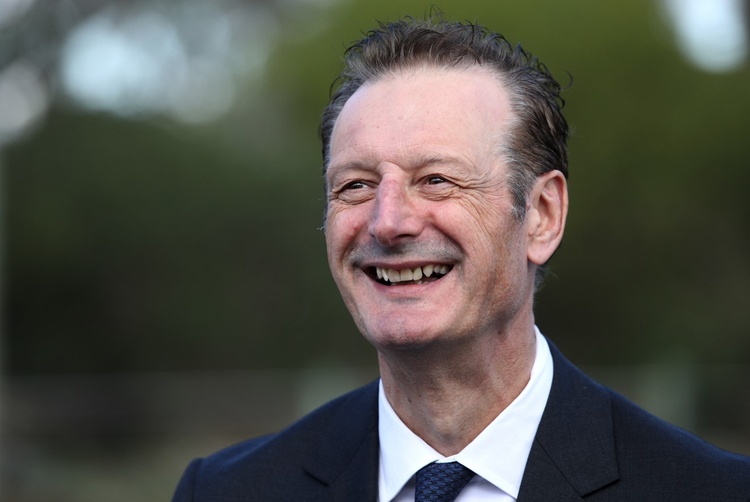
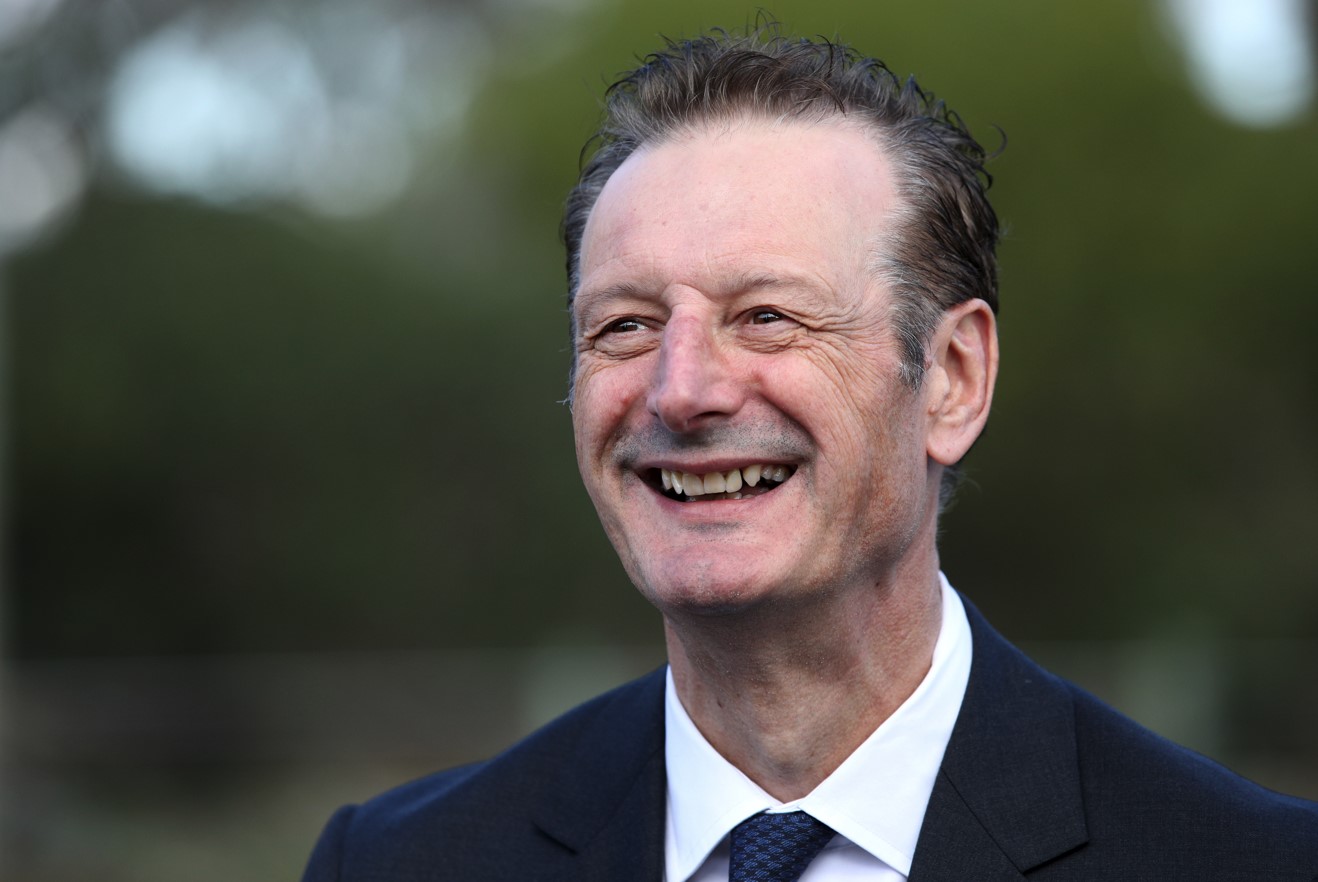
This year, as part of the Australia Day Honours, Pignata he received one of Australia’s highest honours, the Medal of the Order of Australia (OAM) in recognition of his significant contribution to football across Australia.
Readers of Il Globo are likely to recall one of those significant contributions fondly. In 2012, Pignata’s corporate strategic expertise, coupled with his powers of persuasion, led to the recruitment of Alessandro Del Piero for Sydney FC.
Through this achievement, he created a pivotal turning point for the sport in Australia. And football magic for the fans, Italian style.
Pignata’s achievements are numerous, and always visionary. Whilst working at Football Victoria (then Victorian Soccer Federation) his major focus was bringing financial stability to the Association which was facing financial woes at the time.
From Association executive, Pignata turned to club leadership. He has been a CEO for three football clubs, Sydney FC, Perth Glory and the inaugural CEO of Wellington Phoenix FC, the latter being an A-League club across the seas in New Zealand. Whilst there, he was responsible for bringing out LA Galaxy—including David Beckham.
Whilst not directly a gain for Australia, this achievement set the tone for an almost audacious approach to building the game within the A-League family. And the ripple effect was certainly felt here in Australia.
A few years later, as CEO of Sydney FC, Pignata focussed his sights on an even bigger coup: the signing of Juventus’ golden boy, Del Piero. This major move put Australian football on the radar.
Pignata chuckles when he recalls people’s disbelief when the news broke about enticing Del Piero to Australia. He admits he was nervous about meeting the legendary player in Torino, but says Del Piero was very receptive.
“Del Piero could see what we wanted to do in terms of the game, for the community, for the Italian diaspora,” he revealed.
“It certainly helped being able to talk to him in Italian. No translators or mediators, just honest and direct communication. It helped Del Piero understand the big picture, what we wanted to do for football in Australia and how much it meant to us all.
“Del Piero had already achieved everything he wanted as part of his football career; we presented him with a new story and he got on board. Del Piero was very proud to play in Australia.”
Pignata recalls that period of football fondly. Del Piero’s recruitment to Sydney FC out-surpassed initial hopes: “There was a huge ripple effect.” Fans of football became active in the game, both as spectators and as players for their local clubs.
People who did not follow football became increasingly curious and were drawn to see Del Piero on the field. In doing so, they also became fans of the game and memberships flourished.
“Everyone bought a number 10 Del Piero jersey,” he recalled, “It was an incredible period, but there was more to do.”
Football has always been part of Pignata’s life. He admits he is a lover of many sports, but football has always been his passion.
Pignata watched his father play weekend football and as a boy was captivated by Italy’s national team form in the ‘70s and their World Cup win in 1982.
His love for football stemmed from his own journey as a young player at Salesian College and then progressing to play with Box Hill Inter.
As a young man, alongside football, Pignata also pursued academic studies to become an investment banker. During his banking life, he worked for NAB, AXA Australia and HSBC, honing his skills in governance, strategy and financial administration.
Later he went on to graduate with a Global Master in Sports Management and Legal Skills (Madrid University, ISDE-FC Barcelona).
In fact, in 2017, the Australian Financial Review named him as one of Australia’s top CEOs. As a result of his contribution to the game, the NPL has expanded and there is a flourishing base for the growth of football across the nation.
And there is no stopping him. His current role as CEO of Football Tasmania is part of his bigger vision for a thriving football landscape in Australia. In each of his roles, he has been slowly carving out a strategic approach to growing the game Down Under.
The vision is to ensure that participation can occur at all levels, leading to a better pathway for talented players and a stronger fan base—drawing on the power of football for all community members to connect.
Pignata is fully aware that the sport is important to how people connect in their local community, surpassing any barriers such as language, ethnicity and age.”
His expertise in grassroots football and corporate leadership, and his passion for the sport have made him a strong force in advancing the game in Australia.
Contributing to creating an A-League for Australia has been a “passion project” for Pignata.
It’s one that has exacted its dues, however. Pignata admits that there have been some tough times. He acknowledges that forging a path forward for the world game has meant carving out a space for it amongst the other sports played in Australia.
On a personal level, it has meant long periods away from his Melbourne home and his family whilst he carried out his roles at Wellington, Sydney and Perth.
“Tough days. COVID times were particularly tough, with restrictions on travel impacting on seeing my family,” he shared.
The boardrooms of clubs around Australia and internationally are a far cry from the humble beginnings which characterised Pignata’s early years. Like many Italians in the 1960s, Pignata’s parents migrated from post-war Italy.
His father first arrived in Brisbane to consider a brief stint in the cane-fields and plantations, but quickly decided to move to Melbourne with his young bride, also from the region of Campania.
Pignata’s father worked as a crane driver but his love for the game he played back in his village near Salerno never diminished. He continued to play on weekends with his friends in Melbourne, which influenced his son’s love of the game.
Being of Italian background is something that has shaped Pignata and his view of the world, especially in forming values around family, community, children and a strong work ethic.
“I am proud of my heritage and so are my own two sons,” he said. “This pride is something our family passed on and it’s something that we nurture as part of being Australian-Italian.”
In his view, Australia may not have the history, investment and resources of other countries, but he is confident in his claim that “we punch well above our weight”.
“There is a good future for the game,” he added.
Tony is proud to have contributed to the beautiful game in Australia. “It’s about building community and sport has a role to play,” he said.
“It’s wonderful to see that football is the most widely participated sport in Australia. Everyone has a place in the game. We now have experienced great success through the Socceroos and the Matildas”.
Pignata explains that the OAM “encapsulates 50 years of work and commitment to the game”.
“My own contribution has only been made possible as result of everyone around me, my family, friends, colleagues—everyone,” he admitted. “Volunteers, staff, coaches, fans ... The OAM acknowledges everyone that has been part of the story.”
“I was very emotional, excited … both proud and humbled to be to receive the honour,” he said of the moment he found out about the Award.
Pignata explains that is still quite surreal, especially when recalling the journey of a young boy running around kicking a ball to where he currently finds himself.
Given the twists and turns of the Pignata story, one wonders what is next for him and for his continuing contributions to football in Australia.
For now, however, it’s a chance to congratulate Tony Pignata on his distinguished recognition.