With the highest autonomy in daily activities, and the best treatment outcomes for anxiety and pain, the best health-related quality of life is found in Trentino Alto Adige, followed by Abruzzo/Molise, while it is the worst in Umbria, said the 13th Crea Sanità report from the University of Rome Tor Vergata, presented in Rome.
This is a result not solely linked to healthcare performance. Some regions in the south, such as Calabria and Sicily, have a better quality of life than regions like Veneto, where levels of health protection are higher.
The study, conducted with contributions from a panel of 107 experts from the National Health Service, evaluated health-related quality of life based on five dimensions: the citizen’s ability to carry out daily activities independently, self-care, levels of anxiety or depression, experience of physical pain and the ability to move independently.
In third place in the ranking is Friuli Venezia Giulia, followed by Tuscany, Liguria, Sardinia and Lombardy, then Lazio, tied with Piedmont/Valle d’Aosta and Calabria.
Ahead of Umbria are Campania and Puglia/Basilicata.
“This is attributable to lifestyle, cultural, educational and environmental factors,” explains Daniela d’Angela, scientific coordinator of the study and president of Crea Sanità.
“However, it’s not strictly linked to health performance, which is measured based on parameters including health mobility, hospitalisation rate, prevention, access to emergency rooms and out-of-hospital care.”
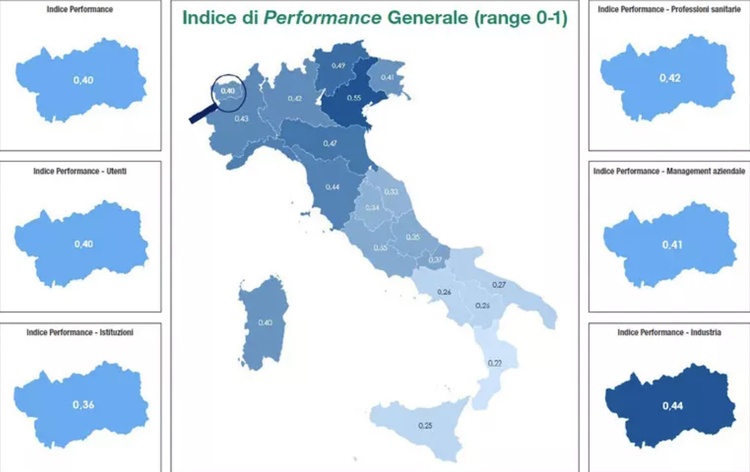
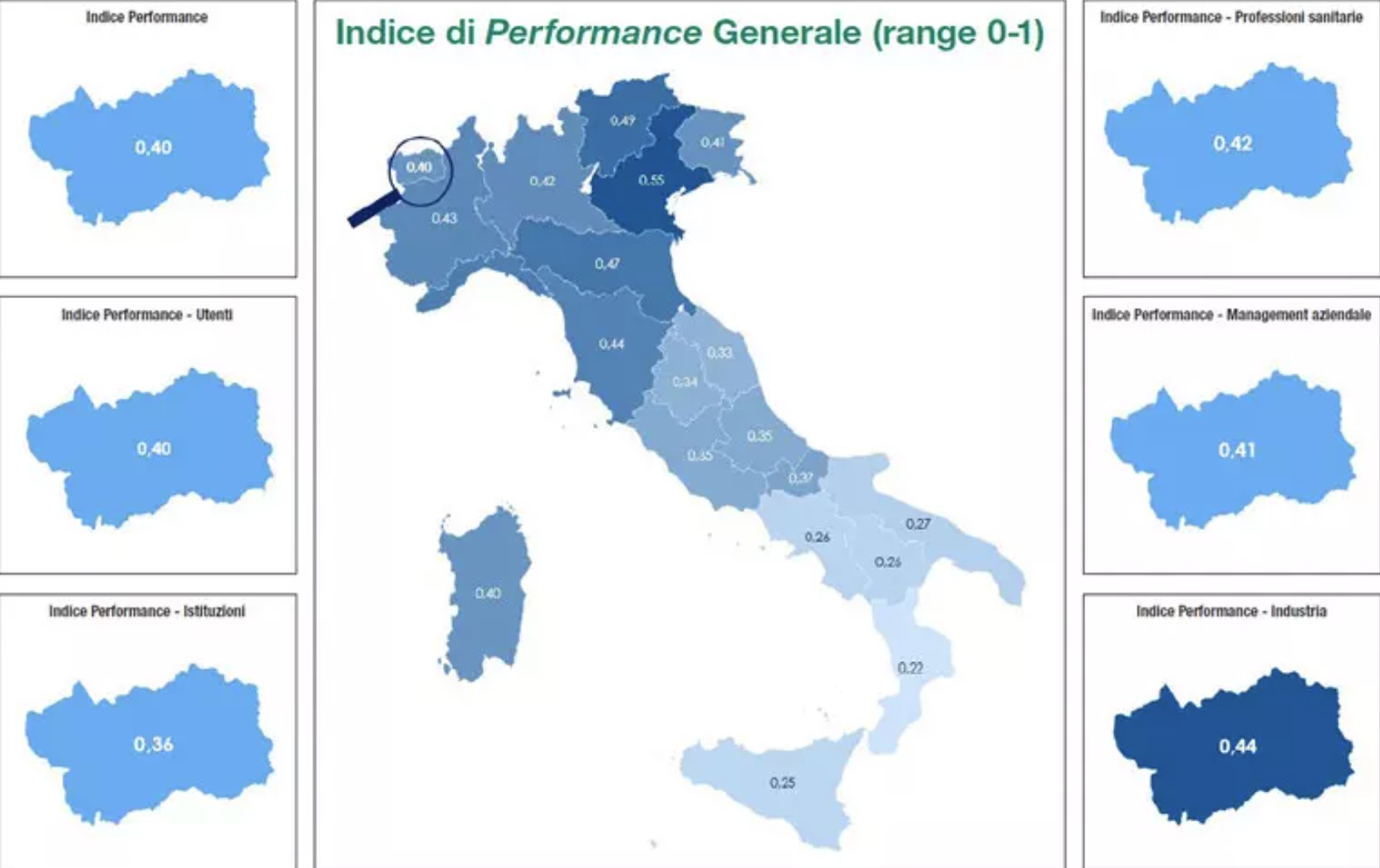
In this case, Veneto is at the top with a score of 55 per cent and Calabria is at the bottom with 23 per cent.
The study also evaluated the resilience of health services; that is, their ability to respond to needs in the medium to long term. The best regions in this respect are Piedmont, Lombardy, Veneto, Liguria and Emilia-Romagna.
“Regional performance levels,” comments Federico Spandonaro, president of the Scientific Committee of Crea, “remain far from optimal values.
“The gap between north and south persists, but the south is gaining ground.
“This shows the importance of investing in targeted health policies to improve efficiency and equity.”
ANSA