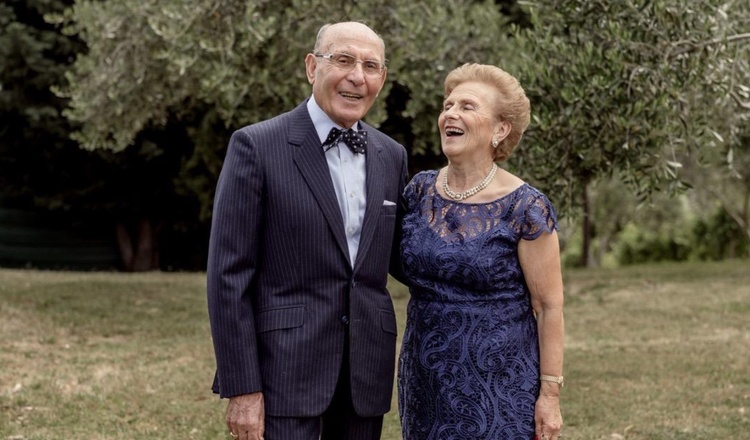
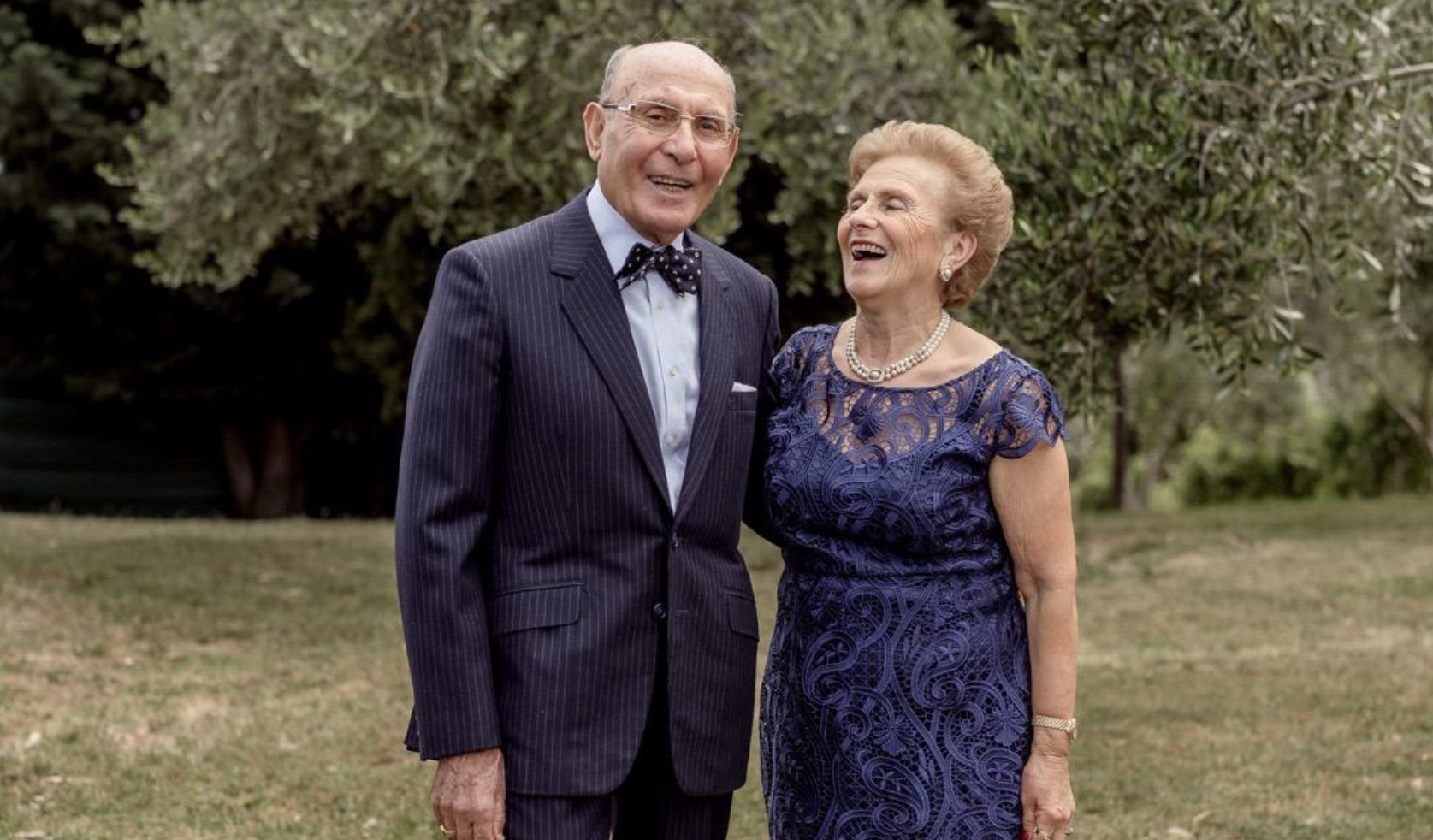
Cavallo was born in Ragusa on February 27, 1934. He emigrated to Australia at just 16 years of age and, only two years after his arrival, opened a tailoring shop on Malvern Road in Toorak, which he ran for more than 40 years.
A father of three daughters, he returned every year to his beloved homeland, where he and his wife Concetta had bought an apartment in Marina di Ragusa. It was in his hometown that he passed away on July 21.
“A true evangelist of healthy living and eating,” as his daughter Laura affectionately remembers him, Cavallo decided at the age of 30 to dedicate his life to physical and mental wellbeing following a health issue.
“He was quite an atypical Italian because he told all his friends not to drink coffee, not to eat salami and all those foods that aren’t exactly healthy,” recalled Laura.
“He became vegetarian and pescatarian—he could never give up fish. He never stopped keeping himself fit.”
Cavallo’s remarkable health did not go unnoticed by doctors at the Giovanni Paolo II Hospital in Ragusa, who took him into care on July 18 following a cerebral haemorrhage. At the time of his death, Concetta and their three daughters were present and, without hesitation, gave consent for his organs to be donated.
“My father was quite progressive: he wanted to be cremated and, if possible, he wanted to donate his organs,” Laura explains.
Francesca Corsaro, head of transplant coordination at ASP Ragusa, highlighted in a video published on the hospital’s social media page that Cavallo represents not only a model of extraordinary altruism and kindness, but also the oldest registered organ donor in the province.
“Older people are an example of our past and our roots. But a 91-year-old who decides to donate is looking to the future,” said Corsaro.
As confirmed by Rohit D’Costa, State Medical Director of DonateLife Victoria, Cavallo is also the oldest Victorian organ donor.
According to D’Costa, cases like Cavallo’s are particularly important because they underline how crucial it is to inform one’s family of the decision to donate organs, thereby increasing consent rates.
“What we focus on at DonateLife is encouraging people to make their own decision and register it, so it isn’t left to the family in the future,” he explains.
“When you lose a family member, grief is the main thing you’re dealing with; organ donation adds another layer, making the decision even more difficult.”
DonateLife statistics show that between 2009 and 2019 there was a 122 per cent increase in donations nationally, benefiting 81 per cent of people on transplant waiting lists.
These promising figures, however, were followed by a 23 per cent decline in 2020 and 2021 during the Covid-19 pandemic. Why?
“We don’t have absolute certainty about the specific reasons,” D’Costa says, “but it’s a global phenomenon.
“Consent rates dropped in the UK, in parts of the US and, from what I’ve heard, even in Spain, which usually records very high rates.”
D’Costa explains that DonateLife observed a shift in the experiences of patients and families during the pandemic, particularly due to restrictions on hospital visits, which negatively affected consent rates and fuelled misinformation.
Added to this was a growing fear about a perceived lack of commitment or professionalism from medical staff when dealing with patients who had consented to organ donation.
Silvia Pulitanò, paediatric intensivist and head of organ and tissue donation coordination at Rome’s Gemelli Polyclinic, clarified in an interview with the Italian weekly Panorama last year that “organ retrieval occurs only after a rigorous neurological and cardiological assessment that leaves no room for doubt”.
According to the Italian Blood Volunteers Association- AVIS, Italy’s National Transplant Centre recorded a 2.7 per cent increase in donations in 2024, resulting in “226 more transplants than in 2023 (+5.1 per cent)”.
“The national donation rate rose to 30.2 donors per million people (PMP): the first time Italy has surpassed the 30 mark,” explains the association.
“The regions with the highest rates remain Tuscany (49.4 donors PMP), Emilia-Romagna (45.5) and Veneto (44.7). Growth has also been recorded in southern regions (Sicily +5.7, Campania +3.1 and Calabria +2.7).”
Despite these encouraging figures, long-term uncertainty remains. As explained by Giorgio Battaglia, director of the Sicily Regional Transplant Centre, when people are asked about donation—often at the time of renewing their ID card—many are caught unprepared and prefer to delay the decision, or immediately decline.
Nunzio Pizzorusso, a 37-year-old chef who emigrated to Melbourne from Puglia in 2013, also had never considered organ donation. Everything changed suddenly when, a year after arriving in Australia, he received a new heart.
“In August, just as my first Working Holiday Visa was about to expire, I was cycling to work and suddenly couldn’t pedal anymore,” he recalls.
“At first I thought I was just tired—I had two jobs, working seven days a week. But at night I couldn’t sleep, and I needed a couple of pillows just to breathe.”
After multiple tests, Pizzorusso was urgently admitted to The Alfred Hospital, where he remained for five months.
His condition worsened, and he was placed in a medically induced coma while awaiting a heart transplant.
Pizzorusso’s medical journey was further complicated by visa-related restrictions on healthcare access.
“My Medicare had expired, and although a lady at reception helped me, I later ran into problems at The Alfred.”
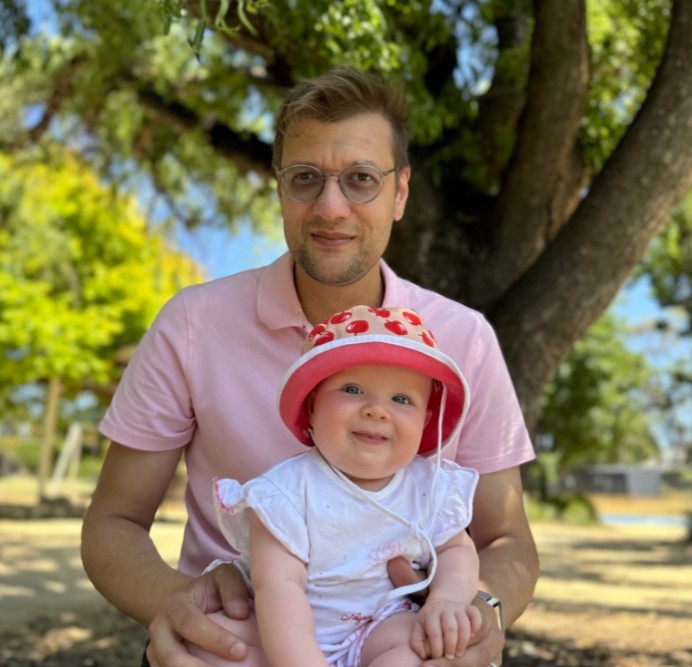
Nunzio Pizzorusso with his daughter Michelle
When he initially turned to Italian institutions, support was slow to arrive. Following interviews he gave to Australian media, assistance eventually came, and Pizzorusso received the heart of a young woman from Victoria who had tragically died in a road accident.
“Her family wrote to me, telling me about her. I wrote back. But I’ve never met them—they chose to remain anonymous.”
Today, after a long legal battle, Pizzorusso is a permanent resident. While he continues to work as a chef, he is looking to the future with a firm desire to spend as much time as possible with his young family.
Reflecting on the fear I once caused my own parents when I considered becoming an organ donor, I ask him what he would say if his daughter Michelle expressed that wish one day.
“Unfortunately, I can’t donate anymore because of the medication I take,” he shares, “But if my daughter one day says, ‘Dad, I want to donate my organs,’ I would be completely open to it.
“Strangely, since I got my new heart, I’ve met many people who’ve received an organ. Before that, it had never happened. And in my family, we never talked about it.”
For those seeking more information or wishing to register their consent, this can be done via MyGov or at donatelife.gov.au.